Why Princess Kate Refused an Autograph in Mumbai — and the Royal Rule Behind It
Princess Kate’s refusal to sign an autograph in Mumbai was not a snub. It reflected a longstanding royal practice: members of the British royal family generally avoid signing for the public because signatures can be copied or forged. Kate apologized, kept chatting with the fan, and carried on greeting the crowd. The small exchange said plenty about royal protocol—and not much about personal warmth.
The moment was brief. Sachin Tendulkar, the cricketing great who joined the street-cricket gathering, signed autographs for excited onlookers, while Kate told one fan, “Sorry, I can’t sign,” as reported by Hello!. She did not leave the interaction there; she continued speaking with people who had gathered to watch. That distinction matters, because a refusal to sign is not the same thing as refusing to engage.
The royal couple’s India trip also carries more weight than a single request at a crowd barrier. It is their first joint international tour in four years, their return to India after a 2016 visit, and Kate’s first joint overseas tour with William since she announced her cancer diagnosis in 2024 and later said she was in remission in 2025. Here’s the kicker: a tiny protocol moment can attract more attention than the work the tour is meant to spotlight.
What Is the Princess Kate Autograph Rule?
The so-called royal autograph rule is the customary reluctance of working members of the British royal family to sign items for members of the public. The usual explanation is practical: a signature can be copied, passed off as genuine, or used in a forgery. It is not a ban on royals ever writing their names. They may sign guest books, official messages, and other documents connected with their duties.
That difference can look fussy from the outside. A fan asks for a name on paper, a royal says no, and the exchange seems oddly formal—until you consider the many ways a public signature can circulate once it leaves the original owner’s hands. A signature made for a fan could be copied onto another item or claimed to be authentic in a sale. That does not mean every autograph request is dangerous or every collector is dishonest; it means the institution tends to avoid creating an easy-to-replicate sample in a casual public setting.
There is a second point worth keeping straight. The practice is usually described as protocol, not as a law that makes signing illegal. No report of the Mumbai encounter says Kate was legally barred from signing. The safer description is that royals generally follow a convention against public autographs, while still writing their names in appropriate official contexts.
When I look at the pattern, the clearest clue is consistency. Kate has explained the rule in her own words before, rather than leaving fans to guess at her motives. At the 2022 Chelsea Flower Show, after declining to sign drawings she had made with schoolchildren, she said, “My name’s Catherine,” and explained, “I’m not allowed to write my signature — it’s just one of those rules.” The wording was conversational; the boundary was still firm.
Frankly, that is more useful than a grand explanation. It tells the person asking that the refusal is not a personal judgment, while giving no false impression that she might make an exception if pressed. Public figures are people, not their public image, and a sound reading of the moment leaves room for both sides: the fan’s understandable excitement and the royal’s duty to follow a standing practice.
Core Details and Context
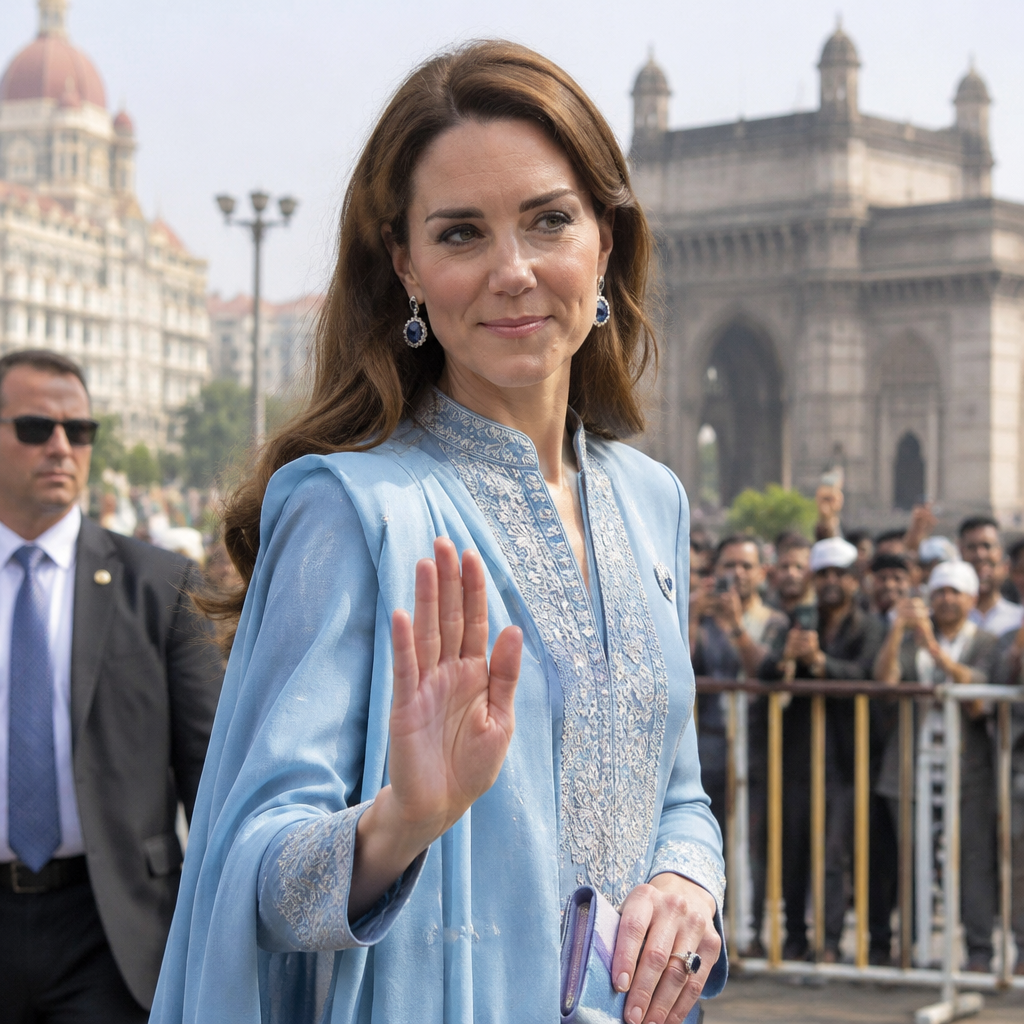
The encounter happened during a public-facing part of a working visit. On Nov. 16, 2026, the Prince and Princess of Wales met well-wishers gathered to watch their street-cricket game in Mumbai. Tendulkar, widely recognized as a cricketing legend, signed autographs for people in the crowd. One attendee asked Kate to sign, and she apologized before continuing to talk with people nearby.
The contrast is easy to spot. One famous guest signed; another did not. But they were acting under different expectations. Tendulkar is a sports celebrity, not a member of the British royal family, and the supplied account gives no indication that he was bound by the same household convention. Comparing their choices as if they were two competing decisions under one shared rule would miss the point.
A few details help make sense of the scene:
- The refusal was polite. Hello! reported Kate saying, “Sorry, I can’t sign.” She did not scold the fan or suggest the request was improper.
- The interaction continued. The report describes the royals shaking hands and chatting with well-wishers. Kate’s refusal concerned the signature, not the encounter as a whole.
- The practice is not absolute across every setting. Royals are known to write in guest books and official messages. The distinction is between a public autograph for an individual and writing as part of an official duty.
- Kate has previously explained the rule herself. Her Chelsea Flower Show comment in 2022 is a useful precedent because it directly addresses why she would not sign a drawing.
- The visit has a larger purpose. The couple travelled to India for the sixth Earthshot Prize awards, Prince William’s project focused on finding and supporting environmental solutions. The official Earthshot Prize site outlines the initiative and its purpose.
The public setting also matters. A royal engagement puts a person in front of cameras, crowds, and people who may have waited a long time to see them. A quick refusal can be replayed and dissected in seconds, while the conversation that followed may barely register. That is the machinery of media coverage: a rule creates a neat headline, but the fuller interaction is harder to compress.
Most celebrity news is shaped by the sharpest image or shortest quote. Here, the sharpest version is “Kate refuses autograph.” The more complete version is that she declined one specific request, gave a courteous explanation, and continued greeting people. Both are true; only one gives the scene fair proportions.
Timeline: How the Mumbai Moment Fits a Wider Pattern
- 2016 — A previous visit to India. William and Kate travelled to India together, making the 2026 trip a return to a country they had visited a decade earlier. The renewed visit gives the tour a personal and diplomatic backdrop, though the autograph exchange itself was a small moment within a much wider schedule.
- 2021 — Kate attends the first Earthshot Prize ceremony. The inaugural awards were held in London, and Kate joined William. The prize was created to identify and support practical responses to environmental challenges. Its stated purpose is described by the Earthshot Prize, rather than by the passing viral clip from Mumbai.
- 2022 — Boston, and a clear explanation at Chelsea. Kate joined William for the second Earthshot Prize ceremony in Boston. That same year, at the Chelsea Flower Show, she declined to sign drawings made with schoolchildren and explained that she was not allowed to write her signature. The explanation was simple enough to be remembered—and clear enough to settle the question.
- 2023–2025 — William attends without Kate. William attended the next Earthshot events in Singapore in 2023, South Africa in 2024, and Brazil in 2025. Kate was away from much public work during treatment and recovery after announcing her cancer diagnosis in 2024; in 2025, she said she was in remission. The Royal Family’s official website is the appropriate place to check official royal announcements and information about the couple’s work.
- February 2026 — Another request in Wales. During a visit to Wales, a man reportedly approached Kate with a pen and asked for her signature. She replied, “I can’t sign things, I’m so sorry. I can shake your hand, though.” The exchange ended with a hug and a wave before she moved on to greet others. The offer of a handshake made the boundary plain without making the fan feel dismissed.
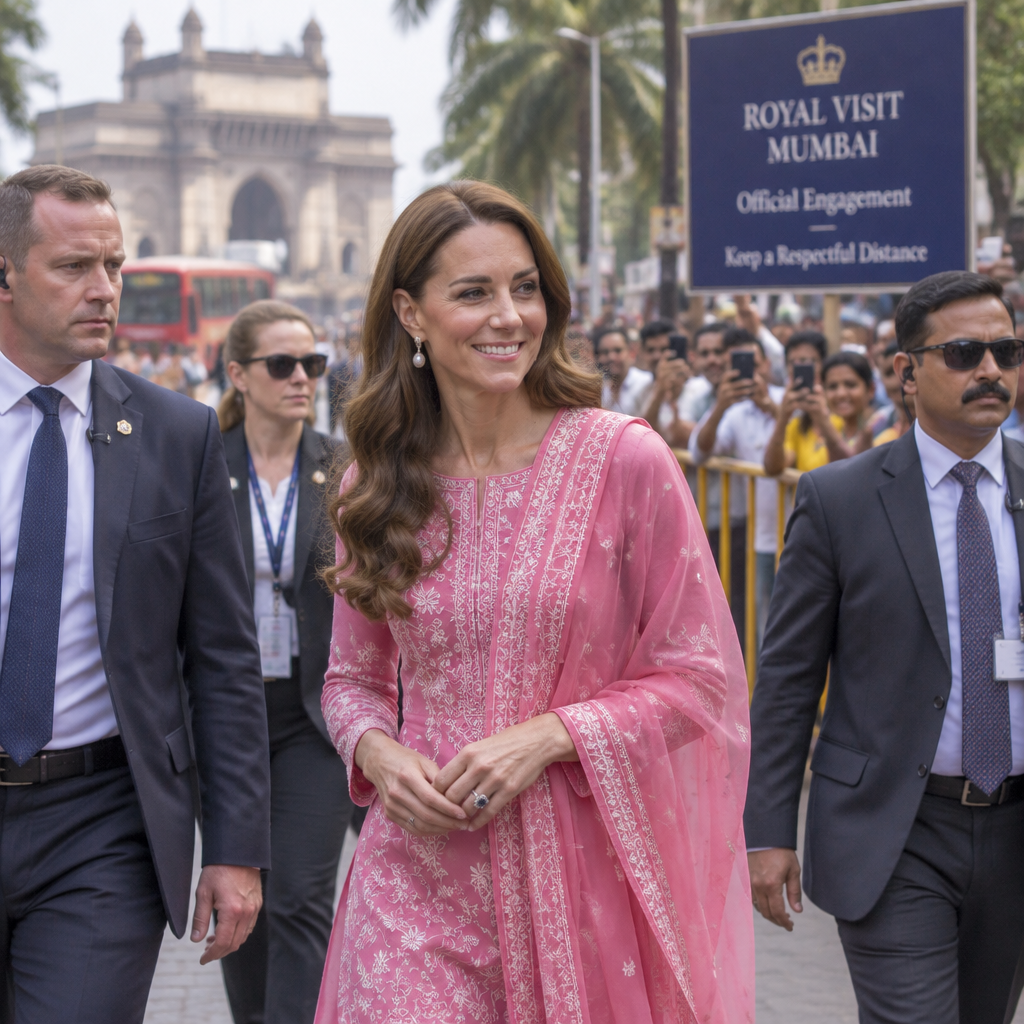
- Nov. 16, 2026 — The Mumbai cricket gathering. On the first day of the India tour, the couple met well-wishers around a street-cricket game. Tendulkar signed autographs, while Kate declined one request and continued chatting. I read this as a familiar rule appearing in a fresh setting, not as a sudden change in her attitude toward the crowd.
The timeline shows why the Mumbai clip was instantly legible to royal watchers. It was not the first time Kate had refused a signature, and it was not the first time she had offered another form of contact. The detail that changes from occasion to occasion is the setting; the basic response remains much the same. That consistency is more persuasive than speculation about what she privately felt in the moment.
Comparison: Royal Autograph Practice vs. Celebrity Autograph Culture
The closest comparison is not another royal. It is the ordinary public autograph request made to a celebrity or sports figure, where signing may be a familiar part of meeting fans. The Mumbai gathering put both approaches in view: Tendulkar signed for people, while Kate followed royal practice and declined. That contrast is useful, but it should not be mistaken for a contest.
| Point of comparison | Royal autograph practice | Celebrity or sports autograph culture |
|---|
| Mumbai example | Kate declined a request and continued chatting. | Sachin Tendulkar signed autographs for the crowd. |
| Main concern or custom | Public signatures are generally avoided because of forgery risk. | Signing may be a routine fan interaction, depending on the person and setting. |
| Exceptions or limits | Royals may sign guest books and official messages. | Practices vary; no single rule applies to every celebrity or athlete. |
| What the exchange shows | A boundary can coexist with a warm greeting. | A signature can be one way of acknowledging fans. |
The table shows two different public roles, not two measures of kindness. Tendulkar’s choice does not make Kate’s refusal colder, and Kate’s position does not make his autograph more meaningful. A fan may value both the signature and the brief conversation, but one cannot be treated as a substitute that everyone must accept. Let’s be real: the people in the crowd were meeting distinct public figures with distinct expectations.
Common Misconceptions and What to Know
Misconception 1: Kate was rejecting the fan personally. The reported words do not support that reading. She apologized, then carried on chatting with the crowd. A short refusal can sound brusque when a clip is detached from its surroundings, but here the account describes continued conversation and other greetings. No one should claim to know her private feelings from a few seconds of video.
Misconception 2: Royals are forbidden by law to sign anything. That overstates the practice. The explanation reported in this case is forgery risk, and the family may sign guest books, official messages, and other material tied to royal work. The distinction is about casual signatures for members of the public. “Typically do not” is not the same phrase as “never can.”
Misconception 3: The autograph rule applies to every well-known person. It does not. The Mumbai scene itself demonstrates the difference: Tendulkar signed, while Kate did not. Public figures make choices according to their own roles, advisers, and circumstances. There is no basis for assuming that every actor, musician, athlete, or politician follows the royal convention.
Misconception 4: A handshake or conversation is a scripted consolation prize. It may be part of a planned engagement, but it can still be a real human exchange. At the Wales encounter, Kate reportedly offered her hand and the request ended in a hug. That does not mean every fan wants the same alternative, or that a brief greeting is equal to a keepsake. It simply shows that declining a signature need not end the interaction.
Misconception 5: The autograph clip tells the whole story of the India tour. It does not. The couple’s visit is centered on the sixth Earthshot Prize awards and environmental solutions, with the Mumbai crowd interaction one visible moment. The trip also marks their first joint overseas royal tour since their 2022 visit to the United States for the Boston Earthshot ceremony. The click-friendly anecdote is not the whole itinerary.
The broader context includes Kate’s return to public duties after a period shaped by diagnosis, treatment, and recovery. That context should be handled carefully, not used as a shortcut to explain every gesture. Her health history is not a license to project an emotional state onto a video, and her public role does not make her less deserving of privacy or ordinary courtesy. People are more than the hardest chapter in their biography; that is a useful standard for readers as well as reporters.
I have covered enough royal stories to be wary of the grand theories built around small gestures. A refusal can be about protocol, not disdain; a smile can be polite, not a secret message; and a short clip cannot settle a person’s character. The fairest account sticks to what was reported, names the rule, and leaves unsupported motives on the cutting-room floor.
Frequently Asked Questions
Why did Princess Kate refuse to sign an autograph in Mumbai?
Hello! magazine reported that Kate told a fan, “Sorry, I can’t sign.” The usual royal practice is to avoid public autographs because signatures could be forged or copied. The report does not say she refused to speak with the fan; it says she continued chatting with people at the gathering.
Is it illegal for Kate or other royals to sign autographs?
The reported explanation describes a customary royal practice, not a law making it illegal. Members of the royal family may write their names in guest books and official messages. The caution concerns signing items for members of the public during informal encounters.
Has Kate turned down autograph requests before?
Yes. At the 2022 Chelsea Flower Show, she explained that she was not allowed to write her signature after declining to sign drawings. During a reported visit to Wales in February 2026, she again declined, but offered to shake a fan’s hand.
Why were William and Kate in India?
They travelled to India for the sixth Earthshot Prize awards, Prince William’s project to find and support environmental solutions. The visit is also the couple’s first joint international royal tour in four years and their return to India after travelling there together in 2016.
Final Thought
A royal autograph refusal is a small rule with an outsized talent for making news. It is easy to see why: the fan asks, the royal answers, the camera catches it, and the clip seems to offer a complete little drama. But the Mumbai exchange was not a quarrel. Kate apologized, explained the boundary in a few words, and kept engaging with the people around her.
That matters because public attention often rewards the most dramatic interpretation, not the most accurate one. The useful distinction here is between saying no to a signature and saying no to a person. The account supports the first; it does not support the second. A handshake or conversation may not be the souvenir a fan hoped for, and no reporter should pretend it is identical. Still, civility is not measured only by what can be written on a piece of paper.
The India tour is ultimately about more than a viral moment. It brings William and Kate back to a country they visited in 2016, resumes their joint international travel after a four-year gap, and places the Earthshot Prize’s environmental aims at the center of the trip. The public will notice the small scenes, naturally. The better habit is to notice them without mistaking them for the whole story—and to leave room for both human warmth and institutional rules.