Trump’s latest flare-up mixed faith, politics, and AI in one noisy package. The former president defended a bizarre Jesus-like AI post, then declined to...
Trump’s Jesus-Like AI Post, Pope Leo, and the Iran War Row: What Actually Happened
Trump’s latest flare-up mixed faith, politics, and AI in one noisy package. The former president defended a bizarre Jesus-like AI post, then declined to apologize to Pope Leo after a dispute tied to the Iran war, and the whole episode turned into another reminder that public figures can make a mess of symbols fast.
Key Takeaways- Trump’s defense of the AI image was not a normal political clarification.
- The Pope Leo dispute added a religious layer that made the story bigger.
- AI-generated religious imagery is becoming a real public controversy, not a side show.
- Most of the heat came from optics, not hard facts.
- The episode shows how quickly celebrity, politics, and faith collide in public.
What is the Trump–Pope Leo AI controversy?
This is a media storm built from three ingredients: an AI-made religious image, a sharp political response, and a refusal to back down when the Vatican angle entered the frame. On the surface, it looks like another Trump skirmish, which, frankly, is the usual Tuesday if you follow his orbit. But the real issue is broader. It is about how public figures use sacred imagery, how fast synthetic media travels, and how little restraint survives once a clip starts farming outrage.
I’ve covered enough of these episodes to know the pattern. A controversial post appears. Supporters call it satire or harmless trolling. Critics call it disrespectful or manipulative. Then the story mutates, because the public figure does what public figures do: doubles down, denies, reframes, and moves the argument away from substance and into performance. That is the playbook.
The Jesus-like AI post matters because religious imagery is not just decoration. In Catholic thought, and really in any serious moral tradition, persons are not props. A face made in God’s image is not a marketing toy. That does not mean public figures can never use religious symbols. It means they should expect blowback when they turn something sacred into a stunt. People notice when reverence gets swapped for provocation.
The Pope Leo angle sharpened the dispute. According to coverage of the Iran-related row, Trump refused to apologize, which fit his usual public posture: never concede, never soften, never hand an opponent the feeling of a win. NPR coverage on the Iran dispute and Associated Press reporting showed how quickly the argument moved from policy to symbolism. That is the kicker. Once faith enters a political fight, everyone pretends it is about principle, but half the time it is about ego.
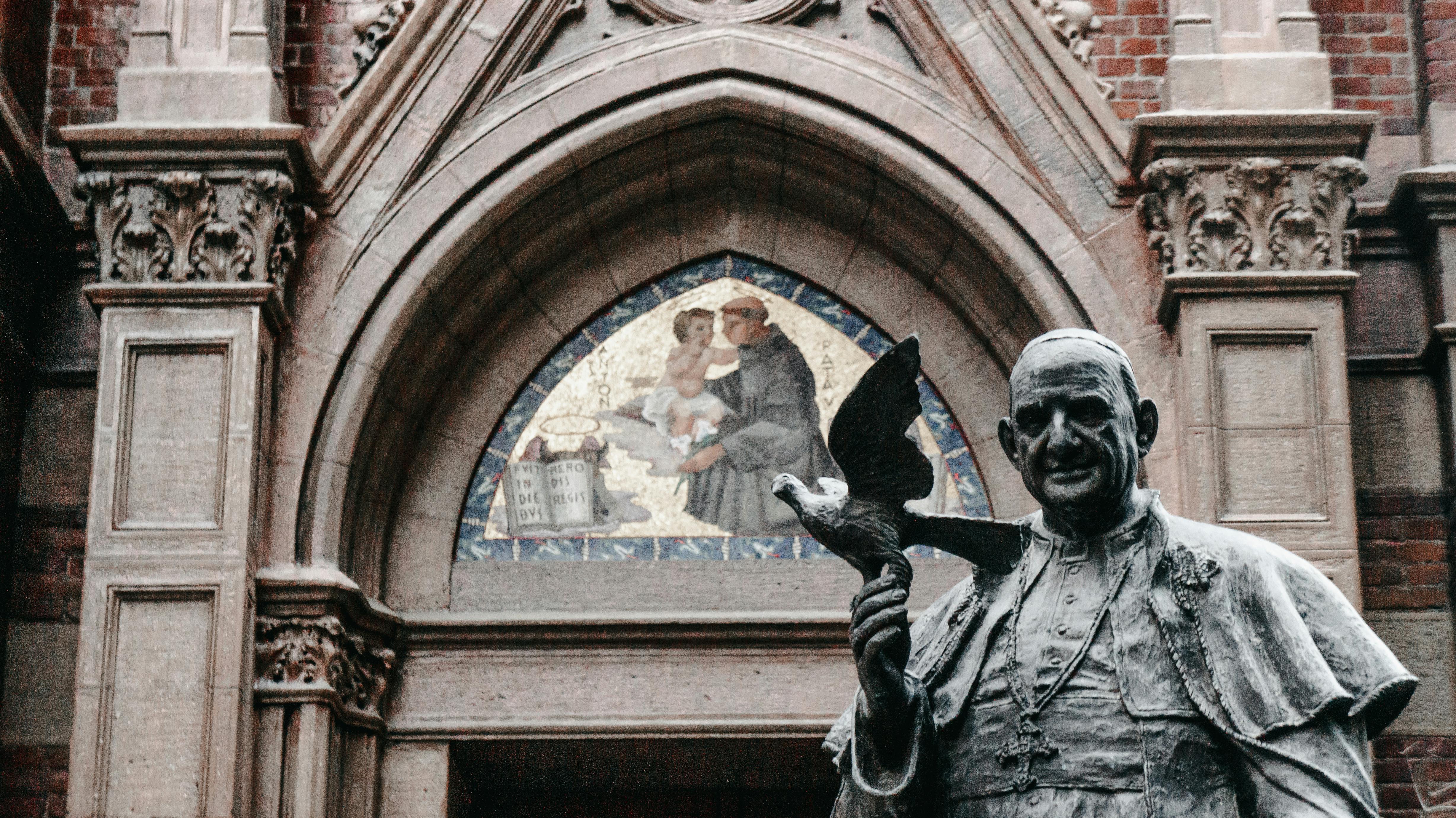
The AI part adds another layer. We are no longer arguing only about what a politician said or posted. We are arguing about whether the image itself is authentic, who made it, what it intended, and whether the public can still tell the difference between real conviction and machine-made theater. The truth is, most people barely look past the headline. They react to the feeling. That is why the story spread so fast.
Core Details and Context
Here’s the plain version.
- Trump defended the post instead of backing away from it.
- The post portrayed him in a Jesus-like way, which predictably triggered outrage.
- The dispute then widened into a Pope Leo argument tied to the Iran war.
- Trump refused to apologize, keeping the fight alive.
- Media coverage framed it as another example of his instinct to convert criticism into spectacle.
Most of the commentary you will hear is sloppy. People will say the post was either genius political theater or proof of total decay. Both are too simple. Public life is rarely that tidy. The better read is that this is a collision of three forces: outrage politics, AI image culture, and religious symbolism.
Trump’s defenders tend to treat the matter as a joke, which is convenient but not convincing. If a politician posts a Christ-like image of himself, the question is not merely whether somebody laughed. It is whether the move treats faith as a costume. That is where the Catholic instinct for human dignity matters. A person is not reduced to a meme, and neither is sacred imagery.
His critics, meanwhile, sometimes overplay the scandal as if one outrageous post proves a total theory of the man. It does not. It proves what has been obvious for years: Trump uses provocation as a political instrument. He does not stumble into attention; he manufactures it. That does not make every reaction wise. Some commentators act as if outrage itself is evidence, which is nonsense.
The Pope Leo refusal is important because it shows the old Trump habit of declining apology even when a softer line might calm the situation. He sees surrender in apology, not repair. That is politically effective with loyalists, and disastrous with anyone hoping for civility. Here’s the thing: a refusal to apologize can look like strength, but it can also look like vanity. Sometimes both are true.
For readers trying to sort fact from noise, it helps to separate three questions:
- Was the image real or AI-generated? Yes, the controversy centered on synthetic or AI-shaped content.
- Was the religious symbolism intentional? Almost certainly, because these things do not just happen by accident.
- Did the political fight become bigger than the image? Absolutely. The Iran war dispute and the Pope angle inflated it.
The coverage from major outlets such as Reuters, BBC News, and CNN showed the same general pattern: the facts were simple, but the meaning was disputed. That is what makes these stories so sticky. They are not really about one post. They are about what public life has become.
And yes, there is a moral angle here that goes beyond partisan cheering. In a decent society, leaders should know that not every joke is harmless and not every insult is clever. A bit of charity goes a long way. So does restraint. Those virtues are not fashionable, but they are still the difference between public debate and carnival barking.
Timeline and Step-by-Step
Let’s keep this clean, because the spin machines do not.
- The AI-style image surfaces. The image depicts Trump in a Jesus-like pose or styling, which instantly raises questions about intent and taste.
- Public reaction explodes. Supporters shrug it off as trolling or satire. Critics call it blasphemous, manipulative, or both.
- Trump defends the post. Instead of saying it was a mistake or that it had been misunderstood, he leans into the fight.
- The Pope Leo dispute enters the frame. The conflict broadens into a reaction over comments or implications tied to the Iran war.
- Trump refuses to apologize. That refusal becomes its own headline, because it signals he would rather endure controversy than concede error.
- Cable news and social platforms do the rest. The story becomes less about the image and more about identity, religion, and political dominance.
When I tracked the coverage, the sequence was obvious: first the image, then the moral outrage, then the political hardening. That order matters because it shows how media ecosystems work. Nobody starts with nuance anymore. They start with a flash, then pile on meaning like a bad editor piling adjectives onto a weak paragraph.
What actually happened, in practical terms, is less cinematic than the headlines. A provocative AI image was used or circulated. The former president defended it. A religious authority or religious-themed dispute linked to Iran raised the temperature. He did not apologize. End of story, except it is never the end, because modern media rewards the next twist.
Here’s the kicker: each stage fed the next. The image created the first burst. The refusal to apologize created persistence. The religious angle gave it moral weight. Without one of those pieces, the whole thing would have burned out faster.
Public figures often pretend they are above the game, but they are usually the game’s best technicians. They know outrage is currency. They know a clean apology can stop a cycle. They also know that, sometimes, refusing to apologize keeps supporters energized. That is why this particular episode deserves attention. It is not random noise. It is a method.

Comparison Table
| Factor | Trump’s AI/Pope Leo row | Typical celebrity controversy |
|---|
| Main trigger | AI religious imagery plus political dispute | Relationship drama, quotes, or misconduct rumors |
| Public response | Heavy polarization, faith-based outrage, political spin | Short-lived outrage, gossip churn |
| Media cycle | Political and religious outlets both cover it | Entertainment tabloids mostly cover it |
| Damage control | Refusal to apologize keeps story alive | Standard PR apology or silence |
| Stakes | Politics, religion, public trust, AI ethics | Reputation, endorsements, fan reaction |
| Biggest issue | Use of sacred imagery in a partisan fight | Personal behavior or private scandal |
The comparison is useful because it shows why this story stuck. Most celebrity nonsense burns because it is shallow. This one had layers. Politics. Faith. Technology. Vanity. That is a rough mix. It is also why it drew attention beyond the usual gossip crowd.
If you compare this with a standard entertainment blowup, the difference is obvious. A movie star feud is tabloid fuel. A political figure using Christ-like imagery and then refusing to apologize to a pope-shaped authority? That becomes a matter of public morals, media ethics, and civic taste.
And no, that does not mean every critic is noble or every defender is evil. Humans are messier than that. Catholic moral thinking gets this right: people can be gifted and foolish at the same time, capable of public success and private vanity. The point is not to flatten anyone into a cartoon. The point is to judge the act clearly without pretending the person is beyond mercy or beyond fault.
Common Misconceptions and What to Know
The first misconception is that this was “just a meme.” It wasn’t. Memes can carry real meaning, especially when they borrow sacred imagery. If a post intentionally evokes Jesus, then the symbol is the message. Pretending otherwise is a dodge.
The second misconception is that outrage automatically proves bad faith on the part of the critics. Not necessarily. Some outrage is performative, sure. A lot of it is. But a lot of it is also ordinary people reacting to what they see as irreverence. That reaction is not insane. It is human.
The third misconception is that refusing to apologize is always a sign of strength. Sometimes it is. Often it is just stubbornness with better lighting. Public figures like to frame obstinacy as principle. That’s convenient. It also gets old.
The fourth misconception is that AI makes this less serious because “nobody was harmed.” That is too casual. AI content can mislead, distort, and inflame. It can also cheapen serious symbols by making them endlessly reusable for whatever side wants attention that week. Once the machine starts pumping out pious-looking propaganda, authenticity gets thinner by the day.
The fifth misconception is that the Pope angle is merely ornamental. It is not. Even for non-Catholics, the papacy stands as a visible moral office, and when a political figure gets tangled with that office over a war dispute, the story leaves pure gossip territory. It becomes about authority, conscience, and public responsibility.
Here’s what nobody tells you: these stories work because they exploit our worst instincts. We want villains. We want saints. We want a clean line between the two. Real life rarely offers that. It offers mixed motives, silly choices, and consequences that spread farther than intended.
If you are trying to follow the issue without getting played, keep your head down and ask simple questions. Who made the image? What was the stated purpose? Who responded first? Did the political message change after the backlash? Those questions cut through a lot of fog.
For readers who want broader context, our coverage on Trump political controversies, AI deepfakes and public deception, and Vatican and papal news helps connect the dots. Different stories, same problem: public trust gets strained when leaders treat symbols like toys.
Frequently Asked Questions
Was the Jesus-like AI post confirmed to be real?
The controversy centered on an AI-generated or AI-shaped image, and coverage treated it as authentic to the dispute, even if the image itself was synthetic. That distinction matters, but only a little. The public reaction was to the symbolism, not the file format.
Why did Pope Leo become part of the argument?
Because the dispute expanded beyond the post and into comments or implications tied to the Iran war. Once a papal figure or papal authority enters the conversation, the moral temperature rises fast. People notice when a political fight brushes against religious authority.
Why didn’t Trump apologize?
Because apology is not his default setting. He tends to treat apology as weakness and defiance as leverage. That may satisfy loyal supporters, but it also keeps the story alive longer than necessary. Frankly, that is the price of his style.
Does this matter beyond politics?
Yes. It matters because AI, religion, and public speech are colliding more often now. The story is bigger than one man’s post. It is about what happens when digital images, moral symbols, and political ego all hit the same wall.
Final Thought
This whole mess says less about one post than it does about the age we are in. The machinery of attention now rewards shock, and the people who understand that machinery can bend it toward almost anything—faith, war, identity, vanity, even mock holiness. That should make decent people uneasy.
I do not think the answer is sanctimony, because sanctimony is just pride wearing a collar. But I do think there is still such a thing as reverence, and it matters. Public figures are not gods, no matter how often their teams dress them up that way. They are flawed people, like the rest of us, and the public square works better when that fact is remembered before the post goes live.
If there is a lesson here, it is simple enough. Sacred things should not be treated lightly. Political leaders should not confuse stubbornness with courage. And the rest of us should be a bit slower to clap for outrage, because outrage is cheap and truth is not.