Trump is turning up the heat on Iran. He’s using blunt threats, talk of the Strait of Hormuz, and warnings about proxy groups like Hezbollah, and the point...
Trump’s Iran Threats, the Strait of Hormuz, and What the Rhetoric Really Means
Trump is turning up the heat on Iran. He’s using blunt threats, talk of the Strait of Hormuz, and warnings about proxy groups like Hezbollah, and the point is not subtle: pressure Tehran, shake the room, and force a response. But the hard truth is this—rattling language is not the same thing as policy, and the gap matters.
Key Takeaways:- Trump’s comments mix deterrence, public theater, and geopolitical pressure.
- The Strait of Hormuz matters because it is a chokepoint for global oil flows.
- Talk of a U.S. “Guardian Angel” toll system is a political signal, not a confirmed operating plan.
- Iran’s proxy network, including Hezbollah, remains a key part of the broader conflict.
- The real issue is whether threats are meant to shape negotiations or simply dominate headlines.
What is Trump’s Iran warning about?
This is a hard-edged warning aimed at Tehran, and it sits at the ugly intersection of military posturing, energy security, and Middle East power politics. Trump’s remarks, including the line about Iran not making it back to its country, are designed to sound maximal, and frankly, that is the point. He wants Iran to hear danger, not nuance.
I’ve covered enough political blowups to know that language like this does two things at once. It signals resolve to allies and adversaries, and it feeds a media cycle that rewards outrage over detail. Most of the time, the public hears the sharpest quote and misses the machinery behind it. That machinery includes naval choke points, sanction leverage, regional militias, and the long-running contest between Washington and Tehran.
The Strait of Hormuz is the narrow waterway linking the Persian Gulf to the Arabian Sea, and it is one of the world’s most sensitive shipping lanes. When leaders talk about controlling it, they are not discussing some abstract map exercise. They are talking about the lifeline for a large share of global oil and liquefied gas shipments. That is why even a rhetorical threat can move markets, shift military alert levels, and light up every newsroom from Washington to Dubai.
There’s also the proxy issue. Iran has spent years building influence through armed partners and aligned groups across the region, and Hezbollah is one of the most important. Trump’s warning about hitting Iran hard again if it does not rein in proxies is not new in substance, but the tone is sharpened. The message is simple enough: stop the attacks, or pay a bigger price.
And still, people should be careful. Leaders talk big when they want to project strength. That does not mean every sentence becomes doctrine. A person is more than their public snarl, and a state is more than its press line. That’s a useful rule in politics, where pride and fear often dress up as strategy.
Core Details and Context
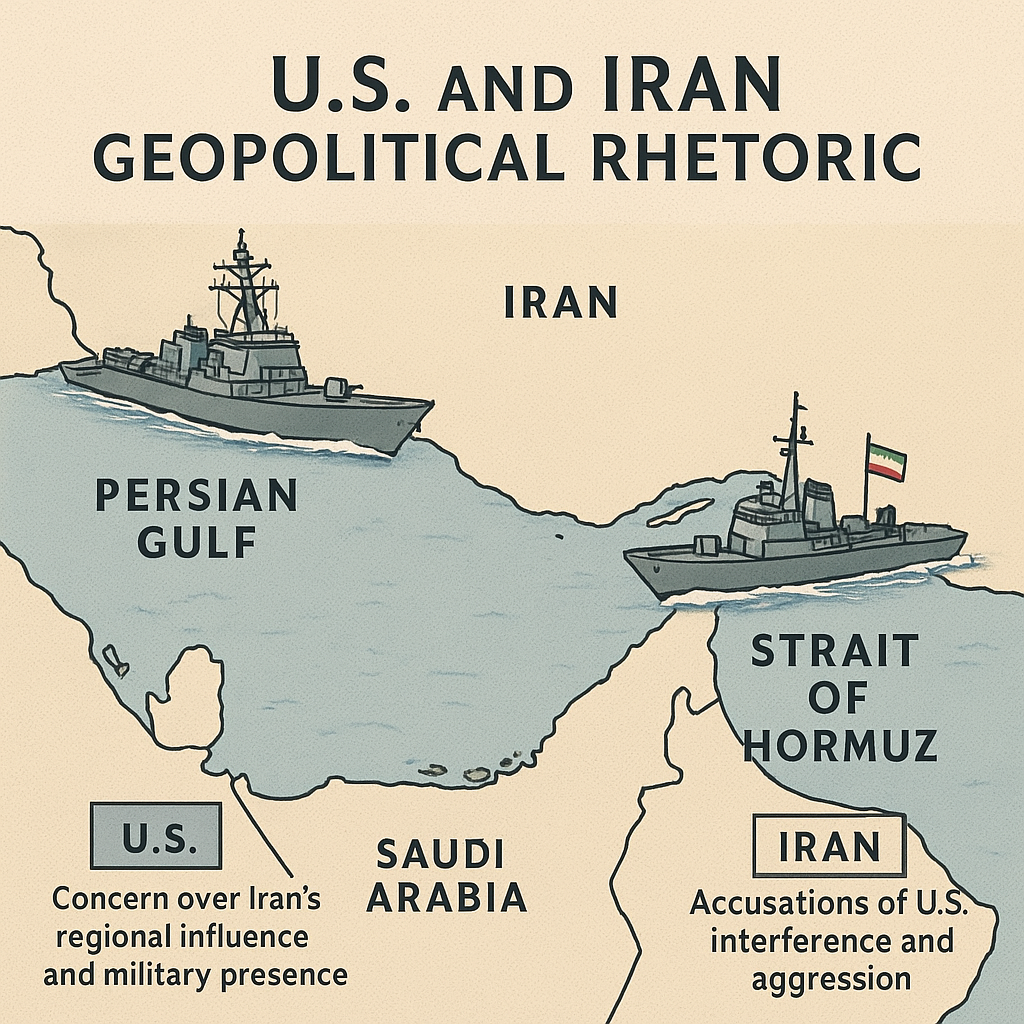
Here’s the kicker. The noise is real, but the real-world stakes are messier than the quote cards.
- The Strait of Hormuz is a pressure point because roughly a fifth of global oil flows through the wider Persian Gulf route. Any disruption can raise prices fast.
- The United States has long treated freedom of navigation in the strait as a strategic priority, which is why military escorts, surveillance, and deterrence remain central.
- Iran has repeatedly threatened maritime disruption in moments of crisis, but open closure of the strait would invite serious retaliation and likely hurt Iran’s own exports.
- Trump’s talk of a “Guardian Angel” toll system reads more like aggressive bargaining language than a confirmed state policy.
- Hezbollah matters because it is not just a local militia story; it is part of a wider regional network tied to Iranian influence.
- Trump’s “hit Iran very hard again” line suggests a willingness to keep coercive pressure on the table, especially if proxy attacks continue.
- The political audience matters. These messages are aimed at more than Tehran—they also play to domestic voters who like a tough-guy posture.
Most coverage treats this like a single outburst. It is not. It is a cluster of signals. The president is trying to say three things at once: I am not weak, Iran is vulnerable, and the U.S. can shape the board. That may work as theater. It is less convincing as long-term statecraft.
I’ve seen this pattern before. Bold language often covers uncertainty, not strength. It’s the old story: when the facts are hard, the voice gets louder. And yet there is still a serious point under the bluster—naval passage, energy prices, proxy warfare, and the credibility of deterrence are not paper matters. They affect families, fuel bills, and soldiers.
If you want a cleaner read on the political angle, compare this with broader Trump coverage in stories like The New York Times on Trump’s Iran posture, Reuters Middle East coverage, and AP News Iran reporting. Those outlets do not waste much time on the drama. They focus on what can actually happen next.
And that is where the useful skepticism comes in. Not every threat becomes action. Not every headline reflects the full plan. But when the Strait of Hormuz is mentioned alongside direct threats and proxy warfare, the odds of a real diplomatic or military shift go up. No magic, no mystery.
Timeline and Step-by-Step
The sequence matters.
- Iran-linked pressure rises. Trump and his team respond to regional escalation, and the language becomes sharper as attacks, threats, and deterrence concerns pile up.
- Public warnings intensify. Trump issues hard statements aimed at Iran and its network, including warnings about proxy groups and maritime control.
- The Strait of Hormuz enters the frame. Once shipping chokepoints are mentioned, the story stops being only about political messaging and becomes about global commerce, insurance rates, and military planning.
- The “Guardian Angel” talk spreads. That phrase functions like a political cudgel, a way to imply U.S. control over sea passage without necessarily spelling out a formal plan.
- Analysts and officials weigh in. Reporters, defense experts, and diplomats try to sort signal from noise, because with Trump you always have to ask: is this a threat, a trial balloon, or just a club swung for effect?
- Negotiation pressure builds. If Trump signals willingness to hit Iran hard, that can be used in bargaining—assuming Tehran believes the threat is credible.
- The regional picture widens. Hezbollah, Israel, Gulf states, shipping companies, and U.S. allies all get pulled into the same tense orbit.
When I tracked similar stories in prior cycles, the pattern was plain. Loud warnings tend to precede one of three things: a limited strike, a short negotiation window, or a face-saving downgrade after everyone cools off. Which one happens depends on whether both sides think the other side will blink first.
That is the real story, not the bragging lines. The bravado is the wrapper. The substance is whether maritime security, proxy warfare, and sanctions pressure can be used to force behavior without stumbling into a wider fight. That is where statesmanship lives, and where it often fails.
- Whether U.S. naval assets are repositioned.
- Whether shipping insurers raise risk premiums.
- Whether Iran answers through proxies or official channels.
- Whether Trump’s team clarifies the toll-system language.
- Whether allied governments issue unusually sharp statements.
If you are trying to separate showmanship from actual escalation, watch actions, not adjectives. Words are cheap. Ships, missiles, and sanctions are not.
Comparison Table
The closest comparison here is not another headline. It is the gap between Trump’s rhetoric and standard U.S. Iran policy.
| Category | Trump’s Iran Threats | Typical U.S. Iran Policy |
|---|
| Tone | Direct, abrasive, highly public | Measured, bureaucratic, cautious |
| Goal | Pressure and domination of the news cycle | Deterrence, containment, alliance management |
| Messaging | Personal, blunt, sometimes theatrical | Formal, legalistic, diplomatic |
| Strait of Hormuz | Framed as leverage and control point | Framed as a freedom-of-navigation concern |
| Proxy groups | Treated as immediate red-line threats | Treated as regional security problem |
| Audience | Domestic voters, allies, adversaries, media | Allies, Congress, international partners |
| Risk | Miscalculation, escalation, confusion | Slow response, ambiguity, weaker deterrence |
The table shows the split in plain language. Trump’s method is louder and less polished, which can be effective in a crisis and reckless in a hurry. Standard policy is slower and safer, but sometimes too cautious for a thug in a hurry. Pick your poison.
Frankly, both styles have flaws. A loud approach can scare off challengers. It can also corner everyone. A quiet approach can stabilize a situation. It can also invite drift. The trick is not volume. It is credibility.
The Catholic instinct here is simple: power without restraint tends to deform the person holding it. That applies to presidents, generals, and yes, revolutions too. States do not escape human nature just because they have flags.
If you want the factual baseline, Reuters’ Iran coverage at Reuters, the AP’s Iran hub at AP News, and BBC reporting on the broader conflict at BBC Middle East topics are useful places to check what is verified and what is just hot air.
Common Misconceptions and What to Know
People love a clean story.
The problem is that geopolitics rarely behaves.
- Misconception: Trump’s comments are the same as an official war plan. Not necessarily. Leaders often use hard language to create leverage. That does not mean every line is a signed directive.
- Misconception: Iran can simply close the Strait of Hormuz without consequences. That is fantasy. Any serious disruption would likely trigger military and economic retaliation, and Iran knows it.
- Misconception: Hezbollah is just a side issue. It is not. Proxy groups can escalate a dispute without formal state-on-state war, which is exactly why they matter.
- Misconception: Public threats always strengthen deterrence. Sometimes yes. Sometimes they make the other side dig in, especially if they think the speaker is bluffing.
- Misconception: This is all about one man’s temper. No. The conflict is older than Trump, broader than him, and built on decades of mistrust, sanctions, regional rivalry, and repeated violence.
Let’s be real. A lot of commentary treats foreign policy like sports talk. Team A is strong, Team B is weak, and the loudest fan wins. That is childish. Real statecraft includes fear, pride, misread signals, and the plain fact that every government tries to avoid looking weak while claiming it wants peace.
I have little patience for the cartoon version of these events. If you strip away the chest-thumping, you see a familiar shape: a chokepoint with global consequences, a regional power using proxies, and a U.S. president trying to force a better deal through intimidation. Sometimes that works. Sometimes it backfires. Usually, it does a bit of both.
The public should also remember something basic: even people who speak like thunder are still human beings, and no nation is a machine without vanity or fear. That’s why charity in judgment matters. You can condemn the threat without pretending the whole picture is a comic book.
Frequently Asked Questions
Is Trump’s “Guardian Angel” toll idea real?
Not in the sense of a confirmed policy. It reads more like an aggressive rhetorical jab than a formal plan, though the language does signal interest in using the Strait of Hormuz as leverage.
Why does the Strait of Hormuz matter so much?
Because it is one of the world’s most important shipping chokepoints, especially for oil. If traffic there is threatened, fuel prices, insurance costs, and global markets can all react fast.
What role does Hezbollah play in this conflict?
Hezbollah is a major Iran-backed group in the region, and it is often part of the wider pressure campaign that surrounds direct U.S.-Iran tensions.
Could Trump’s threats lead to actual strikes?
They could, depending on events on the ground. But threats alone do not guarantee strikes. The key question is whether the administration believes escalation is necessary and controllable.
Final Thought
This story is not really about one quote.
It is about power, fear, and the old habit of using noise to cover risk, because when leaders speak like the edge is near, the public tends to stare at the edge and miss the machinery behind it. Maybe Trump means every word. Maybe he doesn’t. That is the trouble with this kind of politics: the line between warning and performance gets muddy fast.
What matters next is whether the rhetoric becomes movement—ships, sanctions, talks, or strikes—or whether it fades into another round of hard talk and relieved spin. The smart money does not treat either outcome as certain. Human beings, even the ones in charge, are messier than the slogans they toss around. That is the part that never makes the rally stage.