Russell Brand has been convicted at London’s Southwark Crown Court of one count of rape and three counts of sexual assault after pleading not guilty. The...
Russell Brand Convicted: What the Rape and Sexual Assault Verdict Means
Russell Brand has been convicted at London’s Southwark Crown Court of one count of rape and three counts of sexual assault after pleading not guilty. The judge said a significant custodial sentence was inevitable and remanded Brand into custody, with sentencing scheduled for Monday, Nov. 9.
Key Takeaways- Brand was convicted of four offenses: one rape count and three sexual assault counts.
- He had faced seven charges in total and pleaded not guilty.
- Six accusers testified during a trial lasting just over three weeks.
- The judge remanded him into custody; the final sentence is still pending.
The verdict settles a specific criminal case, not every argument about Brand’s public image, earlier career, or the wider allegations reported about him. That distinction matters: a court’s findings should be reported plainly, while claims beyond those findings still need careful attribution. The judge’s warning about a significant custodial term is serious, but it is not the sentence itself. As of the verdict reports, sentencing is due on Nov. 9.
This case has drawn attention because it joins two kinds of scrutiny that are often muddled together: investigative journalism that first brought allegations into public view, and a criminal trial that tested specific charges in court. They are related, but they are not interchangeable. Frankly, headlines often flatten that difference. The record deserves better.
What Is the Russell Brand Case?
The Russell Brand case is a criminal prosecution arising from allegations of sexual offenses reported by several women. Brand, an actor and comedian, faced three counts of rape, three counts of sexual assault, and one count of attempted indecent assault. He pleaded not guilty. After a trial at Southwark Crown Court, he was found guilty of one rape count and three sexual assault counts, according to reports by the BBC, Sky News, and The Times.
That is the clearest answer to what happened. Four convictions were recorded in the reports; the case involved seven charges. The reports summarized here do not set out the verdict disposition for every remaining charge, so it would be careless to fill in those details by inference. The central, confirmed result is the four convictions, followed by the judge’s decision to remand Brand into custody before sentencing.
The alleged offenses covered a period between 1999 and 2009. One complainant’s allegation concerned an incident in a hotel room in 1999, CBS News reported; Brand denied that allegation while testifying. Other allegations were also heard in court. Six accusers gave testimony during the trial, and Brand took the stand as well, according to The New York Times.
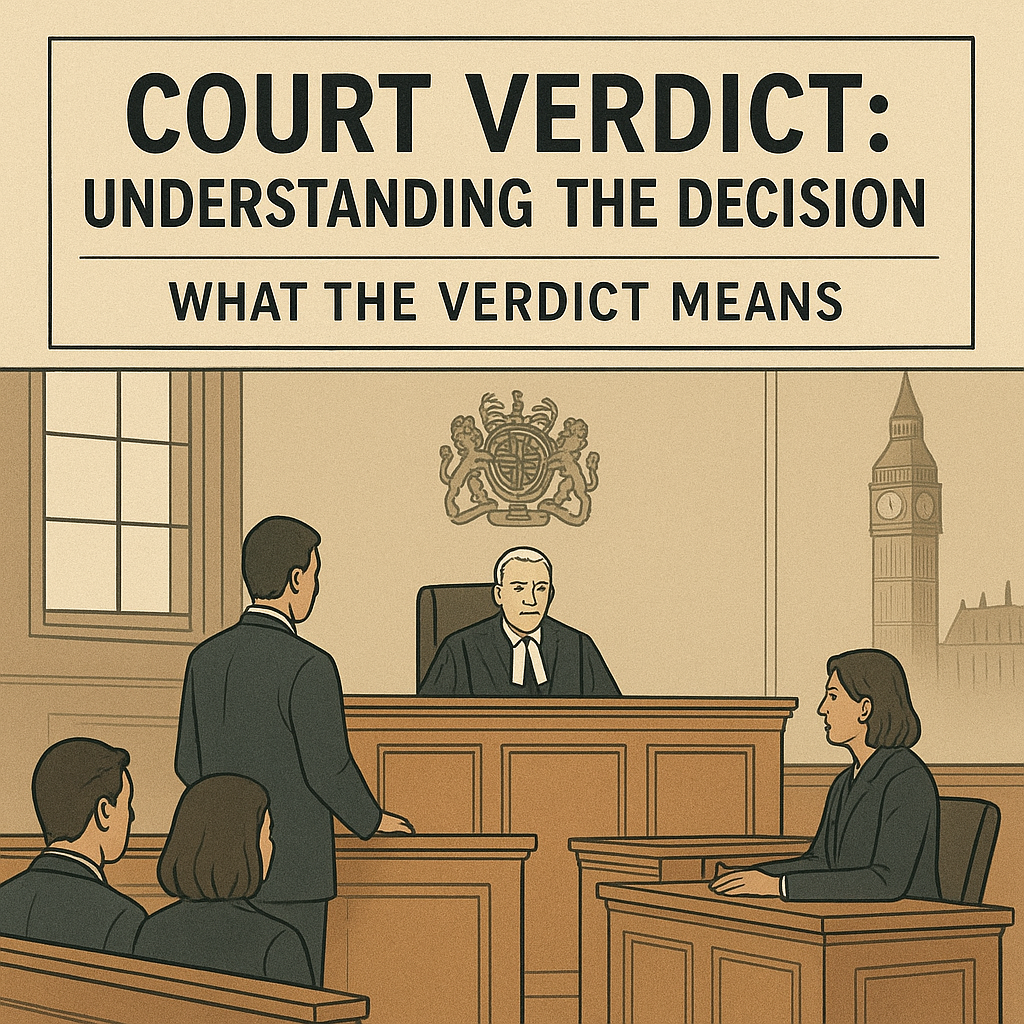
The case did not begin in the courtroom. Initial allegations were reported in 2023 in a joint investigation by The Sunday Times, The Times, and the Channel 4 current-affairs program Dispatches. The Metropolitan Police began investigating after that reporting. Journalism can draw attention to alleged conduct and prompt public scrutiny; it does not itself determine guilt. That decision belongs to the criminal process, which has now produced convictions on four counts.
When I separate the stages, the outline is straightforward: allegations were reported, police investigated, prosecutors brought charges, and a trial tested the charges. The public argument around Brand may be loud, but the verdict is narrower and more useful than the noise. It identifies what the court found, and it does not license embellishment about what the court did not find.
Core Details and Context
Several details anchor the story. They also help prevent the usual rush from a court result to sweeping claims about every aspect of a public figure’s life.
- The charges: Brand faced three rape counts, three sexual assault counts, and one attempted indecent assault count. He pleaded not guilty.
- The convictions: He was found guilty of one rape count and three sexual assault counts. The judge said the offenses meant he should expect a significant custodial term.
- The trial: Proceedings lasted a little over three weeks and included testimony from six accusers and Brand himself, The New York Times reported.
- The next court step: Brand was remanded into custody after the verdict. Sentencing is scheduled for Monday, Nov. 9, according to a Metropolitan Police news release.
A verdict is a finding on the charges tried, not a general referendum on a celebrity’s entire life. That can sound obvious, yet coverage often swings between two unhelpful extremes: treating a famous person’s denials as if they settle a case, or treating every allegation ever made as if it has already been adjudicated. Neither is responsible. The court result should be stated firmly; allegations and testimony should be described with care and attribution.
Brand testified that he had never had non-consensual sex and said he believed consent was ‘fundamental, essential, necessary, and in many ways, more important than sex itself,’ according to The New York Times. That reported statement belongs in the account because he gave evidence and denied wrongdoing. It does not cancel the verdict. Likewise, the verdict should not be used to claim that every account discussed in public was separately proven in court.
The judge’s statement is especially important to describe accurately. Mr Justice Bennathan told Brand that the consequence of his convictions would ‘inevitably’ be a significant custodial term and said his current view was that Brand had to be remanded into custody, the BBC reported. That is a forecast about the likely sentence and a custody decision pending sentencing. It is not a final term of imprisonment. No exact sentence is given in the reports summarized here.
The wider public image question is real, but it should not swallow the legal detail. Brand’s fame and prior media profile explain why the case attracted broad coverage; they do not change the standard of reporting. A person is more than a public image, and recognizing that dignity does not weaken accountability. It asks readers to judge proven conduct without turning a human being, or the people who testified, into props for a celebrity spectacle.
Timeline: From Reporting to Sentencing
- 2023: Allegations enter public reporting. The Sunday Times, The Times, and Dispatches published a joint investigation describing allegations against Brand. The reporting prompted widespread attention and was followed by a police investigation. The investigation was a journalistic account, not a court verdict.
- Police investigate. The Metropolitan Police began investigating after the 2023 reports. The information summarized here does not state every investigative milestone or the dates on which each charge was authorized, so those details should not be guessed. What is reported is the broad sequence: media investigation first, police inquiry afterward.
- The criminal trial begins on Oct. 12. The trial at Southwark Crown Court lasted just over three weeks. Six accusers testified, and Brand also gave evidence, The New York Times reported. The testimony concerned allegations spanning 1999 to 2009, though the exact evidence and count-by-count findings should be drawn from court reporting rather than social-media summaries.
- Brand denies non-consensual sex. While testifying, he said he had never had non-consensual sex and described consent as essential. CBS News reported that he denied a complainant’s allegation about an incident in a hotel room in 1999. His testimony is part of the record; it is not the outcome of the case.
- The court returns guilty findings. Brand was convicted of one rape count and three sexual assault counts after pleading not guilty. Reports also list the original seven charges. Where a report does not specify the disposition of every other count, the responsible approach is to avoid supplying an answer from guesswork.
- The judge remands Brand. After the verdict, Mr Justice Bennathan said a significant custodial term was inevitable and ordered Brand remanded into custody. The step means he is held pending the next stage; it does not mean the final sentence has already been pronounced.
- Sentencing is scheduled for Nov. 9. The Metropolitan Police news release gives that date. Until the court imposes a sentence, the length and precise terms of any custodial punishment remain unknown. Here’s the kicker: a dramatic courtroom quote can sound like the final decision, but the sentencing hearing is still a separate stage.
When I lay out the chronology, the part most often blurred is the gap between the judge’s warning and the sentence. A likely custodial term is serious news; an actual sentence is a separate legal decision. Keep those two facts apart.
Comparison: Court Verdict vs. Investigative Reporting
This case has no sensible ‘biggest competitor’ in the ordinary product-comparison sense. The useful comparison is between the 2023 investigative reporting and the later criminal trial: two connected stages, with different roles and different standards.
| Point of comparison | 2023 investigative reporting | Criminal trial and verdict |
|---|
| Main role | Brought allegations by several women into public view | Considered specific criminal charges in court |
| Key institutions | The Sunday Times, The Times, and Dispatches | Southwark Crown Court and the prosecution process |
| Result described here | Police began investigating after the reports | One rape conviction and three sexual assault convictions |
| Evidence mentioned | Accounts gathered and published by journalists | Testimony from six accusers and Brand, according to The New York Times |
| What it can establish | What journalists reported and how the story reached the public | The court’s findings on the charges it decided |
| What it cannot replace | A criminal verdict | Reporting about the story’s origin and public context |
The distinction is not a contest over which institution is more important. Reporting can uncover information and bring it to public attention; a criminal court evaluates charges under legal procedures. The 2023 investigation helps explain why police scrutiny followed. The trial and verdict supply the court outcome. Readers need both pieces of context, but they should not confuse their jobs.
There is another difference worth keeping in view. A media investigation may discuss a broader range of accounts and behavior than the specific counts that reach trial. A prosecution, by contrast, is limited to the charges brought and evidence presented in that proceeding. So ‘reported,’ ‘alleged,’ ‘charged,’ and ‘convicted’ are not interchangeable labels. They mark different stages, and replacing one with another can mislead readers or unfairly smear the people involved.
The case also shows why celebrity coverage needs sturdy attribution. The BBC reported the judge’s comments; Sky News and The Times reported the guilty findings; The New York Times described the length of the trial and testimony; CBS News reported a specific denial from the stand. Those source roles make it easier to check which claim comes from which account. A headline may compress the story, but the body should not.
For search readers, the practical takeaway is simple: use the conviction counts as the answer to what the court found, and use the 2023 investigation to understand how allegations first entered public reporting. Neither stage should be inflated to cover facts that have not been reported. That is less sensational than a sweeping claim. It is also more accurate.
Common Misconceptions and What to Know
Misconception: Brand has already received his final sentence. He has not, based on the reporting summarized here. The judge warned that a significant custodial term was inevitable and remanded him into custody; the Metropolitan Police release says sentencing is scheduled for Nov. 9. A warning about the likely outcome is not the formal sentence. The difference is not a technicality—it is the current status of the case.
Misconception: He was convicted of all seven charges. The reported convictions are one rape count and three sexual assault counts. The original charges included seven counts in total, but that does not mean all seven resulted in convictions. The reports summarized here do not specify the disposition of the remaining charges, so a careful article should not fill the gap with an assumption.
Misconception: The 2023 investigation itself proved criminal guilt. It did not. The joint investigation by The Sunday Times, The Times, and Dispatches brought allegations into public view and was followed by a police inquiry. The later court proceeding produced the reported convictions. Different stages, different functions. Let’s be real: a good story gets weaker, not stronger, when it blurs that line.
Misconception: Brand’s denial means the court did not convict him. Brand denied non-consensual sex while testifying, and his reported words about consent are part of the trial account. The court nevertheless convicted him of four offenses. A defendant’s denial is important context, but it is not a substitute for the verdict.
Misconception: The convictions prove every public allegation about Brand. The verdict establishes the findings on the counts decided in this case. It should not be stretched to claim that every allegation made in public was individually tested or proven at trial. Nor should the fact that a particular allegation is not detailed in a short news report be treated as proof that it was false. The right answer is to stick to what the reporting and court outcome actually say.
Misconception: Fame makes the case mainly a public-relations story. Brand’s celebrity status affects how widely the case is discussed, not what a court verdict means. His career, public image, and past statements may be relevant context, but the trial concerns criminal charges. Most celebrity news invites people to choose a side first and read later. This case calls for the reverse: get the legal facts straight, then assess the wider story with restraint.
The people at the center are not just headlines. The accusers who testified should not be reduced to anonymous plot devices, and Brand should not be described beyond what the record supports. Charity in judgment does not mean pretending that a conviction is minor; accountability does not require contempt. Both can be true at once.
Frequently Asked Questions
What was Russell Brand convicted of?
Brand was convicted of one count of rape and three counts of sexual assault at Southwark Crown Court after pleading not guilty. He had faced three rape counts, three sexual assault counts, and one attempted indecent assault count. The conviction total reported is four. The available reports summarized here do not set out the disposition of every other charge, so those outcomes should not be guessed.
Has Russell Brand been sentenced?
Not in the reports summarized here. The judge said Brand should expect a significant custodial term and remanded him into custody after the verdict. The Metropolitan Police news release says sentencing is scheduled for Monday, Nov. 9. Until that hearing takes place and the court announces its decision, the exact sentence remains unknown.
How long did the trial last, and who testified?
The trial lasted just over three weeks. The New York Times reported that six accusers testified, and Brand also took the stand. His testimony included a denial that he had ever had non-consensual sex and a statement that consent was essential. The length of trial and the witness count do not, by themselves, explain every count; those details need to be read alongside the verdict.
When did the allegations first receive major media coverage?
Initial allegations were reported in 2023 in a joint investigation by The Sunday Times, The Times, and Channel 4’s current-affairs program Dispatches. The Metropolitan Police began investigating after the report. The later criminal trial was a separate process, and it is the trial’s verdict—not the publication of the investigation—that produced the convictions reported here.
Final Thought
The headline is stark: Russell Brand has been convicted of rape and sexual assault. The accurate version is more specific: the court found him guilty of one rape count and three sexual assault counts, the judge ordered him remanded into custody, and sentencing is scheduled for Nov. 9. Those details are not padding around the story. They are the story’s legal boundaries.
A celebrity’s public image can invite endless argument, but a criminal verdict is not a poll about charm, politics, fame, or past performance. It is a court outcome tied to particular charges. The allegations reported in 2023 explain how the case first reached public attention; the trial explains what was tested in court. Brand’s denial belongs in the record, as do the convictions. Neither fact erases the other.
I find the most responsible reading is also the least theatrical: name the offenses, report the judge’s words accurately, explain that the sentence is pending, and do not speculate about facts that have not been reported. That approach recognizes both the seriousness of the verdict and the dignity of everyone involved. Human beings are more complicated than a public image, but responsibility still matters. So does precision. The next firm answer will come from the sentencing court, not from a guess dressed up as certainty.