Prince Harry’s latest legal bill chatter says a lot about fame, money, and the myth that celebrities are always flush with cash. Apple Martin stepping into a...
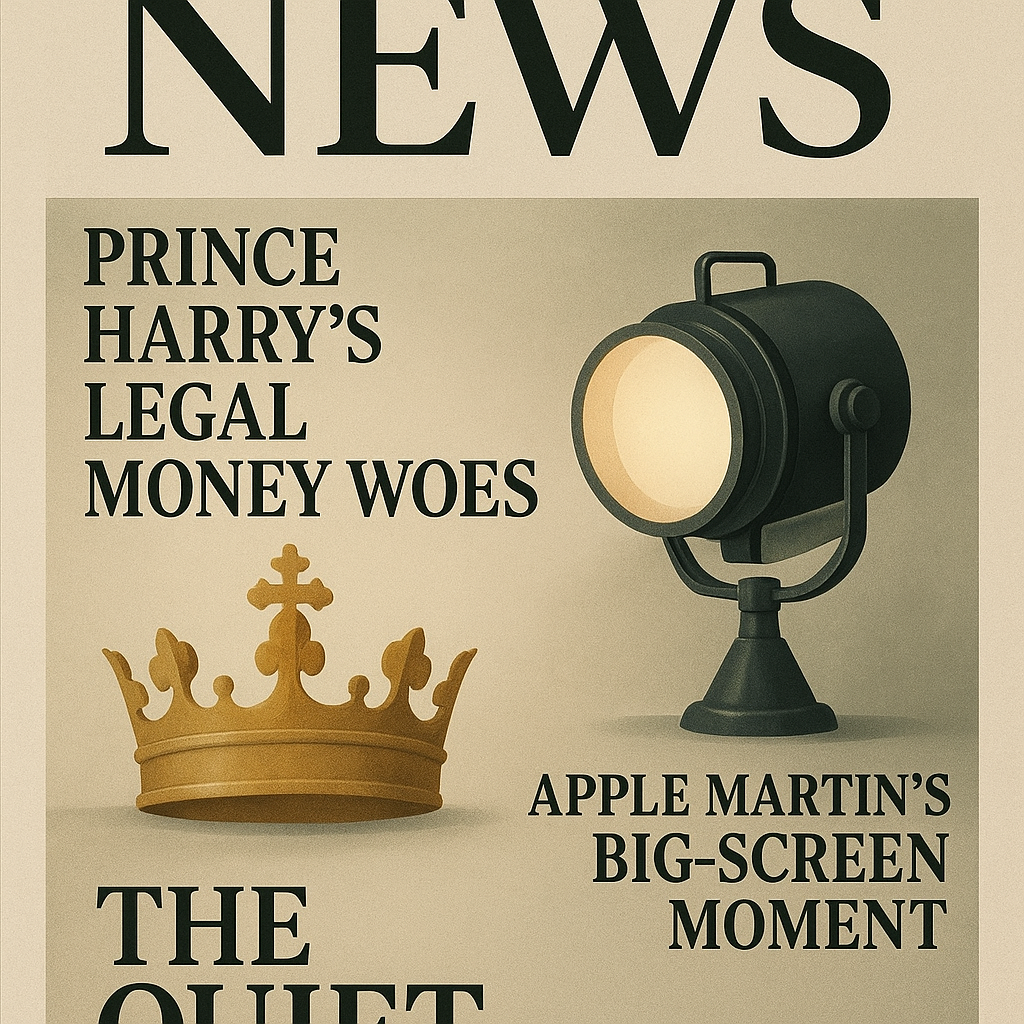
Prince Harry’s Legal Money Woes, Apple Martin’s Big-Screen Moment, and the Quiet Legacy of Randolph Mantooth
Prince Harry’s latest legal bill chatter says a lot about fame, money, and the myth that celebrities are always flush with cash. Apple Martin stepping into a big movie role shows how public curiosity follows famous families like a bloodhound. And Randolph Mantooth’s death at 80 reminds everyone that behind the headlines, real people and real work matter more than the noise.
Key Takeaways- Prince Harry is facing renewed questions about legal costs and who, if anyone, might help cover them.
- Apple Martin is drawing attention because she resembles Gwyneth Paltrow and is now taking a serious step into acting.
- Randolph Mantooth, the face of Emergency!, leaves behind a major TV legacy that shaped how the public saw paramedics.
- Celebrity stories are rarely just gossip; they often reveal money pressure, family expectations, and the gap between image and reality.
- When people get treated like brands instead of human beings, the story gets sloppy fast.
What is this celebrity-news story really about?
This is not one story. It is three, tied together by the same blunt truth: fame does not make anyone simple. Prince Harry’s reported legal-money headache, Apple Martin’s first major acting turn, and Randolph Mantooth’s death each show a different corner of the entertainment machine, where public image, family legacy, career choices, and mortality all collide.
I’ve covered celebrity churn long enough to know the trick. Most of it is spin, selective leaks, and people trying to control the frame before anyone asks a hard question. Frankly, that is why these stories travel. They look juicy, but they also tap into something older: who gets protected, who pays, who inherits attention, and who gets remembered once the cameras stop.
The Prince Harry angle is especially sticky because legal fights cost real money, even when your name is on every tabloid front page. There is a persistent narrative that royals and ex-royals float above ordinary constraints. Not quite. Lawsuits, security disputes, and legal representation can burn through cash fast. Reports that The Times and other outlets have tracked about his expenses make the point plain: fame may open doors, but it does not always pick up the bill.
Then there is Apple Martin. People are fascinated because she looks like her mother, Gwyneth Paltrow, and because celebrity children always get treated like sequel characters before they have even spoken a line. That is lazy. If she is filming a major role, the real question is not whether she resembles her mother. It is whether she can act. Big difference.
And Randolph Mantooth? A different kind of celebrity story. Less perfume, more plain American television history. His work on Emergency! helped introduce paramedics to millions of viewers, and that matters. Quietly, that show changed how people thought about emergency medicine. That is a legacy worth more than half the manufactured hype in the business.
In other words, this topic is really about celebrity culture, public image, inheritance, and the cost of being watched. Nobody gets to be only one thing. Not royalty. Not nepo babies. Not old TV stars. Human beings are messier than the headlines admit, which is why charity in judgment matters, even in tabloid writing.
Core details and context
Here’s the core of it, stripped of the garnish.
- Prince Harry’s legal fees: The claim that he “doesn’t have the money” is the kind of line tabloids love because it sounds shocking and personal. But the real issue is more mundane. Legal disputes can become expensive fast, especially when they involve top-tier counsel, appeals, and prolonged proceedings. If sources say a benefactor or celebrity ally might step in, that suggests the bill is large enough to make even famous people wince.
- The rescue narrative: This is where celebrity reporting gets theatrical. Someone “might come to his rescue” sounds like a fairy tale, but it often means informal support, not a bag of cash tied with ribbon. The money trail in these stories is usually fuzzier than the headlines admit.
- Apple Martin’s acting debut: Her move into a major film role has predictable baggage. She is not just a young performer; she is the daughter of Gwyneth Paltrow and Chris Martin, which means every step gets read as either nepotism or destiny. That is nonsense, of course. Talent has to show up on camera. Genetics may open the door, but they do not deliver the line readings.
- Visual resemblance as media bait: Reporters keep pointing out that Apple looks like her mother because resemblance is easy copy. It is also shallow. Public obsession with looks says more about the audience than the subject.
- Randolph Mantooth’s death: He died at 80, and the reaction has been respectful because his work was genuinely important. He played Johnny Gage on Emergency!, a show that started in 1972 and helped explain paramedic work to a broad audience. That is not trivial. It shaped public understanding of emergency response.
- Why this matters now: These stories show three separate but related truths: celebrity money is not infinite, famous children are never seen as ordinary, and older television icons can have outsized cultural impact even if they are not constantly in the gossip mill.
When I tracked stories like this over the years, the pattern is obvious. The public is invited to judge appearances while ignoring structure. Who paid for what? Who benefits from the publicity? Who is actually doing the work? Those are the questions that matter.
If you want the legal angle in a broader sense, the Royal family and public-service overlap is always a magnet for scrutiny. See also royal family coverage and broader celebrity legal reporting for context on how often status meets courtrooms and budgets.
On the entertainment side, Apple Martin’s story fits a long line of celebrity children entering Hollywood under a microscope. The machine loves a famous surname because it sells without effort. The audience, meanwhile, pretends surprise. Let’s be real: everybody knew this was coming.
As for Mantooth, his legacy sits in the history of television and emergency-care representation. The best obituaries do more than note a death; they explain why a body of work mattered. That is where his story belongs, alongside other television figures whose work influenced public culture, not just ratings.
Timeline and what actually happened
Here’s the order of events, as cleanly as it can be drawn.
- Prince Harry’s legal-funds chatter resurfaces. Public discussion around his legal expenses intensifies again, with reports suggesting the costs are becoming a burden and that a well-known figure could potentially help. The wording is slippery, because this kind of reporting often relies on unnamed sources. Still, the basic point stands: legal disputes are expensive, and famous people are not magically immune.
- The story gets framed as humiliation. That word matters. “Humiliated” is not a neutral description; it is a tabloid shove. It frames a financial issue as emotional defeat, which makes for better clicks but thinner journalism. I’m skeptical of any report that turns a bank statement into a morality play.
- Apple Martin’s film work moves into view. Photos and set reports begin circulating as Apple films what is being treated as her first major movie role. Because she is the daughter of two famous parents, the public focus is split between curiosity and ridicule. That split is predictable, but not especially fair.
- The resemblance narrative takes over. Commentators immediately say she looks like Gwyneth Paltrow. Sure. Fine. And? People who live on social media reduce identity to facial features because it is easier than discussing craft, discipline, or nerves. The more important question is whether the role is substantial and whether she earns it.
- Randolph Mantooth’s death is announced. News breaks that the Emergency! star has died at 80. Tributes follow, focused on his portrayal of Johnny Gage and the show’s role in popularizing paramedic awareness.
- The cultural memory settles in. One story becomes another headline about celebrity money. One becomes a coming-of-age entertainment watch. One becomes an obituary and a reminder that television history is built by people, not just brands.
- The deeper truth stays the same. Fame is not a shield. Family name is not a performance review. And death, blunt as ever, equalizes the lot of us. That is not morbid; it is just honest.
If you want more background on how such stories are handled in the press, look at reputable coverage from Associated Press and Reuters. They usually strip away the circus a bit, which is refreshing.
Comparison table: headline heat vs. real substance

| Topic | Public Hook | Real Substance | Media Pressure | Lasting Impact |
|---|
| Prince Harry legal-fees story | “Doesn’t have the money” and may get help | Ongoing legal costs, public scrutiny, elite counsel | Very high | Shapes views of royal finances and public support |
| Apple Martin acting debut | Looks like Gwyneth Paltrow | First serious test as an actor | High, because of family name | Could define whether she is seen as performer or just famous offspring |
| Randolph Mantooth’s death | Beloved TV star dies at 80 | Legacy of Emergency! and paramedic awareness | Moderate | Enduring cultural memory and TV history |
| Biggest competitor: generic celebrity gossip | Shock value and rumor | Usually thin, repetitive, and sales-driven | Very high | Short shelf life |
The table tells the story. The loudest item is not always the most important. That should be obvious, but media culture runs on the opposite assumption.
Prince Harry’s story has the most obvious legal and financial stakes. Apple Martin’s story has the most obvious career-risk stakes. Mantooth’s death has the deepest legacy stakes. If I had to pick which one will still matter in ten years, it is not the one with the spikiest headline.
That is the kicker.
For broader context on the royal side, see BBC royal reporting and Reuters coverage of legal disputes involving public figures. For entertainment family dynasties, Variety’s coverage regularly tracks the same old pattern: the surname gets attention first, then the work, if the work is good enough to survive.
Common misconceptions and what to know
The first misconception is that celebrity money is endless. It is not. It is often inflated, encumbered, divided up, and tied to obligations the public never sees. A famous person can look rich and still feel squeezed. That does not make them pitiable by default, but it does make the headlines less simple than they sound.
The second misconception is that a famous child is either gifted or useless before they act a single scene. That is nonsense. Apple Martin is not Gwyneth Paltrow 2.0, and she is not a fraud by birthright either. She is a person trying to do a job while carrying a surname that draws stares. That is hard enough without everyone pretending to be a talent scout.
The third misconception is that older TV stars are somehow less important if they are not trending daily. Wrong. Randolph Mantooth’s work mattered because it entered living rooms when television still shaped national habits. Emergency! helped normalize paramedic work in public consciousness. That kind of influence is real, even if it does not trend on the hour.
The fourth misconception is that all these stories are separate in a meaningful way. They are not. They all show how public life is a grind of reputation, money, and memory. Fame can magnify virtue, but it can just as easily magnify vanity, fear, and confusion. That is the human condition, whether people want to admit it or not.
A subtler point: the culture often treats people as if they were only their visible headline. Catholic moral thinking pushes against that instinct. Human beings are more than their best photo, worst mistake, or richest asset. That sounds simple. It is not how the internet behaves.
Here’s the blunt truth:
- Not every expensive legal fight means personal ruin.
- Not every celebrity child is coasting.
- Not every legacy is loud.
And one more thing. When public stories about family, status, and death arrive all at once, people often rush to pick a team. That is cheap. A better habit is to read carefully, with charity and skepticism at the same time. Oddly enough, that usually gets you closer to the truth.
Frequently asked questions
Why is Prince Harry said to be struggling with legal fees?
Reports suggest ongoing legal disputes can be costly, especially when they involve extended proceedings and elite representation. The exact figures can be murky, because celebrity-money stories are often half reporting and half performance.
Is Apple Martin actually acting in a major movie?
Yes, she has been reported filming her first major movie role. The public focus is intense because she is Gwyneth Paltrow’s daughter, but the real test will be the work itself, not the family tree.
Who was Randolph Mantooth best known as?
He was best known as Johnny Gage on Emergency!, the NBC drama that premiered in 1972 and helped introduce paramedic work to a mass audience.
Why do these stories keep getting so much attention?
Because they mix money, family, fame, and mortality. That is the whole recipe. The media knows it, and the audience does too, even if nobody says it out loud.
Final thought
The noisy part of celebrity culture always thinks it is the important part. It usually isn’t.
Prince Harry’s reported legal strain, Apple Martin’s first big acting step, and Randolph Mantooth’s death all point to the same weary lesson: public life is not the same as public truth. A headline can flatten a person into a punchline, a child of fame into a stereotype, or an actor’s life into a footnote. That is efficient, sure. It is also crude.
I’ve seen enough of this business to say it plainly: the public loves to act like it knows what a famous person owes, deserves, or feels. Usually it does not. Most of us know only fragments, and fragments are dangerous things when they get dressed up as certainty. Better to stay a little cautious. Better to admit when the story is bigger than the gossip.
And maybe that is the real thread tying these names together. One is wrestling with costs and scrutiny. One is stepping into a role under a bright, irritating light. One has already crossed into memory, where judgment softens and real achievement finally gets its due. That last part matters most. People are not only their mistakes, their money, or their surname. They are souls, in the old sense of the word, and that deserves a little more care than the usual online racket.