A police shooting is not gossip. It is a real wound in a real city, and when the names of officers, teenagers, politicians, and public figures start tumbling...
A police shooting is not gossip. It is a real wound in a real city, and when the names of officers, teenagers, politicians, and public figures start tumbling through the news cycle, the facts matter more than the noise. This case sits at the crossroads of crime reporting, public image, and political spin, where people get flattened into headlines long before the dust settles.
Key Takeaways
- The headline story involves a shooting in Crown Heights and a detective hit in the back during a gunfight.
- The public conversation often jumps from one figure to the next, but the facts are narrower, colder, and more serious.
- Media coverage can turn a fast-moving incident into a morality play; that is usually too neat by half.
- Public figures, whether politicians, officers, or TV-ready commentators, get judged as symbols, but they remain human beings with real consequences.
- The best way to read these stories is with skepticism, charity, and a little patience. Frankly, that is rarer than it should be.
What is this story really about?
This story is about a violent encounter that got packaged for mass consumption. It starts with surveillance video, a teen allegedly waving a gun, and an NYPD detective shot during a gunfight near Nostrand Avenue. It does not begin with punditry, and it certainly does not end there. The headlines drag in other public names, from politicians to celebrity-style operators, because readers click on people, not systems.
I have covered enough public scandals to know the pattern. A raw event breaks, then the internet decides what it thinks happened before the evidence is sorted, and then everybody acts shocked when nuance shows up late to the party. Most stories involving famous or semi-famous figures are not about truth at first—they are about attention, tribal reflex, and whatever can be made to fit a neat label. That is the part nobody wants to say out loud.
The detective shooting also sits inside a bigger media habit: we treat public figures as if their visibility means we know them. We do not. A police detective may be a local official, a political talking point, or a symbol in a larger fight about crime, but he is also a man with a family, a body, and a deadline he thought he had already outrun. The teenager in the frame is not a cartoon villain either; he is a human being whose choices carry dreadful weight. Catholic common sense helps here: every person bears dignity, even when their conduct is rotten. That does not excuse anyone. It just keeps us from becoming savages in the comments.
The broader question is not only who did what, but how modern news turns one violent night into a permanent identity tag. The public likes clean stories. Reality refuses.
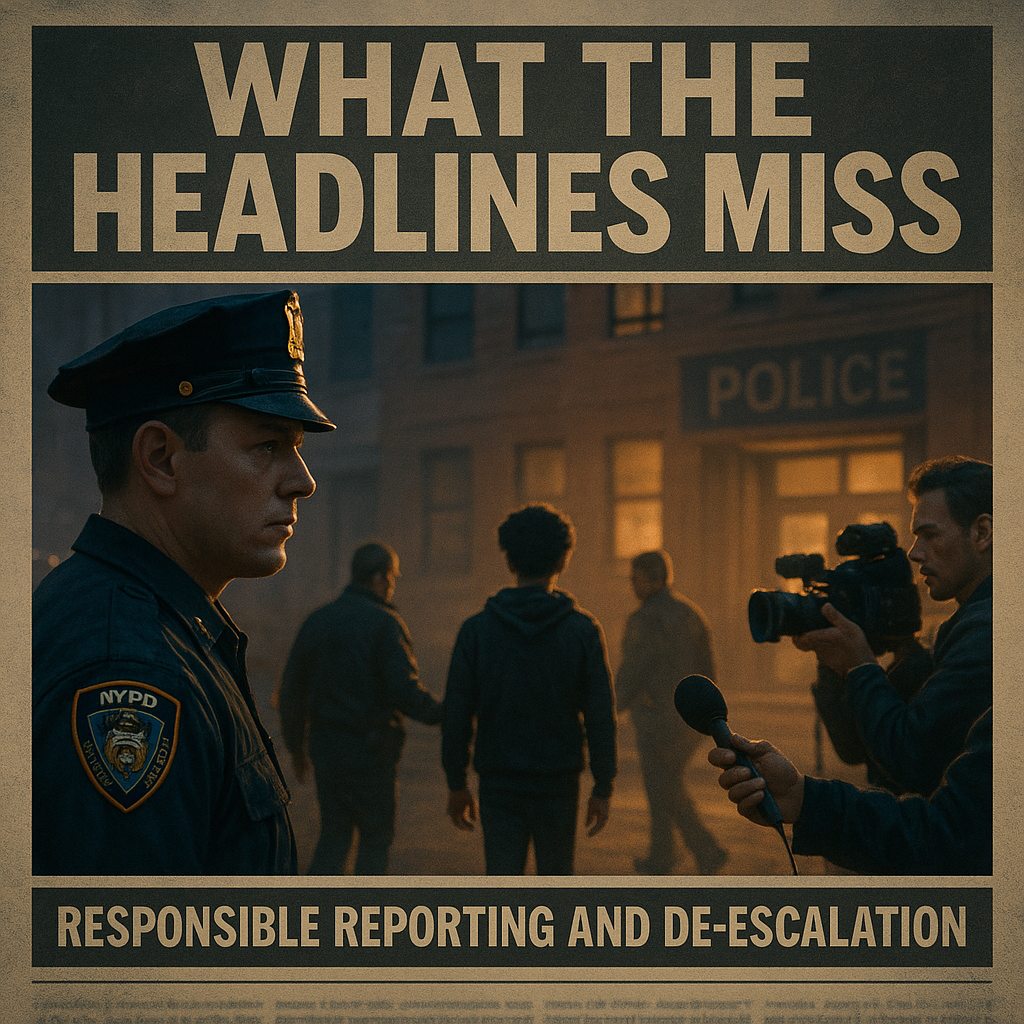
If you want a cleaner read on public controversies and how they mutate, it helps to compare this with stories like NBC News coverage of Donald Trump, where the man and the brand get tangled until separation becomes almost impossible. Same trick, different arena. And when the media machine starts feeding on scandal, the result can resemble the coverage around Associated Press legal proceedings coverage, which often strips away the drama and leaves the raw record behind.
Core details and context
Here is the plain version.
- The core event is an officer-involved shooting in Brooklyn, with a detective struck in the back during a gunfight.
- A surveillance clip reportedly shows an 18-year-old waving a gun before the confrontation.
- The location, Crown Heights, matters because it is a heavily covered neighborhood where crime stories quickly become citywide arguments.
- The detective was reportedly close to retirement, which adds a bitter edge to the story. That part hits hard. Right before the finish line, and then this.
- The public response tends to split into camps: one side talks about law and order, the other about police tactics and community trauma.
Let's be real, both sides often talk past each other.
The most useful way to read a case like this is to separate what is known from what is assumed. Known: a shooting happened. Known: video exists. Known: an officer was wounded. Not automatically known: the full sequence of events, motive, weapon possession details, or what every witness remembers under pressure. People love certainty when outrage is on the menu. The facts rarely cooperate.
That is where media literacy matters. Stories involving politicians, entertainers, athletes, or even one-off public figures often get flattened by the same forces: headline pressure, social media chatter, and the hunger for a villain. The person in the middle may be guilty, innocent, reckless, or all three at different moments in the same life. Human beings are messy. That is not a slogan; it is a fact.
A few things tend to happen after stories like this:
- Commentators treat the incident as proof of a preferred political theory.
- Crime reporters focus on operational details, which are usually less exciting but more honest.
- City officials reach for polished language about safety, enforcement, and community trust.
- The public, meanwhile, wants a simple answer and gets annoyed when reality does not wear a tidy tie.
I have seen this before with celebrity scandals and political blowups. The names change, but the method is identical. People want an emblem. They want a face that confirms their priors. Then they call it analysis.
The better approach is to hold two ideas at once: serious violence deserves serious reporting, and serious reporting should resist easy moral theatre. That balance is old-fashioned, maybe, but it is still the right one.
For a broader look at how public life and scandal bleed into each other, see CBS News New York City coverage, where local incidents often become national talking points in a flash. And if you want the legal side of public controversy, Reuters legal coverage is usually steadier than the rest. No fireworks, just facts. Imagine that.

Timeline and step-by-step
This is how these stories usually unfold, and this one appears to follow that ugly script.
- Early-morning movement begins.
The surveillance video reportedly shows the teen walking back and forth on the street before the shooting, which matters because pre-incident behavior often gets buried under post-incident outrage. - The weapon appears.
The video allegedly captures the young man flashing a gun. That is the kind of detail that changes the whole case, but only after investigators verify what the footage shows and what it does not show. - The detective closes in.
A police cruiser, apparently unmarked, was nearby. Once an officer approaches an armed suspect, the odds of calm evaporate fast. There is no cinematic music in real life. There is just panic, reflex, and bad decisions. - Shots are fired.
The detective is reportedly shot in the back during the exchange. That detail will be mined from every angle, and yes, it matters. It can signal movement, positioning, confusion, or the chaos of a fast gunfight. It can also be used badly by people pushing a narrative. - The aftermath arrives instantly.
Emergency responders, police spokespeople, and local press converge. By then, the event has already become a public story, which means everyone starts coloring inside their own political box. - The media adds the extra names.
This is where public figures get swept in, sometimes fairly and sometimes not. A detective becomes a symbol of urban disorder. A suspect becomes a stand-in for youth violence. Politicians begin lining up to say exactly the sort of thing they were rehearsing anyway. - The public judges before the record is complete.
That is the real step-by-step process, and it is the ugliest one. People do not wait. They do not like waiting. They pick a side, share a clip, and call it wisdom.
When I tracked stories like this over the years, the first report is rarely the final shape of the case. Usually it is just the skeleton. The flesh comes later, if anyone bothers to check. That is why a little restraint matters.
For more on how public narratives form around high-profile figures, you can compare this with The Guardian’s coverage of Donald Trump and with the steadier, fact-first style of Reuters U.S. coverage. Different voices. Same lesson: the first loud version is not always the right one.
Comparison table
The public story and the actual event are not the same thing. That distinction matters.
| Category | This shooting story | Biggest competitor: political scandal coverage |
|---|
| Core focus | Violent incident, police response, surveillance video | Policy fights, ethics probes, campaign damage |
| Main public figures | Detective, suspect, NYPD officials, local leaders | Politicians, aides, donors, staffers |
| Media angle | Crime, danger, accountability, neighborhood safety | Power, corruption, optics, partisan warfare |
| Speed of rumor | Very fast, especially with video clips | Also fast, but often shaped by leaks and spin |
| Evidence base | Footage, witness accounts, ballistics, reports | Documents, hearings, statements, filings |
| Public emotion | Fear, anger, grief | Cynicism, outrage, tribal loyalty |
| Final truth | Often slower and narrower than headlines imply | Often buried under strategic messaging |
The comparison is useful because the media habits are similar, even when the subject is different. A shooting story and a political scandal both attract confident nonsense. They also both punish readers who skip the boring part where facts get checked. That is where the real work lives.
This is why I keep saying that public image is not the same thing as character. A person may be a cop, a suspect, a politician, a star athlete, or a media fixture, but none of that exhausts who they are. There is always more under the badge, the suit, the headline, or the viral clip. People are not caricatures, no matter how convenient that would be for the cable crawl.
If you want to see how different kinds of public stories are framed, compare this with ESPN’s NFL coverage, where athletes can become heroes one week and cautionary tales the next. Same appetite. Different jersey.
Common misconceptions and what to know
The biggest mistake is thinking a video clip equals the full truth.
It does not, and frankly, it never has.
Short clips can reveal a lot, but they can also hide everything that came before and after. A person waving a gun is not a small thing. Still, a clip alone does not explain motive, fear, command decisions, or the split-second timing that turns an ordinary street into a crime scene. The internet hates that sentence because it removes the thrill of instant certainty.
Another misconception is that the presence of a politician, cop, celebrity, or other notable person makes the story more meaningful in a moral sense. Sometimes it does. Often it just makes the story louder. There is a difference. A detective shooting near retirement is tragic because of the human cost, not because the calendar was almost done. The public loves symbolism, but life rarely cares.
Here are a few corrections worth keeping in mind:
- Not every public rumor is confirmed by repetition.
A claim becomes common faster than it becomes true. - Not every official statement is complete.
Authorities often release only what is ready for release. - Not every controversial figure is the whole story.
A person can be wrong, wounded, reckless, or victimized, sometimes in the same week. - Not every neighborhood tragedy proves a grand theory.
Sometimes a bad event is just a bad event, though people hate that because it offers no slogan.
Here is the kicker: moral judgment without patience usually makes fools of us. That is not a legal rule; it is a spiritual one too. People are more than their worst 10 seconds, even when those 10 seconds destroy lives. That does not excuse anything. It just keeps us from pretending we are better than we are.
If you want more context on how headlines evolve around public figures, check BBC News U.S. and Canada for cleaner framing, and compare it with AP crime coverage, which usually keeps the language tighter and the drama lower. That is a virtue, not a flaw.
Frequently asked questions
What happened in the Crown Heights shooting story?
A detective was reportedly shot during a gunfight in Brooklyn after surveillance video allegedly showed an 18-year-old with a gun near the scene. The exact sequence belongs to investigators and verified reporting, not internet improv.
Why is the video important?
Because footage can help establish timing, movement, and weapon possession, but only if it is authenticated and read carefully. A clip is evidence, not a final verdict. People keep forgetting that. Convenient, isn’t it?
Why do public figures get pulled into these stories?
Because the public likes recognizable faces, and media outlets know it. Politicians, officers, and other notable people become symbols for bigger arguments about crime, safety, law enforcement, or urban policy.
Can early reports be wrong?
Absolutely. Early reports are often incomplete, and sometimes flat-out mistaken. That is why cautious readers wait for corroboration, not just the loudest headline.
Final thought
This is the part where everybody pretends the story is simple.
It never is, and that is the trouble. A detective near retirement gets shot, a teenager is caught in a violent moment, a neighborhood becomes a stage, and the rest of us start sorting human beings into neat little bins so we can feel wise for a minute. We are not owed neatness. We are owed honesty.
When I look at stories like this, I see more than the headline race for clicks. I see the old, stubborn fact that people are capable of both ruin and dignity, sometimes in the same breath. That is the part modern media often misses because it is easier to sell outrage than to sit with complexity. Yet the truth is always there, waiting for anyone patient enough to stop performing and start reading.
The better response is not cynicism, though plenty of it is earned. It is discipline. Check the source. Watch the language. Wait for the record. And remember that even in the worst stories, the people involved are still human beings, not props for our opinions. That small act of restraint may be the least fashionable thing left in public life, which is exactly why it still matters.