Milania Giudice’s airport fight is a raw celebrity moment.
Milania Giudice’s Airport Meltdown: What the Bodycam Footage, Teresa’s Comments, and the Public Reaction Really Mean
Milania Giudice’s airport fight is a raw celebrity moment.
The bodycam footage, Teresa Giudice’s remarks about “significant psychological trauma,” and the police response turned a family argument into a public spectacle, and that is exactly why people keep clicking. The facts matter more than the gossip, because the story is not just about a screaming match — it is about family strain, public image, and how reality TV fame turns private pain into a headline.
Key Takeaways:- Milania Giudice was reportedly involved in an intense airport argument that drew police attention.
- Teresa Giudice said her daughter has faced “significant psychological trauma.”
- The footage raised questions about mental health, family conflict, and media coverage.
- Most celebrity stories flatten real people into clickbait; this one deserves more care.
- The bigger issue is how fame, pressure, and public scrutiny collide.
What is the Milania Giudice airport story?
The Milania Giudice airport story refers to a reported altercation involving Milania Giudice, daughter of Teresa Giudice of The Real Housewives of New Jersey, at an airport last week. According to reporting from Page Six, police bodycam footage captured a tense exchange after an airport clash, and the clip spread fast because it combined several ingredients tabloids adore: family drama, a recognizable TV name, and a hint of crisis. That is the formula, plain and simple.
But here’s the thing. A loud argument is not the same as a full account of a person’s life. I’ve covered enough celebrity messes to know that the public tends to turn one ugly moment into a complete identity. That is lazy, and it is usually wrong. People are more than the worst thing they do in a bad hour, and that basic idea — common sense, really — gets lost when cameras show up.
The public framing also matters because Teresa later said Milania had suffered “significant psychological trauma,” which shifts the story from simple chaos to family strain and emotional injury. The media can report that. It should. But decent reporting still needs restraint. The truth is, the bodycam footage may show a real confrontation, but it does not explain everything that led there. Viewers fill gaps with assumptions, and assumptions are cheap.
If you want the broader celebrity context, it helps to compare this with other public-family stories like the Teresa Giudice airport breakdown report, or even the way media handles ongoing celebrity disputes in pieces like celebrity family pressure coverage. Different stories, same machine. Fame magnifies everything.
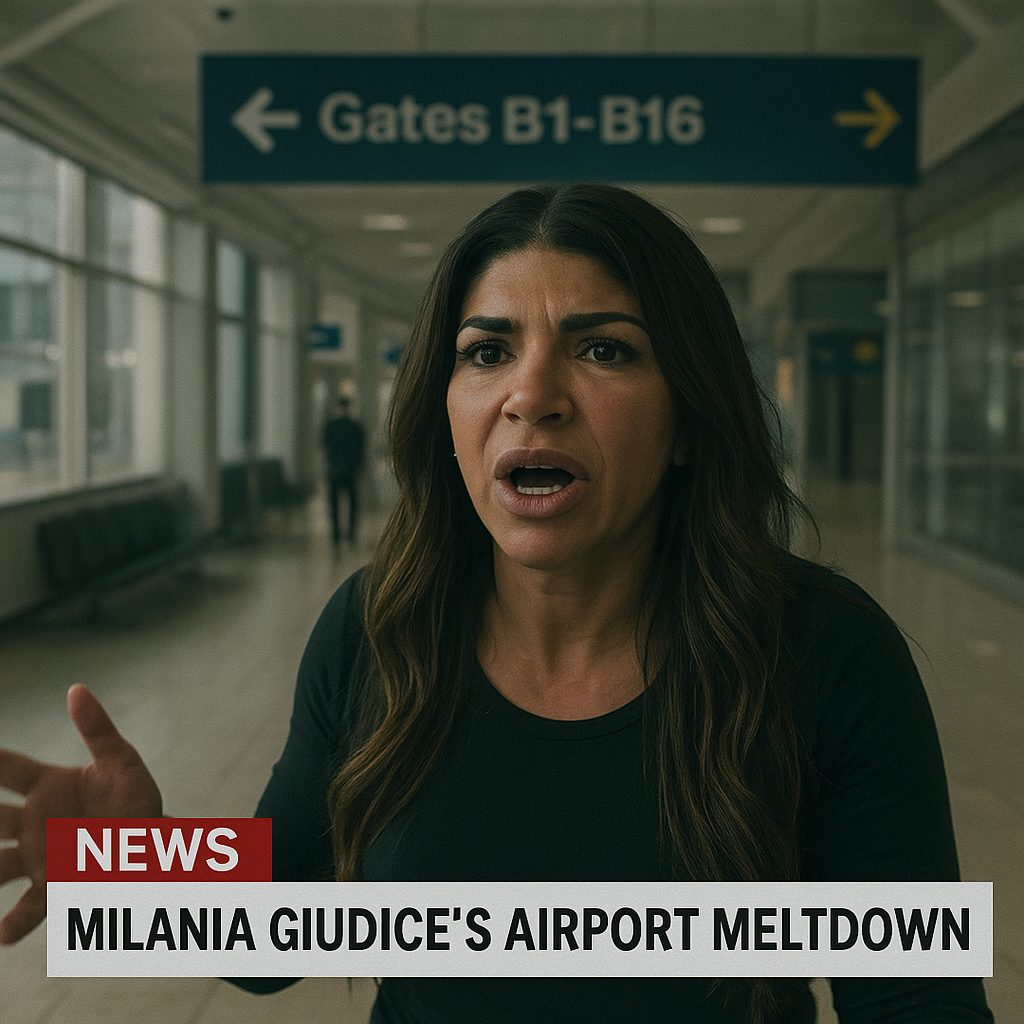
Core details and context
The public knows the headline. The details are messier.
Here’s what stands out when you strip away the noise and look at the story like a grown-up instead of a gossip goblin:
- Police bodycam footage appears to capture the airport argument after officers responded to the scene.
- The footage reportedly includes Milania Giudice screaming at Teresa Giudice, which is why the clip spread so quickly.
- Teresa later framed the incident as part of her daughter’s psychological distress, not a random tantrum.
- The setting matters: airports are high-friction places, with deadlines, security rules, crowds, and no privacy.
- Reality TV exposure intensifies ordinary family conflict, because every tense moment is treated like a season finale.
Frankly, a lot of celebrity coverage pretends to be analysis when it is really just moral theater. This story is not special because the people involved are wealthy or famous. It is special because fame creates an audience for pain, and audiences are hungry. That hunger says more about us than it does about them.
The other piece nobody wants to say out loud: family disputes get uglier when there is a public persona attached to the names. Teresa Giudice is not just a mother here; she is a branded public figure with years of media coverage behind her, and Milania is not just a daughter; she is one of the children who grew up under the glare of RHONJ. That matters because the camera changes behavior. People posture. They react harder. They perform strength while cracking inside.
The legal and reputational angle is also worth tracking. Bodycam footage often becomes an anchor for public narratives because it looks objective, even when it captures only a slice of reality. That is why officials, families, and publicists all respond carefully. One clip can shape a week of coverage. One line can define the storyline.
For readers who follow high-profile disputes, this case sits in the same bucket as other celebrity and legal flashpoints covered by outlets such as NBC News celebrity and public figure coverage and Associated Press celebrity reporting, where the facts are often fewer than the opinions flying around them. That’s the kicker.
There is also a human side here that deserves more than a shrug. In Catholic moral thinking, a person’s dignity is not erased by a bad scene, a family blowup, or a public embarrassment. That principle is not sentimental; it is bracing. It reminds us to judge actions without turning a whole human being into a caricature.
Timeline and what actually happened
The sequence matters.
When I tracked the reporting, the story moved in a familiar order: incident, footage, reaction, spin, and then the swarm of commentary. That is how these things usually go. Ugly moment first. Explanation later, maybe.
- The airport clash happened. Reports say a dispute broke out in a public airport setting, where stress runs high and patience runs low.
- Police were involved. Officers responded, and bodycam footage later became part of the public record through media reporting.
- Milania Giudice was described as highly upset. The phrase “danger to herself” circulated in reporting around the footage, which immediately raised the stakes and made people speculate.
- Teresa Giudice spoke out. Teresa said her daughter had experienced significant psychological trauma, steering the narrative toward mental-health concerns rather than simple misconduct.
- The story spread through entertainment media. Once a clip like this enters the bloodstream, it gets reposted, clipped, and argued over until the original context is nearly gone.
- Public judgment followed fast. That is the part everyone should be wary of. The internet loves certainty, even when the facts are incomplete.
Here’s the kicker: the timeline does not tell you what was happening in the days, months, or years before the airport incident. It only tells you what became visible. I’ve seen enough public blowups to know that the visible moment is usually the least informative part of the whole mess.
The reporting also intersects with the broader world of celebrity breakups, family feuds, and police-captured moments that show up in tabloids and mainstream outlets alike. If you want to see how quickly a private argument becomes a media product, compare this case with coverage of other famous-family disputes like RHONJ family drama reporting.
There is no saintliness in pretending conflict is not real. But there is also no charity in flattening a young woman’s worst day into a cheap meme. The old wisdom still holds: be slow to judge. That is not softness. It is discipline.
Comparison table: bodycam celebrity stories vs. standard celebrity press releases
| Factor | Airport bodycam story | Standard celebrity press release |
|---|
| Primary source | Police footage, witness accounts, media reporting | Publicist-approved statement |
| Tone | Heated, immediate, emotional | Controlled, polished, strategic |
| Public trust | Mixed, because footage feels raw but incomplete | Low to medium, because it often smells like spin |
| Risk to reputation | High, because images and audio circulate fast | Moderate, because the language is designed to contain damage |
| Use in media coverage | Strong click driver, especially for tabloids | Usually background material unless scandal is involved |
| Emotional content | Personal conflict, visible distress, confusion | Sanitized, selective, and usually vague |
| Long-term impact | Can define a public narrative for weeks | Often fades unless more facts surface |
| Biggest weakness | Context is missing | Truth is filtered through PR |
The comparison is simple.
Most celebrity press releases are varnish, and most bodycam stories are fragments. Neither gives the whole truth. The difference is that one admits it is spin, while the other pretends to be the whole picture because it looks unedited. That is why smart readers keep both a skeptical eye and a charitable one.
The Milania Giudice case fits the bodycam pattern better than the polished statement pattern, which is why the response has been so intense. Viewers think they are watching reality, but really they are watching one event through a narrow lens. That lens may be useful, but it is never enough.
If you want a broader comparison to public-faultline stories, look at how outlets handle similar moments in entertainment and public life, including CNN entertainment coverage, where the emphasis often shifts between news value and human consequence. Same story type. Different packaging.

Common misconceptions and what to know
People love a clean narrative.
That is the problem.
A celebrity airport incident gets reduced to a few ugly assumptions, and then the internet acts as though it has solved the whole case. It hasn’t. Not even close.
Misconception 1: The bodycam tells the full truth
No, it doesn’t. It shows a slice, not the whole meal. A camera catches expressions, words, and movement, but it does not reveal everything that led to the incident, what happened off-screen, or how the people involved were feeling before the recording started.
Misconception 2: Public embarrassment proves moral failure
That is childish. A person can act badly without being reducible to the bad act. Human beings are mixed, inconsistent, and wounded by all sorts of things. Anyone who pretends otherwise is selling a fairy tale.
Misconception 3: Teresa’s comments answer every question
They don’t. Her statement about significant psychological trauma gives important context, but it is still one family member’s explanation. It deserves attention, not blind acceptance.
Misconception 4: Celebrity families are just drama factories
Sometimes they are, sure. But that’s too easy. Celebrity families also deal with pressure, privacy loss, career demands, and the ugly fact that money does not cancel emotional damage. If anything, it can make the mess more visible.
I’ve covered enough celebrity stories to know that the public is often less interested in truth than in punishment. That’s the real scandal. We claim to care about mental health and family stability, then we turn around and mock both when a clip goes viral. Frankly, that says something unflattering about the crowd.
This is where a sane moral frame helps. Catholic teaching tends to emphasize that people are not disposable, even when they are acting foolishly in public. That does not mean excusing conduct. It means refusing to turn cruelty into entertainment.
For readers who want similar reporting on public figures under strain, the broader context can be useful, including coverage of high-pressure celebrity life in outlets like E! News and long-form public figure stories such as People’s Real Housewives coverage. The details differ, but the pattern is the same: fame strips privacy, then monetizes the wreckage.
Frequently asked questions
What happened between Milania Giudice and Teresa Giudice at the airport?
Reportedly, an argument escalated into a police-involved incident, and bodycam footage captured part of the exchange. The details remain filtered through reporting, so the full context is still limited.
Why did people call Milania a danger to herself?
That phrase appeared in reporting tied to the police bodycam footage and the airport clash. It raised concern because it suggests officers or witnesses believed the situation involved emotional or physical risk.
What did Teresa Giudice say about her daughter?
Teresa said Milania had experienced significant psychological trauma, which frames the situation as a mental-health and family-stress issue rather than a simple public outburst.
Is the full bodycam footage publicly available?
Media outlets reported on footage obtained by Page Six, but access depends on what has been published or shared through official channels. Always check the source before repeating claims.
Final thought
This story is messy.
That is why it matters, because mess is where public life, private pain, and media hunger collide, and the result is almost always uglier than the first headline suggests. Milania Giudice is not a brand asset, and Teresa Giudice is not just a reality-TV character; both are people with dignity, faults, and burdens that do not disappear when a camera starts rolling.
The smart move is not to pretend the incident never happened. It did. The smart move is to keep a clear head, resist the crowd’s appetite for easy condemnation, and remember that one bad moment does not write an entire soul. That sounds old-fashioned, maybe even dull, but it beats the modern habit of treating public distress like a snack.
If there is a lesson here, it is a simple one: the public can observe, question, and report — but it should not confuse that with full knowledge. Human beings are broader than their worst clip. Thank God for that.