A report attributed to TMZ says Beach Boys co-founder Mike Love died at his Los Angeles home at age 85, after health complications. That claim should be...
Mike Love Death Report: What Is Confirmed About the Beach Boys Legend?
A report attributed to TMZ says Beach Boys co-founder Mike Love died at his Los Angeles home at age 85, after health complications. That claim should be treated as unconfirmed unless corroborated by a representative, the band, family, or other reputable outlets; the account alone does not establish an official announcement or cause of death.
A death report about a famous musician travels quickly because fans want to know whether it is true, what happened, and what the person leaves behind. Speed is not the same as confirmation. When I assess a breaking claim, I separate the central assertion from the surrounding details, then ask which parts are independently supported and which still rest on attribution.
That distinction matters here. Love’s importance to the Beach Boys is not in doubt, but a claim about his death and health should not be converted into a definitive obituary without clear confirmation. A responsible account can explain his career, the group’s history, and what the report says while being frank about what has not been established.
What Is the Mike Love Death Report?
The report says Mike Love died at home in Los Angeles and attributes that information to people described as having direct knowledge. It also says Love had COVID-19 the previous year and had experienced complications afterward. Those are significant claims about a living person’s status and medical history, so they deserve precise attribution and independent confirmation before being repeated as fact.
The distinction is simple. A publication may report what its sources tell it; a family statement, a representative’s confirmation, an official band announcement, or multiple independent news reports can add a separate layer of verification. The account described here does not quote a named representative or provide a public medical record. That does not prove the report false. It does mean readers should not mistake anonymous sourcing for an official statement.
Frankly, the most useful first question is not whether the story sounds plausible. It is what evidence is available. A name, an age, a location, and a medical detail can make a report feel complete, but detail alone does not establish accuracy. I would keep the wording attributed—TMZ reports, or the report says—until an independent confirmation supports stronger language.
Love’s biography is better established than the breaking claim. The Encyclopaedia Britannica biography of Mike Love and the Rock & Roll Hall of Fame’s Beach Boys profile document his place in the group’s history. Those references help explain why the news would matter; they do not, by themselves, verify a current death announcement.
That is the line a careful article should hold. It can give readers context without pretending to know more than it does. A person’s fame does not cancel the need for accuracy, and a reported health struggle should not be embellished into a diagnosis, timeline, or final statement that no one has confirmed.
Core Details and Context
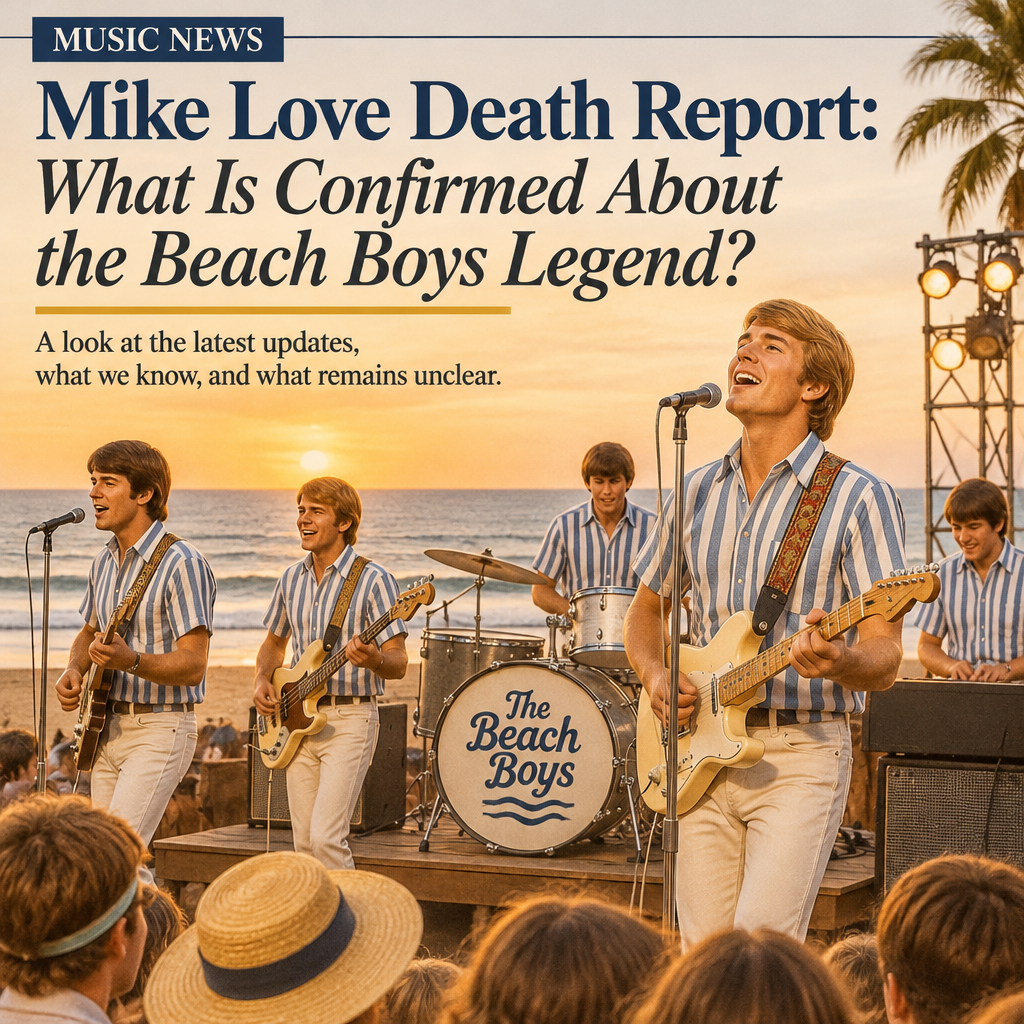
The Beach Boys formed in the Los Angeles area in 1961. The original lineup included Mike Love, brothers Brian, Carl, and Dennis Wilson, and their friend Al Jardine. Their records became closely associated with California imagery, layered vocal arrangements, and songs about youth, cars, beaches, and changing American life. The band’s official site, the Beach Boys website, and its GRAMMY artist profile provide background on the group and its recorded legacy.
Love’s role was not simply that of a singer standing at a microphone. He was a founding member and a prominent vocalist, and his public identity became entwined with the band’s name. Brian Wilson’s arranging and production are often central to accounts of the group’s sound, while Love’s voice and stage presence are also part of the recognizable Beach Boys story. Those contributions should be discussed without turning a complex creative partnership into a tidy contest between two men.
The band’s history also includes loss. Dennis Wilson died in 1983, and Carl Wilson died in 1998. Brian Wilson died in June 2025; his life and work are covered in the Britannica biography of Brian Wilson. Those dates matter because a report that says all three Wilson brothers have died is describing prior events, not confirming a new claim about Love.
Here’s the kicker: the surrounding story can be accurate in broad strokes while its headline claim still needs verification. A band may have a long history, former members may have died, and a musician may have faced health problems, yet none of those facts proves that a new death report is correct. Each claim needs evidence of its own.
The report’s COVID-19 detail should be handled with the same care. Unless a representative or Love himself publicly confirmed the illness and complications, readers should treat that medical account as an attributed report rather than an established clinical history. Avoid naming a specific complication, cause of death, or hospital stay when none has been documented in the information available here.
A further detail concerns actor John Stamos. He has a long-standing association with the Beach Boys and has performed with the group over many years. But saying he toured continuously for 41 years or filled in for late founding members can imply a permanent membership or direct replacement role. That phrasing needs qualification: a guest performer’s appearances and relationship with a band are not the same thing as being a founding member or successor to the people who died.
Timeline: What the Record Shows
- 1961 — The Beach Boys form. Mike Love, Brian Wilson, Carl Wilson, Dennis Wilson, and Al Jardine are among the original members. Their early work helps establish the group’s public identity and California sound. The band’s history is summarized in the Rock & Roll Hall of Fame profile, which is useful context but not a source for a new death announcement.
- The 1960s and after — The group becomes a major act. The Beach Boys build an international audience through records and live performances. Love remains part of the group’s public story across changing lineups, musical directions, and disagreements. A long career creates a large archive of reliable material, but it can also invite oversimplified accounts that make every member’s role sound identical.
- 1983 and 1998 — Dennis and Carl Wilson die. The brothers’ deaths are established historical facts. The band’s public life continues through later years, with different personnel and guest collaborators. That continuation should not be described as if the surviving lineup were unchanged or as if each guest had replaced a deceased founder.
- 1980s onward — John Stamos performs with the band. Stamos’s association spans decades, but the length of an association does not automatically mean continuous touring or formal membership. Careful writing distinguishes a recurring guest from a replacement member. It also avoids folding every appearance into one uninterrupted tour history.
- June 2025 — Brian Wilson dies. Wilson’s death is recorded by major reference sources, including Britannica’s biographical profile. This is separate from the claim about Love. One confirmed death in a group’s history cannot be used as evidence for another person’s reported death.
- The current report — A claim about Mike Love circulates. The account attributes the claim to unnamed people said to have direct knowledge and gives an age, location, and health context. Those details identify what is being alleged; they do not independently confirm it. The responsible next step is to look for a statement from Love’s representatives, family, the band, or other established outlets.
When I track a story like this, I pay attention to the order of confirmation. An initial report may be followed by a representative’s statement, a correction, or no public update at all. Until that next step is available, the wording should remain cautious. Readers deserve a clear distinction between a reported event and one confirmed by people authorized to speak for the person concerned.
Mike Love and Brian Wilson: A Comparison, Not a Rivalry
There is no meaningful biggest competitor to identify here. Love and Brian Wilson were collaborators and founding members, not opponents competing for a single slot. Fans and music writers have often compared their public roles, but a comparison is not proof that one mattered more or that the band’s success can be credited to just one person.
| Subject | Mike Love | Brian Wilson |
|---|
| Connection to the Beach Boys | Founding member and prominent vocalist | Founding member, songwriter, arranger, and producer |
| Place in the group’s identity | Closely linked to the band’s vocals and public performance | Closely linked to its writing, arrangements, and studio sound |
| Historical status | The report discussed here claims he has died; that claim needs independent confirmation | Died in June 2025, as documented by major reference sources |
| What the comparison can show | One part of a large, changing group story | Another part of that story, with a different creative emphasis |
| What it cannot show | That Love’s reported death is confirmed, or that his work can be reduced to one role | That the group’s history belongs to Wilson alone |
The contrast is useful when it stays factual. Wilson’s musical influence receives substantial attention, while Love’s long career and performance role also deserve accurate treatment. Both men helped shape the group’s public identity in different ways. The band’s history includes collaboration, creative tension, changing membership, and a catalogue that cannot be explained by a single personality.
Let’s be real: celebrity coverage often turns complicated people into opposing characters because rivalry makes an easy headline. That framing can obscure the actual work. A fair account gives the reader enough context to understand what each person did without pretending that every disagreement has a clean winner or that every contribution can be measured in one column.
The comparison also shows why current claims need separate support. Brian Wilson’s death is a documented historical event. A report about Love is a different claim, with its own evidence threshold. Readers should not infer the second from the first simply because the men shared a band and a family of musical collaborators.
Common Misconceptions and What to Know
Misconception: A report from a well-known outlet is the same as an official confirmation. It is not. Reputable outlets can publish accurate breaking news based on sources, but the attribution still matters. If a report relies on unnamed people, say so. If a family representative confirms the news later, say that too. These are different evidentiary steps, and good coverage does not blur them for the sake of a dramatic headline.
Misconception: Specific details prove the central claim. A location, age, medical history, or reference to a recent conversation may make a story sound convincing. Those details can be important leads, but they need their own support. A reported COVID infection does not independently prove complications, and complications do not establish a cause of death. Unless an authorized source makes those points public, keep them attributed and avoid filling gaps with speculation.
Misconception: The surviving Beach Boys lineup is interchangeable with the original band. The group has continued performing through major changes, but a touring lineup is not the same thing as the five-person founding group. Guests can become familiar parts of live performances without replacing the history or identities of departed members. Stamos’s long association is notable; describing him as a direct substitute for Carl or Dennis Wilson overshoots what the role means.
Misconception: A famous person is only a public image. A musician’s work, controversies, career decisions, and public statements can all receive scrutiny. Still, the person is more than the image shaped by press coverage. Charity in judgment is not a demand to suspend reporting; it is a reminder to avoid treating rumor as a verdict. Human beings can be talented, difficult, generous, flawed, and private at the same time.
Misconception: An unconfirmed claim must be either true or false immediately. Sometimes the evidence is incomplete. That is not a satisfying ending, but it is an honest one. A careful writer can say what has been reported, identify who is being cited, explain what remains unverified, and update the account when reliable confirmation arrives. Readers are better served by that restraint than by a confident sentence that later needs to be walked back.
What should readers check? Look for an on-the-record statement from a family member, representative, or the band, then compare it with coverage from reputable news organizations. Check publication times and later updates, since early reports can change. Reference sources such as Britannica, the Rock & Roll Hall of Fame, and GRAMMY help establish career background; they are not automatic confirmation of breaking events. The links in this article provide context, not independent proof of the death claim.
Frequently Asked Questions
Has Mike Love’s death been officially confirmed?
The report described here attributes the claim to TMZ and unnamed sources, but the details do not include a quoted statement from Love’s family, representative, or the Beach Boys. Without such confirmation or independent corroboration from reputable outlets, the careful description is that a report has been made—not that every detail is established. Check for updates from authorized representatives and credible news organizations before sharing the claim as fact.
How old is Mike Love?
Mike Love was born on March 15, 1941. He would be 85 in November 2026, which is consistent with the age stated in the report. An age matching public biographical records does not verify the central claim, though; the reported event still needs independent confirmation. The Britannica biography linked above is a reference for his life and career, not proof of a current announcement.
What did Mike Love contribute to the Beach Boys?
Love was a founding member and a prominent vocalist whose career became closely tied to the band. The group’s history also includes the distinct work of Brian, Carl, and Dennis Wilson, Al Jardine, and later musicians. The Rock & Roll Hall of Fame profile and the Beach Boys’ official site offer historical context. A short obituary-style summary should not flatten a long, collaborative career into a single credit or rivalry.
Did John Stamos replace the Wilson brothers in the Beach Boys?
That description is misleading. Stamos has a long association with the band and has performed with it, but a guest performer is not automatically a formal replacement for deceased founding members. Reports should distinguish guest appearances, touring collaborations, and official membership. The distinction matters because fans may otherwise come away believing the band’s personnel history was more straightforward than it was.
Final Thought
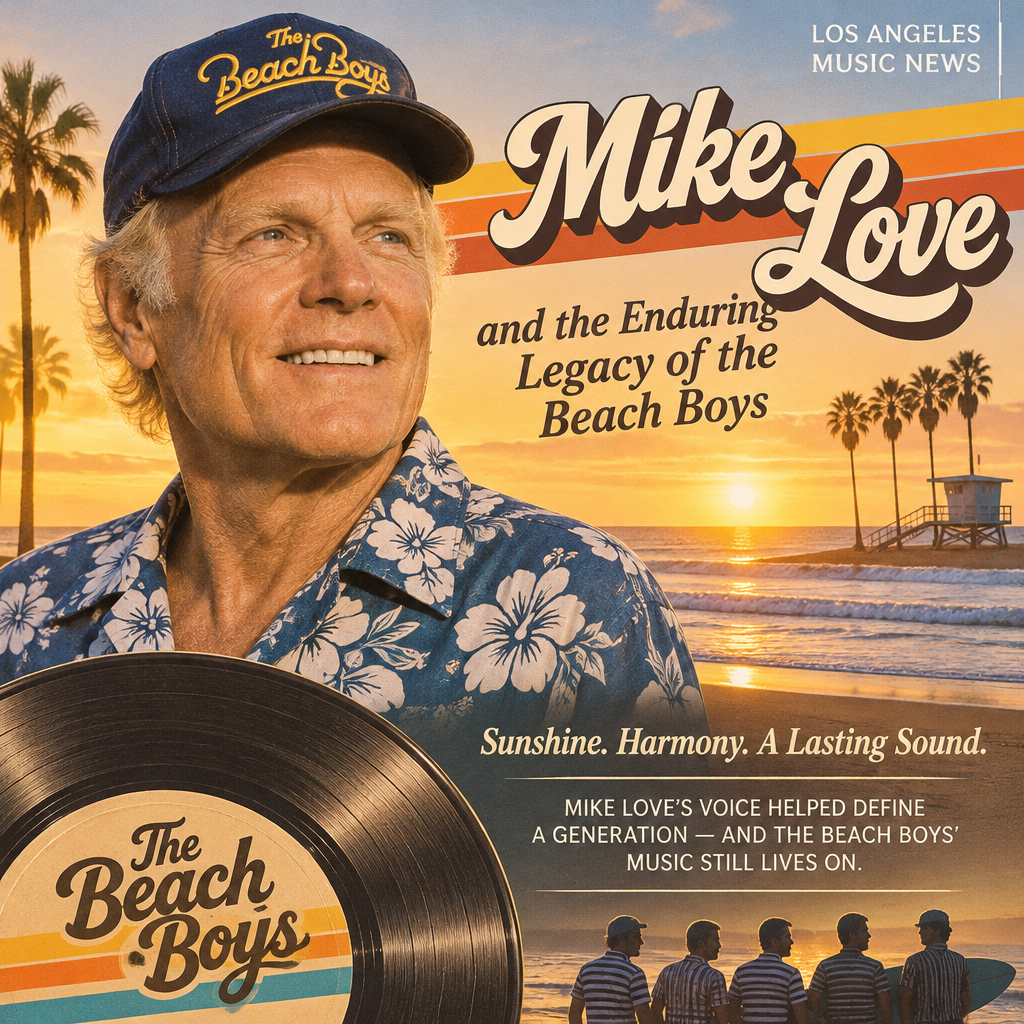
Mike Love’s place in the Beach Boys’ history is significant whether a reader knows the group through its records, its live performances, or the long public debate about its creative legacy. That history can be explained with confidence. A new death report requires a separate standard: clear attribution, independent corroboration, and careful treatment of private medical details.
The temptation is to publish the whole story at once, especially when the headline sounds definitive and fans are waiting for answers. Resist it. A responsible account does not confuse speed with certainty or use a musician’s age and past health information as a substitute for confirmation. It tells readers what is known, what is reported, and what remains unsettled.
I would update this account if an authorized statement or reliable corroboration establishes the claim. Until then, the central point is plain: the report says Mike Love has died, but the details cited here do not establish official confirmation. His career deserves more than a rumor, and readers deserve more than a confident guess.