Melania: The Series: Barron, Marriage Privacy and What the First Lady Reveals
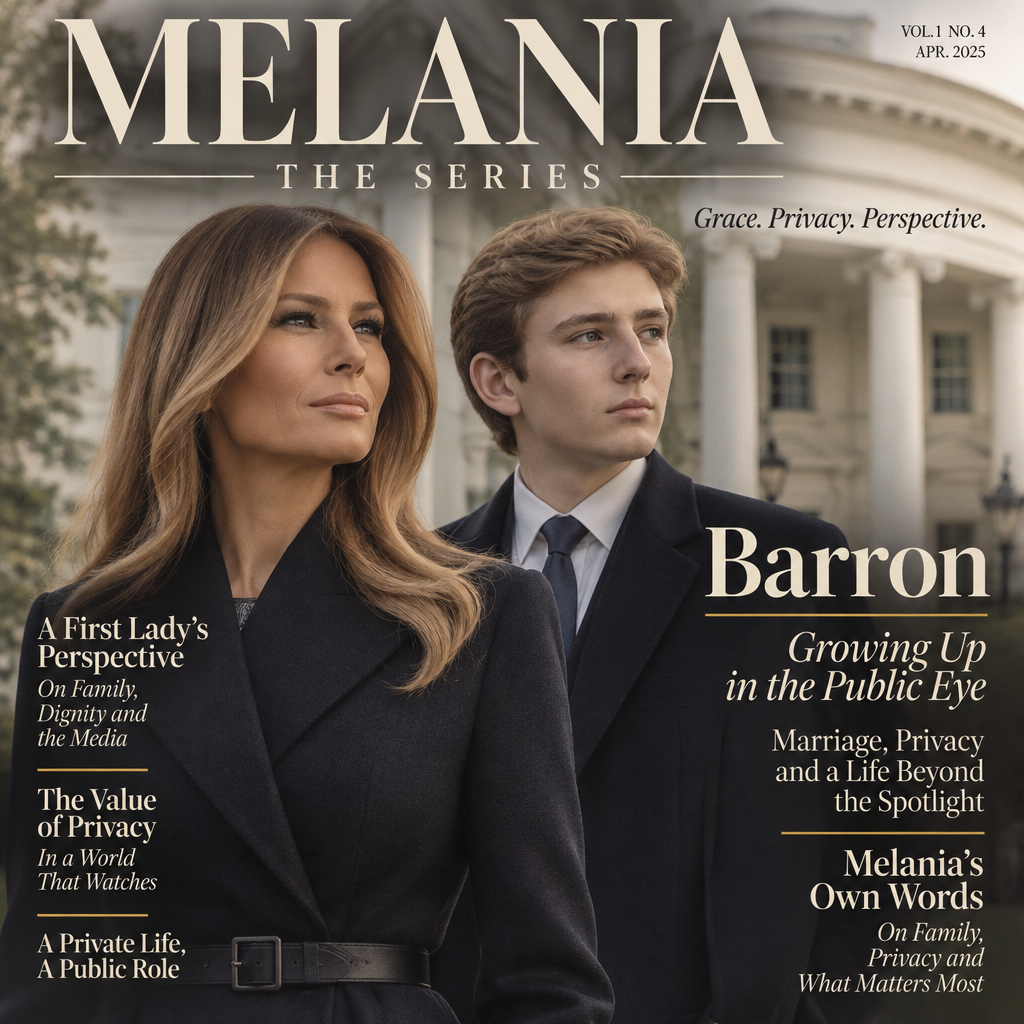
Melania: The Series is a two-part Amazon Prime Video docuseries that presents the First Lady’s family life and public role through her own account. Its most personal disclosures concern her protective advice to Barron Trump and her explanation for keeping affection with President Donald Trump largely private. That distinction matters.
The disclosures are intimate in subject, but they are not a complete record of private life. A documentary can offer a meaningful first-person view and still leave plenty outside the frame; that is especially true when the people involved have reasons to protect their family’s privacy. The most useful reading is neither automatic belief nor automatic suspicion. It is to separate what Melania says from what viewers may wish to infer.
The series also puts a familiar public question into sharper focus: how much should a family reveal simply because one member holds office? Here, the answer appears selective. Melania discusses her son’s wellbeing and her marriage, then draws a clear line around what remains private. That boundary is part of the story, not a gap that gossip can responsibly fill.
What Is Melania: The Series?
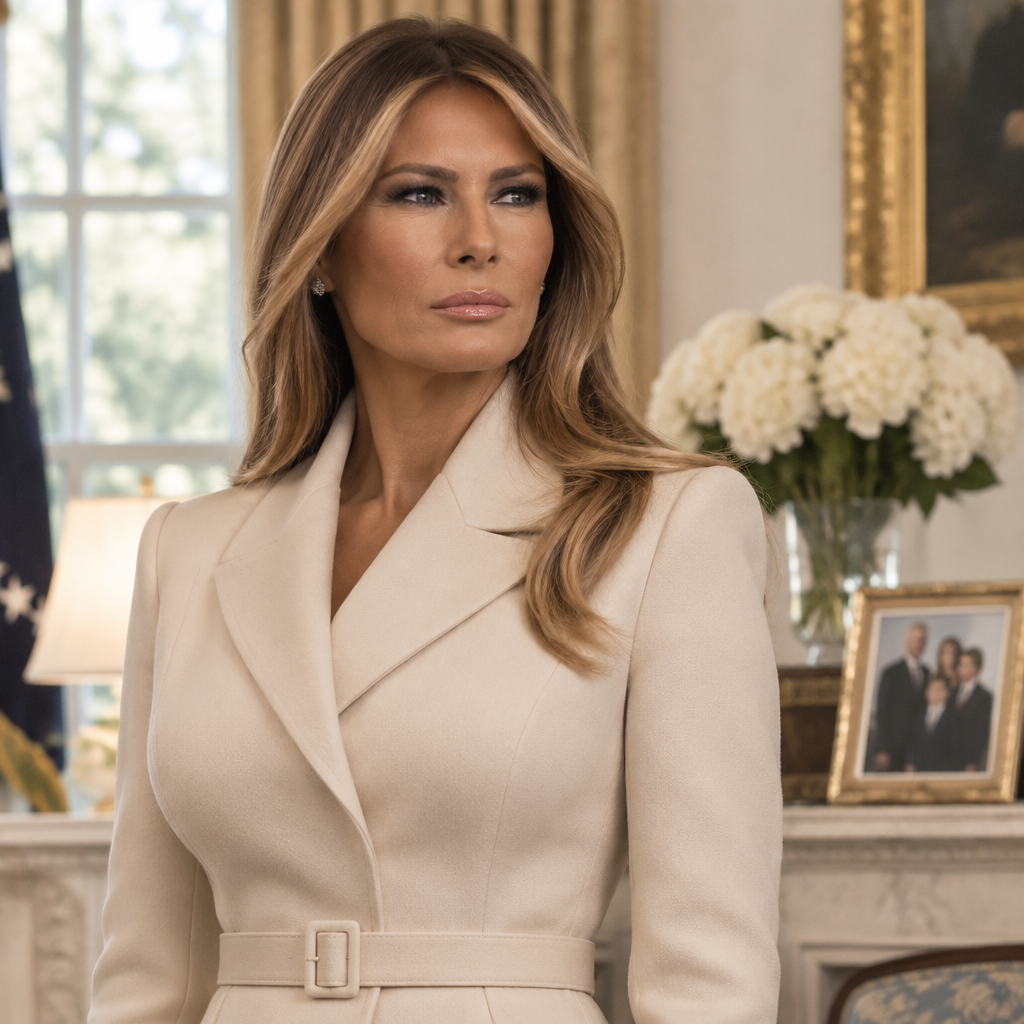
Melania: The Series is described as a two-part docuseries released on Amazon Prime Video. The first episode follows family and trust as Melania prepares to return to the White House for Donald Trump’s second term. The second focuses on the honor of serving as first lady. The format gives viewers a guided account of two connected subjects: her family and her public role.
That is a narrower promise than “everything about the First Lady.” The reported material includes her reflections on Barron’s dating life and her response to questions about affection between her and the president. It does not provide a full biography, a complete account of the marriage, or a detailed portrait of Barron’s daily life. Frankly, the distinction matters. A personal documentary is still a selected presentation, not an open door into every room of a family’s life.
The director, Brett Ratner, tells Melania that one of the things he learned while working with her was the strength of her relationship with the president. Melania replies that people do not see that side because the couple are not very public outside their private life. She also says public affection is not her style. Those comments form the series’ clearest answer to an enduring piece of public speculation: reserve in public does not, by itself, prove unhappiness in private.
I read the series’ central tension as a question of access. Melania is willing to speak about affection, family loyalty and motherhood, yet she does not promise unrestricted disclosure. That balance can frustrate viewers who expect a confession. It can also be a sensible limit. Public figures remain people, and a child’s dating life is not public property merely because his parents are famous.
The account identifies the series as an Amazon Prime Video release. Viewers looking for the platform can check Amazon’s search page for the title; the available information here does not specify episode lengths, a production schedule or additional participants. Those details are not reported, so they should not be filled in with guesswork. A careful description stays close to what the series is said to cover: family and trust in one episode, the first lady’s role in the other.
Core Details and Context
Several parts of the account deserve to be kept separate. They have different levels of certainty and different implications for the people involved.
- Melania’s advice to Barron: She says she repeatedly tells her son to “be careful” about love because, in her words, “it’s a dangerous world out there.” This is her expression of parental concern, not evidence that a particular relationship has occurred or that she knows of a specific threat. The plain meaning is protective: she wants him to approach dating cautiously.
- Her promise of support: Melania says she and Barron have open communication about life and that she will always be there for him. She calls him her priority. That is the clearest statement about the mother-son bond in the account. It describes her commitment; it does not reveal private conversations or establish how Barron himself views the relationship.
- Barron’s dating status: The account says little is publicly known about his love life. It recalls a Page Six report that an entire floor of Trump Tower was closed for a date, based on a source who spoke to the publication. That is a reported claim, not confirmation from Barron or his family. Page Six’s search results for its Barron Trump date report provide a route to that coverage. The account does not establish whether Barron is currently dating anyone.
- The couple’s public reserve: Melania says the relationship is private and public affection is not her style. Ratner describes what he sees as a beautiful relationship, while Melania explains why the public may not see it. Those statements are evidence of how the two people discuss their relationship on camera; they are not a complete measure of its private quality.
There is also a useful timing detail. The account describes Barron as 20, a junior at NYU’s Stern School of Business, living with his parents at the White House after transferring to the Washington, D.C., campus. It does not provide an independent record of his schedule or explain the transfer beyond that description. NYU Stern’s official website is available at stern.nyu.edu, but the information about Barron’s personal arrangements should be attributed to the account rather than expanded beyond it.
Here’s the kicker: the story’s most durable detail may not be the rumor about a date. It may be Melania’s declaration that her son remains her priority. Celebrity coverage often prizes a mystery over a plain statement of care, but the latter is the part she chose to say on camera. The distinction helps keep the article about what was actually disclosed instead of turning a young adult’s private life into a guessing game.
Timeline: What Happened and When
The available timeline begins well before the docuseries. It contains a few clear milestones and leaves other dates unspecified.
- 1998 — The couple meet. Melania and Donald Trump meet at a New York Fashion Week party, according to the account. It supplies the setting and year but does not describe their first conversation or the details of their early relationship. Those missing details should remain missing rather than being reconstructed from assumptions.
- January 2005 — They marry. The account says the couple married in January 2005. That date provides basic context for the later discussion of their relationship, but it does not explain how they manage private life or how their marriage has changed over time. A wedding date is a milestone, not a full relationship history.
- Before the series — Melania prepares for a return to the White House. The first episode is described as focusing on family and trust as she prepares for Donald Trump’s second term. The account does not give a precise filming calendar or say how long production lasted. I would not treat the episode’s structure as proof that every scene was filmed in real time; no such production detail is reported.
- Friday — The two-part series airs. The account says both episodes aired on Amazon Prime Video on Friday, without providing a calendar date. The first centers on family and trust; the second considers the honor of serving as first lady. No audience figures or viewing statistics are reported, so claims about the series’ ratings would be speculation.
- During the series — The family disclosures emerge. Melania talks about warning Barron to be careful in love and says she will always be there for him. Near the end, she discusses the couple’s private relationship and explains that public displays of affection are not her style. Ratner offers his impression of the marriage, and Melania responds by distinguishing private life from public visibility.
- The present dating question remains unanswered. The account says Barron is continuing his junior year at Stern and living with his parents at the White House after transferring to the D.C. campus. It does not say whether he currently has a partner. That remains an open fact, not a puzzle that can be solved by repeating an old report about a date.
This sequence is modest, but it is useful. It separates the couple’s shared history from what the new series actually discloses and from older reporting about Barron. It also prevents a common tabloid shortcut: placing an old claim next to a new interview and implying that one verifies the other. It does not.
Comparison: The Series Versus the Public Speculation
The account names no rival docuseries or direct entertainment competitor. So the fairest comparison is between Melania: The Series and the competing public narrative described in the coverage: the idea that limited public affection signals trouble in the marriage. That is not a contest between two programs. It is a comparison between a first-person explanation and an interpretation made from public appearances.
| Question | Melania: The Series | Public speculation described in the account |
|---|
| What does it rely on? | Melania’s on-camera statements and Ratner’s impression of the relationship. | Interpretations of the couple’s limited public affection. |
| What does it say about the marriage? | Melania describes the relationship as private and says public affection is not her style. | Some observers have treated a lack of public affection as a sign of marital trouble. |
| What does it say about Barron? | Melania describes her warnings about dating and her continuing support. | Interest often centers on speculation about whether he is dating. |
| What is confirmed? | The statements made in the series, as described in the account. | The existence of speculation, not the truth of the conclusions drawn from it. |
| What remains unknown? | The full private dynamics of the marriage and Barron’s current dating status. | Whether the speculation has any factual basis. |
The series has the advantage of direct testimony, but direct testimony is not the same as total access. A person can tell the truth about one part of life while keeping another part private. Likewise, an audience can recognize that a filmed account is edited without deciding that every statement is false. The evidence supports a careful middle position: take Melania’s explanation seriously, and do not pretend it answers questions she did not address.
I would also resist treating the two columns as equally strong evidence. A stated boundary is clear: she says the relationship is private and public affection is not her style. A theory about marital trouble is an inference drawn from appearances. Inferences may be worth discussing, but they should not be dressed up as established facts. The truth is less dramatic and more useful: viewers have a first-person explanation, while the private details remain private.
Common Misconceptions and What to Know
Misconception: The series confirms that Barron is dating. It does not. Melania talks about the advice she gives him, and the account says little is publicly known about his love life. The recollection of a Trump Tower date comes from a separate Page Six report citing a source. It does not establish his current relationship status. “She warned him about dating” and “he is dating now” are different claims. Mixing them together creates a headline, not a reliable conclusion.
Misconception: A floor reportedly closed for a date proves the details of Barron’s personal life. It proves only that a source made a claim to Page Six, as reported in the account. The date, the other person’s identity and Barron’s current status are not established there. Security-related explanations also should not be inflated into a complete account of what happened. The responsible wording is simple: a source reportedly said a floor was closed; further details are not publicly confirmed in this account.
Misconception: Lack of public affection proves a troubled marriage. It does not. Melania directly says that public displays of affection are not her style and that the relationship is private. Ratner says he learned about a beautiful relationship while working with her. Those comments do not let outsiders inspect the marriage, but they do make clear that public reserve is not, by itself, proof of a private crisis. People differ in how they express affection; a camera cannot measure every relationship.
Misconception: A docuseries is an unfiltered window. A series can offer meaningful personal testimony while still being shaped by what is filmed, selected and shown. The account does not report how the episodes were edited, what footage was excluded or how scenes were arranged. That absence does not establish manipulation; it simply limits what viewers can know about the production. Skepticism is useful when it asks what evidence exists. It becomes lazy when it assumes an answer without evidence.
Misconception: Public figures owe audiences every detail. The series discusses family life, but it does not erase the family’s right to privacy. Barron is a person in his own right, not merely an extension of his parents’ public image. Curiosity is understandable; turning unverified personal details into certainty is not. A measure of charity in judgment is not a ban on scrutiny. It is recognition that people contain both strengths and frailties, and that public attention does not cancel their dignity.
What the series does show is narrower and clearer. Melania identifies her son as her priority, describes an open line of communication and offers her account of why she and the president are reserved in public. Viewers can assess those statements without assuming they reveal everything. That is a more honest standard than treating every quiet moment as a clue or every personal statement as a final verdict.
Frequently Asked Questions
What is Melania: The Series about?
It is described as a two-part Amazon Prime Video docuseries. The first episode focuses on family and trust as Melania prepares for Donald Trump’s second term; the second focuses on the honor of serving as first lady. The account also describes her comments about Barron and her private relationship with the president. It does not provide episode lengths or a full list of topics.
What did Melania say about Barron’s dating life?
She said she tells him to be careful because the world is dangerous, and she emphasized that she will always be there for him. She described open communication and called him her priority. Her remarks do not confirm that he is currently dating anyone. The account says his dating status is not publicly known.
Did Melania address speculation about her marriage?
Yes. She said people do not see the relationship because the couple are not very public outside their private life. She also said public affection is not her style and that the relationship is private. Ratner described what he had learned as a beautiful relationship. These are their stated views, not a complete record of the marriage.
Where can viewers watch the series?
The account says the two-part series aired on Amazon Prime Video on Friday. It does not specify a calendar date or provide a separate schedule for later viewing. The title can be searched on Amazon; availability may depend on the platform’s current listing and region.
Final Thought
The strongest part of Melania: The Series, as described, may be its insistence on a distinction that celebrity coverage often blurs: public visibility is not the same thing as private access. Melania speaks about her son’s safety, her commitment to him and the way she chooses to express affection. Those are meaningful disclosures. They still leave room for privacy, and they do not invite outsiders to declare what Barron’s dating life or the marriage must look like.
A skeptical viewer need not be cynical. It is reasonable to remember that a docuseries presents a selected account; it is not reasonable to invent unseen scenes or treat silence as proof. Likewise, viewers can acknowledge Melania’s explanation without claiming that a few remarks settle every question. The evidence has boundaries, and good reporting respects them.
When I assess this story, the fairest point is also the least sensational: a mother says her son is her priority, and a wife says affection is private. Neither statement turns public figures into perfect people, nor does either make them characters whose every private moment belongs to an audience. Fame makes people visible. It does not make their dignity conditional. The details the series offers are worth hearing; the details it does not offer should remain what they are—unknown.