Meghan Markle’s Father’s Arrest: Why King Charles May Keep Any Support Private
No royal palace has publicly commented on Thomas Markle Sr.’s arrest. Royal experts say King Charles could offer Meghan Markle and Prince Harry support privately, but the legal investigation may make even a personal conversation sensitive. Whether any private contact has taken place has not been reported.
The distinction matters. A palace statement would be an official public act, while a private call or message would be a family interaction that the public might never see. The reporting does not establish that the King has contacted the Sussexes, or that Meghan and Harry have received private support from any royal. It records expert views on why discretion might be appropriate, not confirmation of what happened behind closed doors.
The allegations have also put an old family rupture under fresh scrutiny. Meghan’s decision to keep her father away from her children drew criticism in the past, but the new case has prompted some observers to reconsider what they understood about that choice. The sensible response is neither to declare the allegations proven nor to treat the family’s silence as proof of indifference. Both would outrun the known facts.
What Is the Royal Family’s Response?
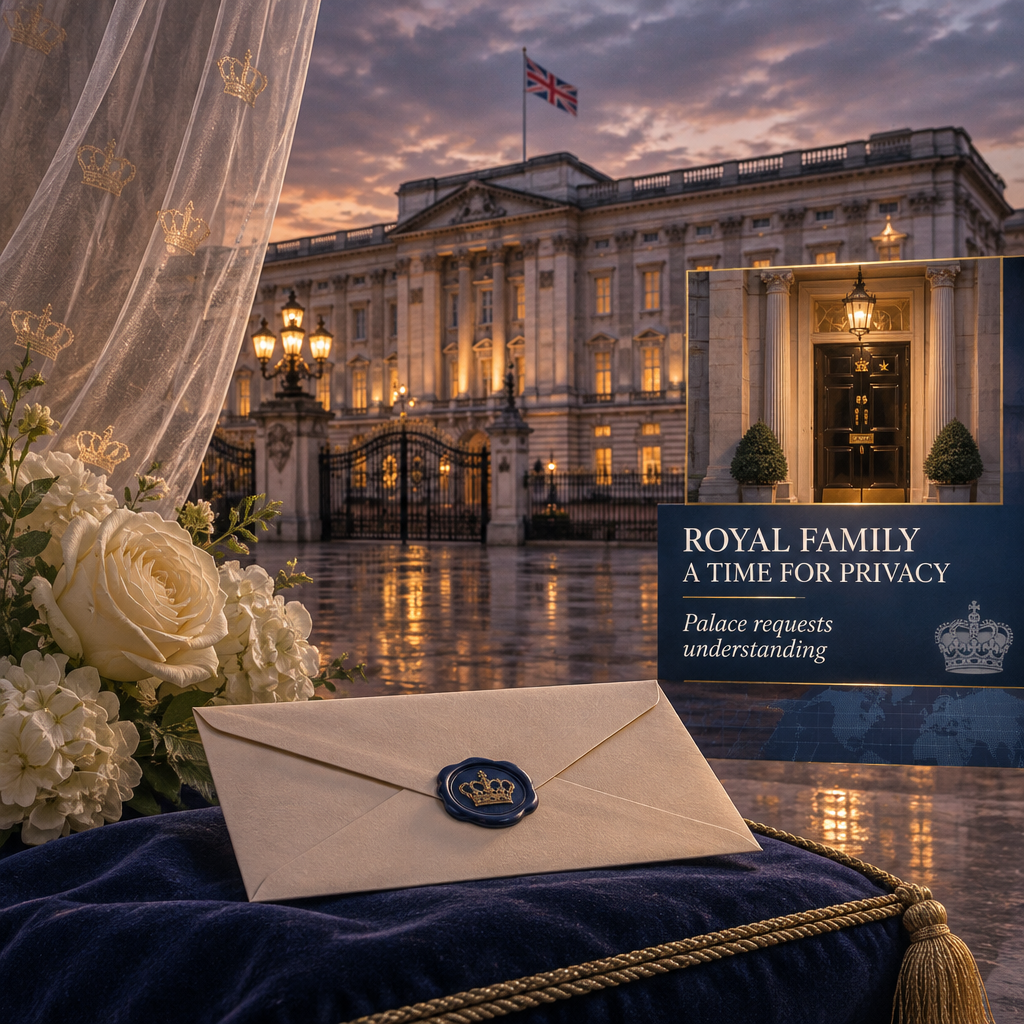
The direct answer is that the royal family has not issued a public response through Buckingham Palace or Kensington Palace. Those are the two palace offices identified in the reporting, and neither has publicly commented on the allegations against Thomas Markle Sr. That is the confirmed public position—not a statement about every private conversation among family members.
The question has two parts that are often blurred together. First: have the palaces spoken publicly? No. Second: has the King privately offered support to Meghan and Harry? The report does not say. Seward believes the King should speak to them privately and says she is sure he will, but that is her expectation, not an announcement from Charles or evidence of a call.
That difference is important in celebrity and royal coverage, where an empty space can quickly be filled with confident guesses. A palace’s refusal to comment might reflect caution, a wish to respect a private family matter, legal sensitivities, or some combination of those considerations. The available reporting does not identify a formal reason from the palace itself. It would be careless to claim one as fact.
The royal family’s public image is built around carefully managed communication, but private family life does not run on press statements alone. Nor does silence prove that a person has no sympathy. A quiet message, if one occurred, would not necessarily be disclosed; equally, the public should not assume it happened simply because an expert thinks it would be humane or fitting.
The story is particularly delicate because Harry has reportedly been taking tentative steps toward rebuilding his relationship with his father after years of estrangement. That context makes any question about Charles’s response more emotionally charged, but it does not establish the state of their current communication. The facts remain narrow: no public palace statement, expert disagreement over the risks of private contact, and no confirmation of what the family has said to one another.
Frankly, that is less dramatic than a palace leak, but it is more accurate. The answer to whether the royal family has publicly responded is no. The answer to whether it has privately offered support is unknown.
Why King Charles May Keep Any Support Private
Seward’s view is straightforward. She describes the matter as private and says the King should speak to the Sussexes privately. Her reasoning, as reported, is rooted in ordinary family compassion: a father might reach out when a daughter is facing distress. She also says she is sure Charles will do so. But an expert’s confidence is not the same thing as a verified account, and the distinction deserves to stay visible.
Hardman offers a different emphasis. He argues that anything connected to a legal process is something the royal family will avoid, because even a private conversation might be misconstrued. He refers to the scrutiny surrounding the former Prince Andrew and his ties to convicted sex offender Jeffrey Epstein as an example of how legal and reputational sensitivities can become difficult for the institution. His point is about risk, not proof that Charles has chosen silence in private.
These views do not necessarily contradict each other. Seward is describing what a family member might reasonably do; Hardman is warning that a royal’s contact could be interpreted in ways neither side intends. One focuses on personal care. The other focuses on institutional caution and how a private act might later be portrayed. Both are commentary, not a statement of palace policy.
There is also a practical difference between a sympathetic message and a public intervention. A brief, private expression of concern would not amount to a comment on the charge, an assessment of the evidence, or an attempt to influence a legal process. A public statement, by contrast, could be read as taking a position on a case that is still under investigation. Hardman’s concern is that even private communication might leak or be recast; that possibility explains his caution, though it does not establish that contact would be improper.
The question is not simply whether the King cares. The public cannot inspect private family relationships, and a headline cannot measure them. Royal figures, like everyone else, can face the tension between showing compassion and avoiding a gesture that others might mistake for commentary on allegations. That tension is especially sharp when a case involves serious charges and public attention.
When I assess the competing explanations, the most defensible reading is modest: private support is plausible, and experts have laid out reasons for and against it, but the record does not confirm it. A palace silence can leave room for speculation. It cannot fill in the missing facts.
The Arrest, the Allegations, and the Police Questions
PEOPLE reports that Thomas Markle Sr. was arrested in Florida on Nov. 6 on a federal charge of possessing child pornography, after an investigation into suspected child sexual abuse material recovered from storage units he rented in the Los Angeles area. He was initially released under strict conditions, then taken back into custody on Nov. 10 after allegedly cutting off his ankle monitor. Thomas Sr. has previously denied wrongdoing.
Those are serious allegations, and they must be described as allegations. The information reported here does not say that Thomas Markle Sr. has been found guilty. An arrest and a charge are not a conviction, and the reported allegation about the ankle monitor should not be turned into a proven fact when the account describes it as alleged. Careful language is not a technicality; it is the difference between reporting a case and announcing a verdict.
The story has a separate, earlier police thread. In an Oct. 23 statement, Meghan said she had been alerted to allegations involving her father in 2019 after London’s Metropolitan Police shared a letter written by his first wife, Roslyn Loveless, which detailed claims about his conduct. According to a source familiar with the situation, a royal protection officer advised Meghan not to speak publicly about the allegations, while she was assured, she said, that they were being investigated.
The Metropolitan Police later confirmed that it received the letter in January 2019 and passed it to the Sussexes’ office. The force did not share the allegations with other law enforcement agencies, according to the report. The Met referred itself to the Independent Office for Police Conduct, which launched an independent investigation into the failure to pass the allegations to other authorities. Separately, the Met is examining its decision to share the letter with the Sussexes’ office. These are two distinct matters: one concerns onward referral, and the other concerns the decision to share the letter with the Sussexes’ office.
The reporting does not say that the 2019 allegations and the current federal charge are identical, nor does it establish what evidence authorities have examined in either matter. It also says there is no indication that William, Kate, or Charles personally knew about the earlier allegations. At the time, Harry and Meghan were part of a joint royal household with William and Kate, and their households formally separated in March 2019. Shared offices do not prove shared knowledge.
For readers following the official police dimension, the relevant institutions are the Metropolitan Police and the Independent Office for Police Conduct. Their involvement does not settle the underlying allegations; it concerns the handling of information and the oversight of police decisions described in the reporting.

Timeline: What Has Been Reported
- January 2019: The Metropolitan Police receives a letter written by Roslyn Loveless, Thomas Markle Sr.’s first wife. The Met later confirms that it passed the letter to the Sussexes’ office, but did not share the allegations with other law enforcement agencies.
- March 2019: Harry and Meghan’s household formally separates from the joint Kensington Palace household they shared with William and Kate. The date provides context for the office arrangements; it does not show who knew what about the letter.
- Later in 2019: Meghan is alerted to allegations involving her father, according to her October statement as described in the report. A source familiar with the situation says a royal protection officer advised her not to speak publicly, while Meghan says she was assured the allegations were being investigated.
- Oct. 23: Meghan makes a statement about being alerted to the allegations in 2019. She also says her decision to keep her father away from her children was intended to protect them. The report does not offer an independent account of every private exchange around that decision.
- Nov. 6: Thomas Markle Sr. is arrested in Florida on the reported federal charge. The allegations relate to suspected material recovered from storage units he rented in the Los Angeles area.
- Nov. 10: After initially being released under strict conditions, he is taken back into custody after allegedly cutting off his ankle monitor. He has previously denied wrongdoing, and no finding of guilt is reported here.
- After the case becomes public: Buckingham Palace and Kensington Palace make no public comment. Royal commentators offer competing assessments: Seward favors private contact from the King, while Hardman warns that even a private exchange could be misconstrued.
When I lay the dates out in order, the key point is how many separate questions are bundled together. There is the current federal case, the Met’s handling of a 2019 letter, the IOPC investigation, and the royal family’s response—or lack of a public one. Treating them as one single investigation would blur important distinctions. The timeline gives context, not a verdict on any of those matters.
Public Palace Comment vs. Private Family Support
The comparison is not between two rival royal households. It is between two possible forms of response: a public institutional statement and a private family gesture. The reporting gives a clear account of the first and no confirmation of the second.
| Question | Public palace response | Private family support |
|---|
| What is known? | Buckingham Palace and Kensington Palace have not publicly commented. | No private message or conversation is confirmed in the report. |
| Who offers an assessment? | The absence of public comment is reported; no official explanation is given. | Ingrid Seward says the King should speak privately and believes he will. |
| What is the caution? | A public statement could be read as a position on serious allegations. | Robert Hardman says even a private conversation could be misconstrued amid legal sensitivities. |
| What can readers conclude? | The palaces have stayed publicly silent. | Private support is possible, but its existence is unreported. |
The table does not show that one approach is the royal family’s settled policy. It separates reported fact from expert interpretation. That is the useful comparison here: not a contest for public approval, but a reminder that an institutional statement and a private conversation have different audiences and risks.
What the Story Does—and Does Not—Show
Misconception one: Palace silence proves the King has not reached out. It does not. No public comment has been made, and no private contact is confirmed. Both statements can be true at once. The absence of a public record is not evidence that a private exchange occurred, but it is not proof that one did not occur either.
Misconception two: An expert’s prediction is confirmation. Seward says she is sure the King will speak privately. That is her view, not a palace confirmation and not a report of a completed conversation. Hardman’s caution is also analysis, not proof that Charles has decided against contacting the Sussexes. Commentators can explain possibilities; they cannot substitute for an undisclosed fact.
Misconception three: The current charge establishes guilt. It does not. The report describes an arrest and a federal charge, recounts an allegation concerning the ankle monitor, and notes that Thomas Sr. has previously denied wrongdoing. It does not report a conviction. Any account that presents guilt as settled goes beyond the facts described here.
Misconception four: William, Kate, or Charles must have known about the 2019 allegations because the couples shared an office. The reporting specifically says there is no indication that they were personally made aware. A shared workplace is not proof that every letter or concern was circulated to every person connected with it. The distinction is basic, even if it makes for a less sensational story.
Misconception five: Meghan’s decision to distance herself from her father was simply a public-relations move. The report says Meghan described keeping him away from Archie and Lilibet as a decision intended to protect them. An insider says some people are rethinking their earlier criticism as more information comes to light. Neither statement permits outsiders to know every private reason or to claim the matter has been fully explained.
Meghan’s situation is painful precisely because public narratives tend to flatten people into roles: dutiful daughter, estranged father, distant prince, silent king. Real families do not fit neatly into those labels. A person’s dignity does not disappear because their private history becomes public, and charity in judgment is not the same as ignoring serious allegations. It means refusing to turn uncertain facts into a weapon.
The case also shows how one event can pull several institutions into view: a federal investigation, a police force, an independent oversight body, royal protection, and palace communications. That does not mean every institution has the same responsibility or that every reported detail answers every question. Keeping the strands separate is less flashy but more useful.
Frequently Asked Questions
Has the royal family publicly responded to Thomas Markle Sr.’s arrest?
No. The report says Buckingham Palace and Kensington Palace have not publicly commented on the allegations. That describes the public record; it does not establish whether any royal has spoken privately to Meghan or Harry.
Has King Charles offered Meghan and Harry private support?
The report does not confirm whether he has. Ingrid Seward says the King should speak with them privately and believes he will, while Robert Hardman warns that even private contact could be misconstrued because of legal sensitivities. Those are expert views, not proof of a conversation.
What is the reported status of Thomas Markle Sr.’s case?
He was arrested in Florida on Nov. 6 on a reported federal charge and was taken back into custody on Nov. 10 after allegedly cutting off his ankle monitor. He has previously denied wrongdoing. The report does not state that he has been convicted; the allegations should not be treated as a finding of guilt.
Did King Charles or the Waleses know about the earlier allegations?
There is no indication in the report that Charles, William, or Kate were personally made aware of the allegations. The Metropolitan Police says it passed the letter to the Sussexes’ office, but the existence of a shared royal office does not establish that other family members saw it.
Final Thought
The clearest answer is also the least theatrical: the palaces have not spoken publicly, and the public does not know whether the King has offered private support. Seward thinks a quiet conversation would be the proper course; Hardman sees a risk that even a private exchange could be misunderstood. Those are useful perspectives, but neither is evidence of what Charles has done.
The legal case must be allowed to proceed without headlines turning allegations into conclusions. Thomas Markle Sr. has previously denied wrongdoing, and the account does not report a conviction. At the same time, Meghan has said she made decisions about her children to protect them, and the public should not presume it knows more about her family’s private history than she does. Her father’s case and her past choices can be discussed without pretending outsiders have the whole story.
Royal life invites people to read meaning into a glance, a statement, or a silence. Sometimes that scrutiny catches a real institutional problem; sometimes it merely rewards a guess. Here, the responsible distinction is plain: no official public response has been reported, private contact remains unconfirmed, and the allegations are not a verdict. People are more than their public image, and serious events call for both clear reporting and restraint. That is not evasiveness. It is the minimum fairness owed to everyone involved.