Martha Stewart says Meghan Markle was gossiping. That is the claim, and it is exactly the kind of royal-adjacent chatter that gets people talking before anyone...
Martha Stewart, Meghan Markle, and the King Charles Dinner Party Gossip: What’s Real and What’s Spin?
Martha Stewart says Meghan Markle was gossiping. That is the claim, and it is exactly the kind of royal-adjacent chatter that gets people talking before anyone checks the facts, the timing, or the motive. But this story is bigger than one dinner-party whisper. It sits at the messy crossroads of celebrity branding, royal reputation, and the old-fashioned art of turning private talk into public spectacle.
Key Takeaways
- The claim centers on an alleged dinner-party conversation involving Martha Stewart, Meghan Markle, and a private reunion with King Charles.
- Most of these stories travel through secondhand quotes, not hard evidence.
- Celebrity gossip often blurs the line between observation, interpretation, and outright spin.
- The bigger issue is public image: who benefits when a private moment becomes a headline?
What is the Martha Stewart–Meghan Markle gossip story?
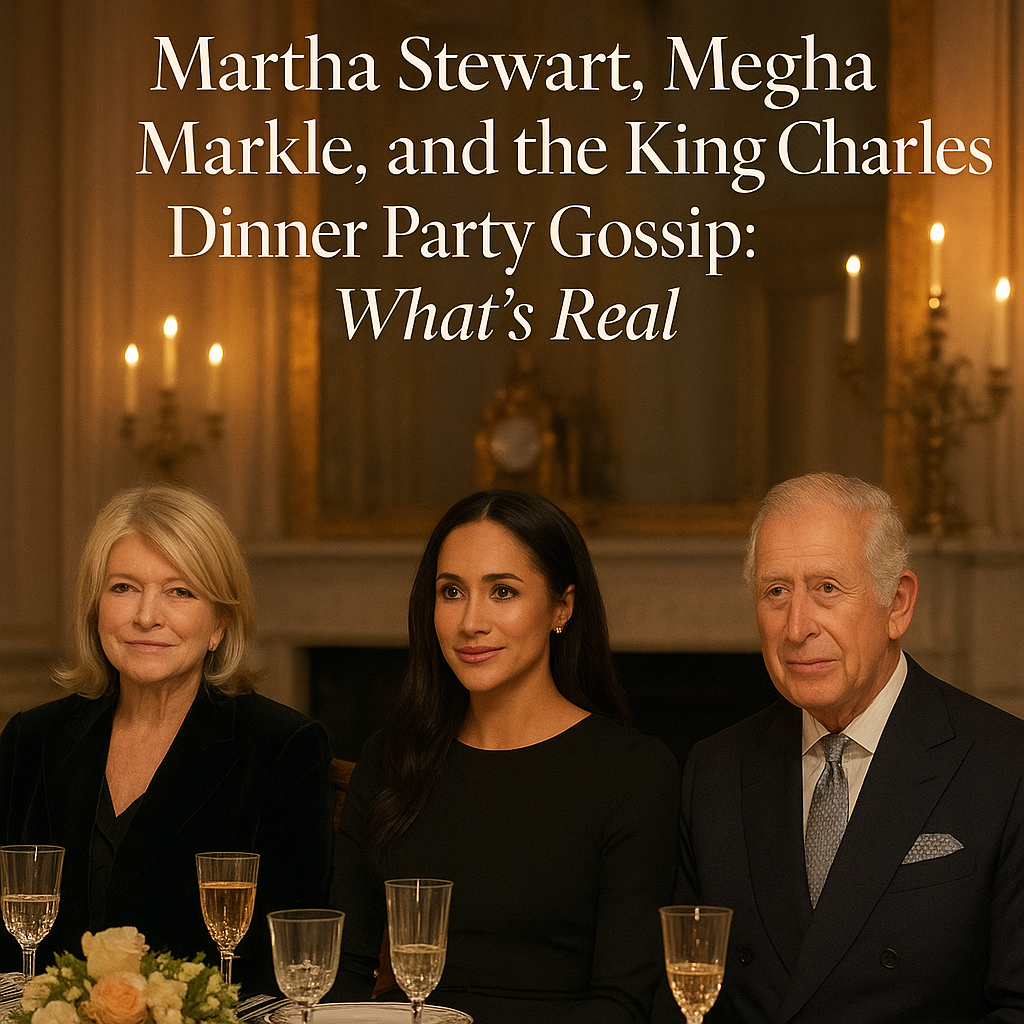
It is a media narrative built around an alleged remark by Martha Stewart that Meghan Markle was gossiping about a private reunion with King Charles at a California dinner party. That is a mouthful, yes, but the structure matters. The story is not just about what was said. It is about who said it, who repeated it, and how quickly the public treats a whispered account as settled fact.
Frankly, celebrity gossip lives on proximity. One person claims to have heard something, another outlet repeats it, and suddenly the story has the sheen of truth. I have covered enough public-figure drama to know this pattern: the most polished people are often the ones with the messiest information trail. The public sees the headline, not the chain of assumptions behind it.
There is also the royal angle. Any mention of King Charles changes the temperature of the story. Royals are not ordinary celebrities; their private interactions are political, symbolic, and heavily stage-managed. A dinner-party comment about a reunion sounds small, but in royal coverage even a shrug can be inflated into a constitutional crisis with better lighting.
The safer reading is simple. We are looking at a gossip claim, not a verified event. That distinction matters. Charity in judgment matters too. People are more than their labels, and public figures are still human beings, even when the tabloids shave them into characters.
Here’s the kicker: stories like this tell us more about media hunger than about truth. Readers want a villain, a victim, and a snappy quote. Real life is less tidy.
Core Details and Context
The details are slippery.
Here is what stands out when you strip away the perfume and press-release polish:
- Martha Stewart is a powerful media figure with a long history of blunt commentary, so any alleged remark from her gets amplified quickly.
- Meghan Markle remains one of the most scrutinized women in the world, which means even ordinary social chatter gets recast as strategy.
- King Charles brings royal significance, and royal significance attracts speculation like a magnet.
- A California dinner party sounds casual, but in celebrity media even casual settings can become headline factories.
Let’s be real. Most celebrity gossip is not born in the room where it allegedly happened. It is born in the retelling. One person says “I heard,” another says “sources claim,” and a third writes it up as if they were standing beside the breadbasket. That does not make every story false. It does mean the burden of proof should stay heavy.
The narrative also fits a familiar pattern in CelebrityNews and Royalty coverage: private women are often written as schemers, while public men are framed as symbols. That imbalance is tired. It also sells.
There is another layer. When a public figure like Meghan is involved, every action gets interpreted as a sign of motive. If she speaks, she is controlling the story. If she stays quiet, she is plotting. If she attends an event, she is sending a message. If she skips it, that is also a message. Frankly, that is not analysis; it is a trap.
I’ve watched this kind of coverage long enough to know the real story is usually about media coverage itself. Who first framed the quote? Who benefits from the outrage? Who gets clicks when the royal family appears to be in conflict again? Those are the questions worth asking.
For readers who want the broader royal context, it helps to compare this sort of rumor with more established reporting on the family. See also our coverage of the broader royal family news and this careful breakdown of Meghan Markle media scrutiny. The point is not to pick sides. The point is to separate evidence from theater.
And yes, the theater is loud.

Timeline and What Actually Happened
The sequence matters.
Here is the cleanest way to think about the story, step by step:
- A private social setting is described. A California dinner party is referenced as the backdrop.
- An alleged remark is attributed. Martha Stewart is said to have commented on Meghan Markle gossiping about a private King Charles reunion.
- The comment is circulated. Media outlets and social posts repeat the claim, often with little added evidence.
- The story gains emotional weight. Once the words “Meghan,” “King Charles,” and “gossip” are in the same sentence, people stop asking basic questions.
- Public interpretation takes over. Supporters and critics read motive into the report, even when the sourcing remains thin.
Here’s what I think happened, based on the pattern, not the perfume. The original comment, if it was made, likely passed through several layers of retelling before becoming a usable headline. That is how tabloid stories are cooked. Not always maliciously, mind you. Sometimes people at parties exaggerate because they like attention, and the press obligingly gives them a bigger stage.
The truth is, this story may be less about the facts of the reunion and more about the public appetite for royal tension. The modern attention economy rewards friction. Calm is boring. Conflict pays.
A careful reader should also notice the missing pieces. Who directly heard the alleged gossip? What was the exact wording? Was the private reunion even the central topic, or just a passing mention? Without those answers, any confident conclusion is overcooked.
I’ll say this plainly. A decent person should resist the temptation to turn a half-seen anecdote into moral certainty. Human beings are complicated, and Christian common sense has always known this: a person is never just the worst line whispered about them in a room full of wine glasses.
If you want a model for how verified coverage differs from rumor, compare this to established reporting on King Charles and the monarchy and broader coverage of celebrity relationship rumors. The contrast is obvious. Careful reporting gives context. Gossip gives velocity.
Comparison Table
| Topic |
Martha Stewart/Meghan Markle gossip claim |
Biggest comparator: verified royal reporting |
| Source strength |
Mostly secondhand, rumor-driven |
Direct quotes, named sources, or official statements |
| Public purpose |
Entertainment, speculation, outrage |
Factual reporting and context |
| Reliability |
Low to medium, depending on sourcing |
Higher, because evidence is clearer |
| Main risk |
Turning hearsay into fact |
Slower pace, but fewer distortions |
| Audience reaction |
Fast clicks, strong opinions |
More measured, less explosive |
| Real value |
Shows how gossip spreads |
Explains what actually happened |
That table tells the story better than a dozen hot takes. The rumor is exciting. The verified material is useful.
Common Misconceptions and What to Know
The myths are loud.
A lot of people assume that if a celebrity says something with confidence, it must be true. Wrong. Confidence is not evidence, and a sharp tone is not a fact check. Martha Stewart, Meghan Markle, and royal figures all carry enormous public weight, which makes every quote feel heavier than it is. That is exactly why skepticism matters.
Here are the main misconceptions:
- “If it’s in print, it must be true.” No. Print can carry guesses, paraphrases, and recycled chatter.
- “A private dinner means private truth.” Not really. Private settings breed exaggeration, selective memory, and status games.
- “Meghan is always scheming.” That kind of blanket reading says more about the reader than the subject.
- “Martha Stewart would never repeat gossip.” Public figures have personalities, grudges, and blind spots like anyone else.
Let’s be blunt. The internet rewards caricature. Meghan becomes the perpetual strategist. Martha becomes the seasoned arbiter. King Charles becomes the distant symbol. None of those are whole people. They are roles, and roles are easier to sell than reality.
There is also a moral hazard in enjoying scandal a little too much. I’m not saying people shouldn’t read celebrity news. Of course they will. I’m saying the habit can become lazy if it stops at judgment. Better to ask: What is actually documented? What is assumed? Who profits from the noise?
This is where a more humane worldview helps. Catholic teaching, at its simplest, insists on the dignity of the person. That cuts against the grain of tabloid culture, which likes to flatten people into saints, villains, or content. It is healthier, and frankly more honest, to remember that public figures carry both strengths and flaws, just like everybody else.
For readers interested in how rumor becomes narrative, this connects well with broader stories in celebrity gossip reporting and royal household coverage. The same pattern keeps showing up: a tiny spark, a giant blaze, and a lot of smoke where the evidence should be.
Frequently Asked Questions
What did Martha Stewart reportedly say about Meghan Markle?
The claim is that Martha Stewart suggested Meghan Markle was gossiping about a private reunion involving King Charles at a California dinner party. The exact wording and sourcing matter, and that is where most retellings get fuzzy.
Is the gossip claim confirmed?
No firm public proof has been established from the information available here. That is the whole issue. Without direct sourcing or a clear statement, it should be treated as an allegation, not settled fact.
Why do stories about Meghan Markle spread so quickly?
Because she is one of the most watched public figures on earth, and because royal stories mix celebrity, politics, and family tension. That combination is rocket fuel for media coverage.
Why does King Charles’ name change the story so much?
Because anything involving the monarchy carries symbolic weight. A private conversation can sound trivial, but once a reigning monarch is mentioned, the stakes look bigger, even when the facts remain thin.
Final Thought
This is one of those stories that looks juicy and feels complete before it is actually proved. That is the trap. A dinner party, a royal reunion, a sharp remark, and suddenly everyone thinks they know the whole script. They don’t.
When I track stories like this, the pattern is usually the same: a little fact, a lot of interpretation, and a crowd eager to fill in the blanks with whatever flatters its prior views. That is not wisdom. It is habit. And habits, especially the bad ones, shape public life more than people admit.
So here’s the sensible take. Treat the claim as gossip until stronger evidence appears. Respect the people involved enough not to turn rumor into verdict. Remember that fame does not erase human dignity, and scandal does not reveal the whole person. The truth is rarely as tidy as a headline, and it is rarely as cruel as the comments section.
People are more than their public image. That should not be a radical thought, but apparently it is.