Larry Poindexter Dead at 66: What We Know About the Actor’s Death and Career
Actor Larry Poindexter, best known for Days of Our Lives, General Hospital and 2003’s S.W.A.T., died Nov. 18 at 66, five days after a car struck him while he was out picking up dinner in Los Angeles, according to his agent. Police confirmed a pedestrian-collision call but have not publicly confirmed the victim’s identity or disclosed a cause of death.
The new details put a difficult five-day period into clearer view, but they do not answer every question. Gold said Poindexter suffered broken ribs and was hospitalized for observation and treatment. The agent also said the injuries were not initially diagnosed as serious; Deadline reported that surgery for the broken ribs was scheduled for the day Poindexter died. Those accounts describe what was known at different moments, not a confirmed medical explanation for his death.
That distinction matters. When I compare the statements attributed to Gold with the LAPD’s limited account, I see a confirmed report of a collision and an ongoing investigation—not a public finding about fault or cause. Celebrity coverage often races past that boundary. Frankly, the facts are strong enough without dressing uncertainty up as certainty.
Poindexter worked across daytime television, primetime series and film, while also pursuing music and musical theatre. His career was not defined by one role, even if soap audiences and moviegoers remember him for different things. The accounts from his representatives describe a performer and family man; they do not give the public a license to fill in private medical or investigative details.
What Is Known About Larry Poindexter and His Career?
Larry Poindexter was an American actor whose credits reached from daytime serials to network dramas and feature films. The best-known television entries in the reports are Days of Our Lives and General Hospital, where he played recurring or multi-episode roles rather than a single brief guest spot. He appeared as Ben Welch on Days beginning in 1984, with 30 episodes credited, and returned to the series as recently as 2018. On General Hospital, he played Dr. Asher Thomas in 12 episodes in 2005.
That kind of career can be easy to undersell. Soap operas demand speed, continuity and a performer’s ability to make a character legible through repeated scenes, often while the story keeps moving at a clip. A recurring role is not a footnote simply because it does not come with a theatrical premiere or a film poster. For many viewers, these performances become part of the daily rhythm of watching television.
Poindexter’s other credits show a broader working life. He appeared on Santa Barbara in 1986, and his résumé also included New York Daze, JAG and Blade: The Series. He later appeared in The Hard Times of RJ Berger across two seasons, in three episodes of CSI: Crime Scene Investigation, and on Station 19. The Lincoln Lawyer and Script Flippers Content were reported as his final credits. The available accounts do not provide episode-by-episode production dates for those last projects, so it is best not to invent a sequence beyond what has been reported.
Film audiences may recognize him from S.W.A.T., the 2003 movie starring Samuel L. Jackson and Colin Farrell. That credit placed Poindexter alongside major names in a high-profile studio release, but it is only one entry in a career that also relied on television work. His agent, Harry Gold, added another dimension: Poindexter had musical talent, played in a rock band and produced musicals. Gold said music mattered to him.
The human details are worth keeping in proportion, too. His manager Adam Levine described him to PEOPLE as “incredibly kind and loving to his family, friends and strangers alike,” and called him a true artist devoted to his craft. Those are personal recollections, not a substitute for a full biography. Still, they help explain why colleagues remember more than a list of credits. Poindexter is survived by his wife, Carol Kritzer, a casting director, and their two sons. Their privacy deserves the same care as the public record.
Core Details and Context
The central new detail concerns the timing of the collision. Gold told NBC News that Poindexter was in Los Angeles picking up dinner when a car struck him on Friday, Nov. 13. A spokesperson for the Los Angeles Police Department told PEOPLE that a radio call was generated at about 6 p.m. that day for a “traffic collision vehicle vs pedestrian.” The department said the pedestrian was taken to a local hospital by the Los Angeles Fire Department and that Van Nuys officers completed a report.
The police account has a firm limit. The spokesperson did not confirm the pedestrian’s identity, and the LAPD said an investigation was active. That means the public account should not state who was driving, exactly where the collision happened, whether anyone was cited, or who was at fault. None of those details is reported in the accounts cited here. A police record of a call is useful evidence that officers responded; it is not the same thing as a final investigative finding.
Gold described injuries that included broken ribs. He said Poindexter was admitted for observation and to repair broken bones, adding that doctors did not initially diagnose the injuries as anything serious. The agent’s words give a glimpse of how the situation appeared at first, but they do not establish the medical reason Poindexter later died. A person can deteriorate, complications can emerge, and information may remain private; without a statement from the family, medical authorities or investigators, speculation would be just that.
Deadline reported that Poindexter was scheduled to undergo surgery for his broken ribs on the day he died. That is an important reported detail, but it does not tell us whether the operation took place, was postponed, or was related to the death. The reports do not supply that answer. Here’s the kicker: a scheduled procedure and a later death may invite readers to connect the dots, but the dots cannot responsibly be joined without evidence.
There is also no contradiction in saying the injuries were first described as not serious and that surgery was later planned. Early assessments and later treatment plans can differ as a patient’s condition changes or as doctors decide how best to repair an injury. Yet the public does not have enough clinical information to say what happened in this case. The useful line is plain: attribute the timeline to the people who reported it, and leave the medical conclusion open until it is confirmed.
Timeline: What Happened
- Friday, Nov. 13, around 6 p.m.: Police receive a collision call. The LAPD spokesperson told PEOPLE that a radio call was generated for a vehicle-versus-pedestrian collision. The pedestrian was taken to a local hospital by the Los Angeles Fire Department, and Van Nuys officers completed a report. Police did not publicly identify the pedestrian.
- Nov. 13: Gold says Poindexter was struck while getting dinner. In an interview published by NBC News on Thursday, Nov. 19, agent Harry Gold said Poindexter was out in Los Angeles “picking up some dinner” when the car hit him. The report ties Poindexter to the collision through his agent’s account, while the LAPD’s public statement stops short of confirming the person’s identity.
- After the collision: Poindexter is hospitalized. Gold said the actor had broken ribs and was admitted for observation and treatment of broken bones. He recalled that the injuries were not diagnosed as anything serious at that stage. The reports do not provide hospital records, a detailed treatment chronology or a public medical statement.
- Wednesday, Nov. 18: Poindexter dies at 66. His talent manager Adam Levine confirmed the death in a statement to PEOPLE. Levine remembered Poindexter as kind and loving, and said he took joy in entertaining and informing audiences through his performances. The date means he died five days after the reported collision.
- Thursday, Nov. 19: The circumstances are reported publicly. NBC News published Gold’s account of the collision. Deadline reported that surgery for the broken ribs had been scheduled for the day Poindexter died. These reports add context, but neither supplies an official cause of death or a final police conclusion.
- At the time of reporting: The investigation remains active. The LAPD confirmed that officers completed a report and said the investigation was ongoing. When I line up the dates, the sequence is clear; the medical explanation and any finding about fault are not. That is where responsible coverage has to stop, at least until authorities or the family choose to provide more.
Comparison: Poindexter’s Soap Roles and Film/Television Work
Larry Poindexter’s career is not a contest with another actor. A more useful comparison is between the two sides of his own résumé: recurring daytime work and a wider mix of film and television appearances. One brought familiarity through returning roles; the other placed him in different projects and formats. The distinction helps explain why audiences may remember him from very different places.
| Career lane | Reported credits | What the record shows |
|---|
| Daytime soap roles | Days of Our Lives; General Hospital; Santa Barbara | Ben Welch appeared on Days beginning in 1984, with 30 episodes reported and an appearance as recently as 2018. Dr. Asher Thomas appeared in 12 General Hospital episodes in 2005. Poindexter also starred on Santa Barbara in 1986. |
| Film and other television | S.W.A.T.; New York Daze; JAG; Blade: The Series; CSI; Station 19 | S.W.A.T. was a 2003 film featuring Samuel L. Jackson and Colin Farrell. The other credits show his work extended across series and formats, though the reports do not give a complete episode or role breakdown for every title. |
| Later credits and creative work | The Hard Times of RJ Berger; The Lincoln Lawyer; Script Flippers Content; music and musicals | He appeared on two seasons of The Hard Times of RJ Berger, and The Lincoln Lawyer and Script Flippers Content were reported as final credits. Gold also described his rock-band and musical-theatre work. |
The table is not a ranking. It shows why a single “best known for” label can flatten a working actor’s career. Soap viewers may remember the characters and the years; film viewers may connect the name with S.W.A.T.; other audiences may recall a guest appearance from a drama they watched once. None of those memories cancels the others.
The comparison also exposes a familiar media problem. A high-profile film title can dominate a short obituary because it is easy to recognize, while decades of television work appear as a hurried list. But recurring work has a different kind of cultural reach: a performer returns to living rooms week after week, and viewers build a quiet familiarity with the character. That recognition is real, even if it does not always translate into headline billing.
Poindexter’s musical interests matter for the same reason. Gold’s comments suggest that performing was not limited to the camera; music and stage production were part of his creative life. The reports do not name the band or the musicals, so there is no sound basis for adding those details. Still, the fact that his agent chose to mention them says the work was meaningful to Poindexter and to the people who knew him professionally.
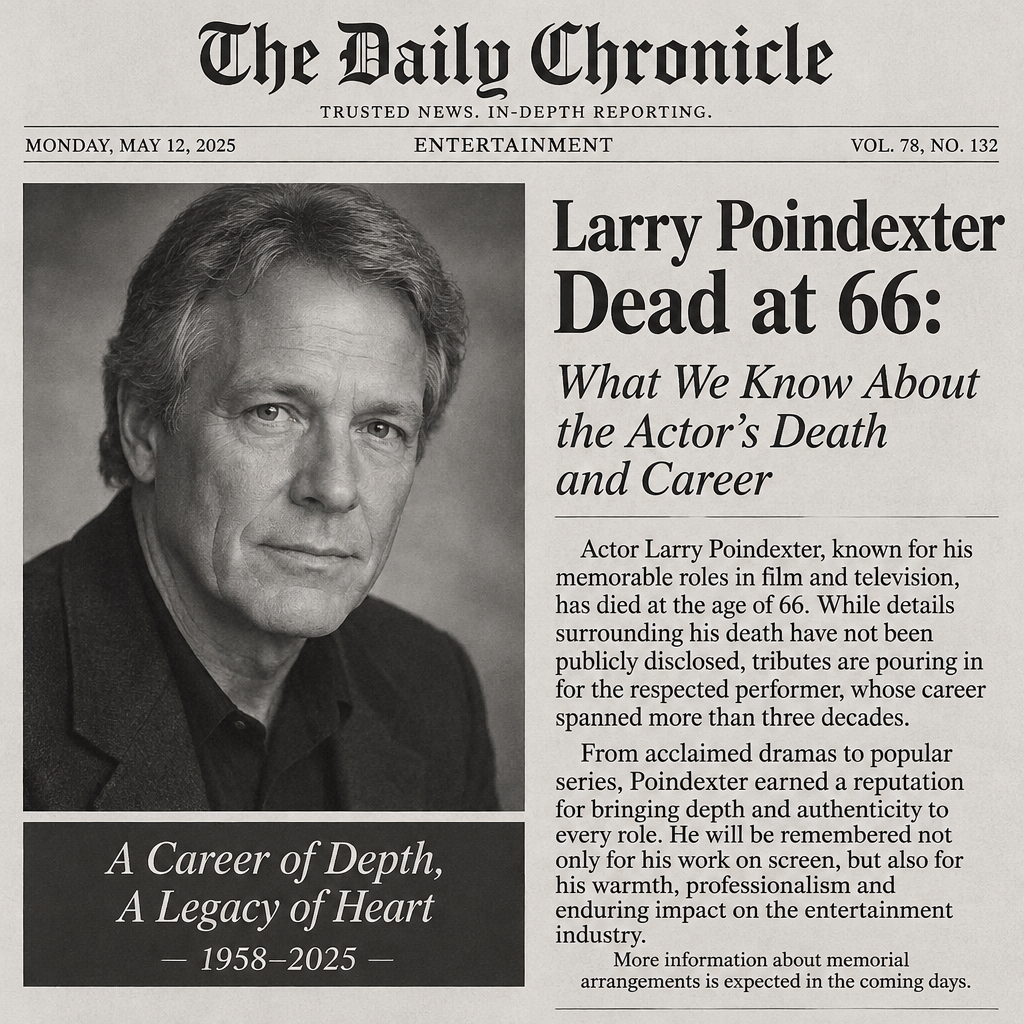
Common Misconceptions and What to Know
Misconception: The cause of death has been confirmed. It has not been established in the reports cited here. Poindexter died five days after the collision, and his agent discussed broken ribs and hospitalization. That sequence is important, but it is not a medical finding. No public statement in these accounts says precisely what caused his death. Anyone presenting a specific cause as confirmed is going beyond the available information.
Misconception: Police publicly identified Poindexter as the pedestrian. The LAPD spokesperson did not confirm the pedestrian’s identity. The connection comes from Gold’s account to NBC News and the surrounding reporting, while police confirmed a collision call and an investigation. Those are different sources saying different things at different levels of specificity. Keeping that distinction visible is basic accuracy, not hair-splitting.
Misconception: An early assessment that injuries were “not serious” means there could be no later emergency. That is not what the remark proves. Gold described the initial assessment as he understood it; Deadline separately reported a planned operation. Medical conditions and treatment decisions can change. Without clinical records or an authorized medical explanation, readers should not diagnose the gap or assign a reason for it.
Misconception: The reports establish who caused the crash. They do not. No driver’s name, citation, charge, or finding of fault is included in the accounts summarized here. The investigation was still active when the LAPD spoke to PEOPLE. A collision involving a pedestrian is serious, but seriousness is not proof of a particular person’s responsibility.
Misconception: Poindexter’s work can be reduced to one recognizable title. S.W.A.T. brought him into a major film with prominent co-stars, but his résumé ranged across soaps, television dramas, later series, film and musical work. “Best known for” is a shorthand used by publications, not a complete measure of an actor’s skill or influence. The people who watched his recurring soap roles may have a different answer from someone who saw him in a movie.
Misconception: A public figure’s family life is fair game because the death is news. His wife and sons are named as survivors, and his wife’s work as a casting director is public biographical information. That does not make their private grief an open invitation for rumor or intrusion. People are more than a public image or a string of credits; charity in judgment is especially useful when the facts are incomplete and a family is mourning.
Frequently Asked Questions
How did Larry Poindexter die?
The reports say Poindexter died on Nov. 18, five days after he was struck by a car in Los Angeles, according to his agent Harry Gold. Gold said Poindexter suffered broken ribs and was hospitalized. The reports cited here do not establish a medical cause of death, so it would be inaccurate to state that the collision or a specific injury was officially confirmed as the cause.
When was Larry Poindexter hit by a car?
Gold told NBC News that the collision happened on Friday, Nov. 13, while Poindexter was out picking up dinner. The LAPD told PEOPLE it received a radio call at about 6 p.m. for a vehicle-versus-pedestrian collision. Police did not publicly confirm the pedestrian’s identity, and the investigation was reported as ongoing.
What was Larry Poindexter known for?
Poindexter was known for playing Ben Welch on Days of Our Lives and Dr. Asher Thomas on General Hospital, as well as appearing in the 2003 film S.W.A.T. His other credits included Santa Barbara, JAG, Blade: The Series, CSI: Crime Scene Investigation, Station 19 and The Lincoln Lawyer. His agent also spoke about his musical talent and his work producing musicals.
Who survives Larry Poindexter?
Poindexter is survived by his wife, Carol Kritzer, a casting director, and their two sons. His talent manager described him as kind and loving toward family, friends and strangers. Beyond those reported details, the family’s private circumstances have not been set out in the accounts, and there is no need to speculate about them.
Final Thought
The confirmed outline is both simple and sobering: Larry Poindexter was struck by a car in Los Angeles on Nov. 13, was hospitalized with broken ribs, and died five days later at age 66. His agent provided the account of the collision, the LAPD confirmed a pedestrian-collision response but withheld the subject’s identity, and the department said its investigation remained active. The public reports have not established a cause of death or fault.
That may feel incomplete. It is incomplete. But the honest account of a death is not improved by filling the empty spaces with guesses, however tempting the timeline may make them. A planned surgery does not prove what happened in the operating room; a first assessment does not explain a later death; a collision report does not decide liability. Those answers belong to evidence and to the people authorized to share it.
Poindexter’s career offers a fuller way to remember him than the final days alone. He worked in daytime television, appeared in film and series, and cared about music and musical production. Viewers may remember Ben Welch, Dr. Asher Thomas, S.W.A.T. or another role entirely. His manager’s tribute adds the personal qualities colleagues valued, while his family remains at the center of a loss no headline can measure.
Frankly, the point of careful reporting is not to make a story less human. It is to treat the person in it as human: gifted and ordinary, known to audiences but still entitled to privacy, remembered for achievements without pretending that anyone’s life is only a résumé. For now, the facts can be stated plainly, the unanswered questions left unanswered, and the family’s grief treated with respect.