Kristen Doute Says Luke Broderick Won’t Film The Valley Season 4
Kristen Doute says fiancé Luke Broderick will not film Season 4 of The Valley. She told Page Six the choice followed a conversation about their family and Broderick’s mental health. Doute says she supports his decision, while continuing her own work on the show and her clothing brand.
This is a boundary around one season of filming, not a confirmed breakup or a blanket retreat from public life. In an exclusive conversation at a James Mae pop-up, Doute described the decision as one made together, while making clear that the final call about participating belonged to Broderick.
The distinction matters. Reality television can make an ordinary family decision look like a plot twist, but the available facts are simpler: Doute says her fiancé will sit out Season 4, and she plans to support him while balancing motherhood, work, and continued filming of her own life.
The report also offers context for the choice. Doute said Season 3 arrived when the couple were new parents and that she experienced a difficult postpartum period. She did not describe a diagnosis, and this article does not assign one. What she did say is that the early months of parenting, combined with cameras and expectations, were hard.
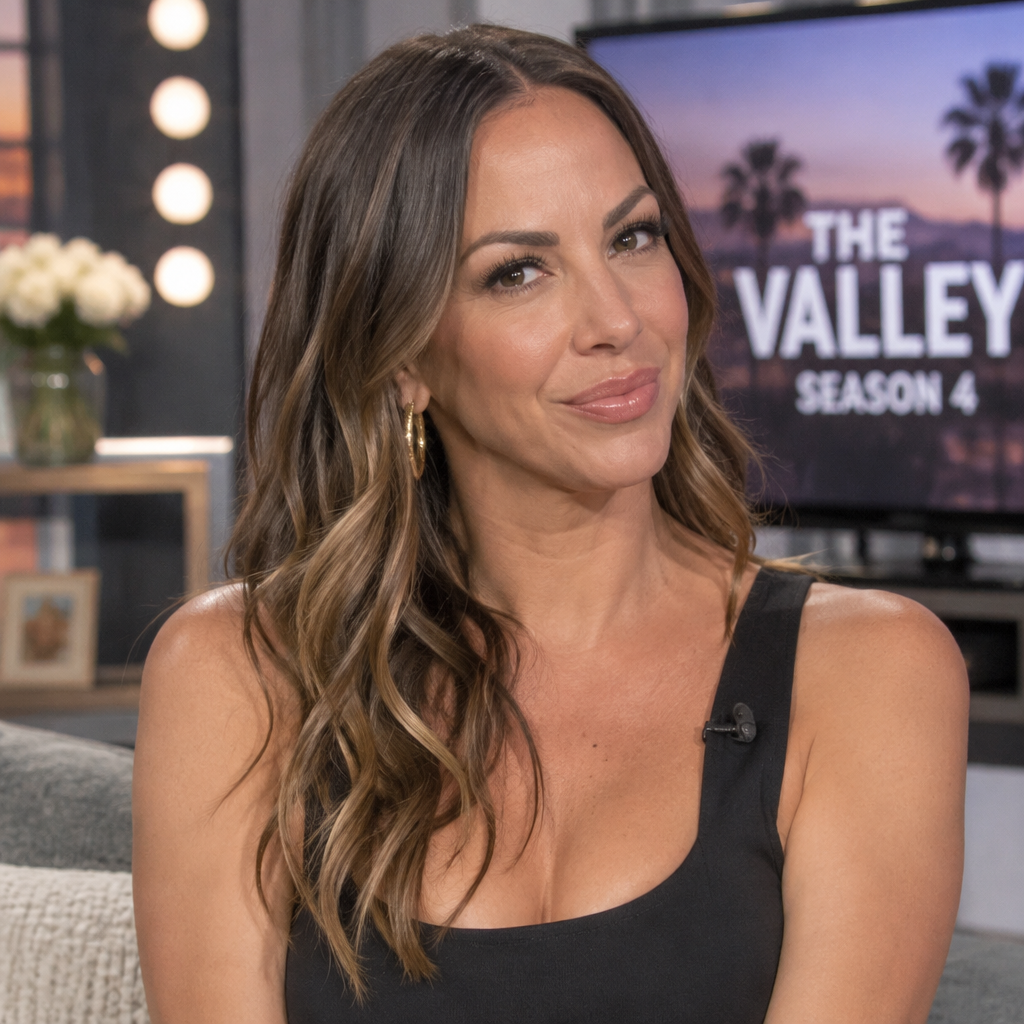
What Is Kristen Doute’s The Valley Season 4 Decision?
The decision is specific: according to Doute’s interview with Page Six, Broderick has decided not to film for Season 4 of Bravo’s The Valley. Doute said the two discussed it before production, with attention to their family and his mental health. She said she would have liked him to participate, but left the choice in his hands and supports the outcome.
That is not the same as a cast firing, a public feud, or a relationship announcement. No such explanation was given in the interview. The available report does not say Broderick has permanently quit reality television, and it does not give a detailed account of what his mental-health concerns involve. Frankly, filling those gaps with confident fan theories would be guesswork dressed up as news.
The Valley is a Bravo reality series centered on a group of friends and families in the San Fernando Valley. Its official show page provides the network’s description and cast context, but the practical point here is more personal: the series brings cameras into relationships and home life, while Doute’s statement describes a choice to keep Broderick out of this season’s filming. See Bravo’s official The Valley page for the show’s own framing.
Doute is not saying she has stepped away. Bravo cameras were reportedly rolling at the James Mae pop-up where she spoke to Page Six, and the report says she continues to take part in the show’s world. Broderick did not attend the event, but the report does not say why. Those details should not be stitched into a dramatic explanation that nobody offered.
There is a difference between choosing privacy and rejecting a person’s work. Doute said she would have welcomed Broderick’s presence, then accepted his decision when it did not feel right to him. That account presents support, not a demand that he perform for viewers. People are more than their public image or their best-known scene; fairness means leaving room for both affection and limits.
The choice also sits beside Doute’s return to work. She said she felt her creative energy coming back as Kaia grew older, and described herself as a mother first while also stepping back into her own projects. Those roles are not mutually exclusive. They simply make the calendar crowded, as any new parent who has tried to run a business can tell you.
Core Details and Context
The clearest detail is the timing. Doute said production on Season 3 began about two-and-a-half months after Kaia was born, leaving the couple to adjust to parenthood while cameras captured their lives. She described that season as very difficult for both of them. That is her account of the experience, not a complete record of every private conversation or every filming day.
Doute also spoke about a difficult postpartum period that, by her account, lasted until Kaia was around 10 months old. She said the contrast between what they expected and what new parenthood actually felt like contributed to strain. The interview does not establish a medical diagnosis, and postpartum experiences differ from person to person. For general information—not an assessment of Doute—read the American College of Obstetricians and Gynecologists’ guidance on postpartum depression.
Her comments about other parents were careful in an important way. She said conversations with mothers in her community and with friends who are parents helped her recognize that difficult adjustment can happen to many families. That may have made her feel less alone; it does not turn one person’s story into a rule for everyone. New parents need useful support, not a scoreboard measuring who is coping correctly.
The couple’s daughter is Kaia Lily Broderick, whom they welcomed on June 11, 2025, after a lengthy and emotional fertility journey, according to the report. The couple had met in 2022 while serving in a mutual friend’s wedding party, and Broderick proposed in Maui in 2024 during a cast trip, with cameras present. That timeline explains why fans connect their relationship milestones to the show, but it does not make every later choice a television storyline.
Doute’s business life is another part of the picture. She co-owns James Mae with Suzanne Jones and said the brand has been part of her life for eight years. The latest collection includes hats, pouches, sweatshirts, and graphic tees for children, women, and men. The James Mae website offers the brand’s own view of its products; Doute told Page Six she is involved in the creative process from beginning to end.
She is also launching the Run It Back podcast with Katie DiMento. That detail matters because Doute’s Season 4 presence and Broderick’s absence are not the whole story of what either person is doing. Doute is maintaining public-facing work while drawing a line around one partner’s participation. Here’s the kicker: the decision is less mysterious than the online chatter suggests.
At the pop-up, cast members Brittany Cartwright, Tom Schwartz, Lacy Nicole, Lala Kent, Jesse Lally, and others attended in support of Doute’s West Coast Rock ’N’ Roll collection, according to the report. Broderick was not there. His absence from that event is a separate fact from his decision not to film Season 4, and the reason for skipping the pop-up was not reported.

Timeline: How the Decision Fits Together
The public timeline helps keep the story in proportion. It starts before the cameras, includes the couple’s transition to parenthood, and ends with Doute’s current explanation. The order matters because a new season announcement can tempt people to treat every earlier moment as evidence of a planned split. The reported dates do not support that leap.
- 2022 — They meet. Doute and Broderick first met while serving in the wedding party of a mutual friend. The report identifies that meeting as the start of their relationship, not as a television setup.
- 2024 — Broderick proposes. He proposed during a cast trip to Maui, with cameras rolling. That is a public milestone documented in the show’s orbit, but it does not establish that the couple agreed to film every later family decision.
- June 11, 2025 — Kaia is born. The couple welcomed their daughter after a difficult fertility journey, according to Page Six. Doute later described the shift into parenthood as a major change in both expectations and daily life.
- About two-and-a-half months later — Season 3 filming begins. Doute said filming started while they were still very new parents. She described the season as difficult and said her postpartum period remained hard until Kaia was around 10 months old.
- Before Season 4 production — They discuss filming. Doute said she wanted Broderick to be involved if he wanted to be, but made room for him to decide otherwise. She says the conversation centered on their family and his mental health.
- At the James Mae pop-up — Doute makes the decision public. She spoke with Page Six at the Hollywood event, where Bravo cameras were reportedly present and cast members came out to support her collection. Broderick did not attend; the reason was not reported.
I read that sequence as a practical account of changing priorities, not proof of an off-camera crisis. Doute has linked her support to the choice Broderick made, and she has described a difficult stretch of early parenthood in her own words. Anything beyond that needs better evidence than an online hunch.
The timeline also shows why the news drew attention. The couple’s proposal and family life have overlapped with filming, and viewers saw tension during Season 3. Still, past access is not a promise of future access. A camera crew may document a relationship without acquiring rights to every private moment in it.
Comparison: Filming Season 4 Versus Sitting It Out
This comparison is about the two choices Doute discussed, not a ratings contest between shows or a claim about what the cast earns. The report supplies no audience figures, contract details, or production terms. What it does provide is Doute’s explanation of why Broderick is not taking part and how she intends to handle the choice.
| Question | Filming Season 4 | Sitting out Season 4 |
|---|
| Who is involved? | Broderick would appear in the season’s filming, if he chose to participate. | Doute says Broderick decided not to film. |
| What reason is reported? | Doute said she would have liked him to join, if it felt right to him. | She says their discussion focused on family and his mental health. |
| What does Doute say about her role? | She was open to his participation. | She says she supports his decision. |
| What is known about the outcome? | The report does not describe a final filming plan for him beyond the decision not to film this season. | The report does not say he is leaving the relationship or permanently leaving television. |
| What remains private? | No detailed production schedule or contract terms are reported. | No specifics about Broderick’s mental health are reported. |
Neither column proves that one option is morally superior. Filming can be part of a person’s career and a shared creative choice; declining to film can also be a sound boundary, especially when the person involved says family and mental health are part of the discussion. Let’s be real: viewers may want a complete explanation, but wanting one does not make it theirs to receive.
There is also no evidence here to compare The Valley with another reality show as a direct competitor. The useful contrast is between participation and nonparticipation, because that is the decision Doute actually described. The facts provided support a narrow reading: Broderick will not film this season, Doute continues her own work, and the couple has not announced a separation.
For Doute, the balance is not simply television versus home. She is also returning to a clothing business, developing a podcast, and raising a young child. A public career can include deliberate limits; in fact, the ability to set them may be what lets someone keep working without placing every part of family life on display.
Common Misconceptions and What to Know
Misconception: Broderick has been fired. Doute said he decided not to film after the couple discussed it. The report does not describe a network decision, a firing, or a dispute with producers. Those are different claims, and there is no basis here to treat them as interchangeable.
Misconception: The couple has broken up. No breakup was announced in the interview. Doute referred to Broderick as her fiancé, described a joint discussion, and said she supports his choice. A decision about filming does not, by itself, establish the state of a relationship. Online speculation is cheap; accuracy is better.
Misconception: The reason is fully known. It is not. Doute identified family and Broderick’s mental health as considerations, but did not provide medical details or a full account of his private thinking. We should report what she said, not turn a brief explanation into an invented diagnosis or a detailed theory.
Misconception: Doute is leaving the show too. The report says she spoke while Bravo cameras were rolling at the pop-up, and it describes her as continuing to take part in the show’s orbit. It does not say she has quit. Her fiancé’s decision and her own work schedule are separate matters.
Misconception: Their Season 3 conflict tells us everything. Viewers saw tense moments, and Doute herself said the season was difficult. But a televised argument is an edited portion of a much larger life. It can show real emotion without serving as a complete diagnosis of a couple, a family, or their future.
Misconception: A hard postpartum period means a specific diagnosis. Doute used her own description of a difficult postpartum experience; the report does not state that she received a diagnosis. General medical resources can explain symptoms and support options, but they cannot tell readers what happened in a particular person’s private medical life. The distinction is basic—and worth keeping.
Misconception: A public figure owes the audience constant access. Doute’s career has included reality television, but that does not erase Broderick’s right to choose whether to be filmed. Celebrity coverage often rewards certainty and outrage. A more decent standard recognizes that a person may be compelling on screen and still deserve privacy off it.
The fairest reading is plain: Doute has spoken about a difficult season, a new-parent adjustment, and a decision made with her fiancé before production. The details of his mental health and the couple’s private discussions remain private. Charity in judgment is not the same as credulity; it means refusing to punish people for boundaries when the facts do not justify it.
Frequently Asked Questions
Is Luke Broderick filming The Valley Season 4?
No. Kristen Doute told Page Six that Broderick decided not to film the upcoming season. She said the choice followed a discussion about their family and his mental health. The report does not say that he is permanently leaving reality television or that he can never appear in a future season.
Why is Luke Broderick not filming?
Doute said their conversation focused on family and Broderick’s mental health. She did not share further details, and the report does not provide a separate statement from Broderick explaining his decision. Claims about a specific diagnosis, conflict, or production dispute would go beyond what has been reported.
Are Kristen Doute and Luke Broderick still together?
Doute spoke about Broderick as her fiancé and said she supports the decision he made. The interview did not announce a breakup. Based on the report, the claim that they have separated is unsupported.
What did Doute say about Season 3 and becoming a parent?
She said filming began when Kaia was about two-and-a-half months old and that Season 3 was difficult for both parents. Doute also described a difficult postpartum period that lasted until Kaia was around 10 months old, while noting that parenting has brought new challenges as their daughter grows.
What is Kristen Doute working on now?
Doute said she is returning to her creative work and to James Mae, the clothing brand she co-owns with Suzanne Jones. The collection includes apparel and accessories for children and adults. She is also launching the Run It Back podcast with Katie DiMento, according to the report.

Final Thought
The headline is easy to reduce to a familiar reality-TV formula: one cast member stays, another disappears, and viewers are invited to guess what the absence means. The reported explanation is more ordinary and, frankly, more human. Doute says she and Broderick discussed what would serve their family, and that he chose not to film this season. She says she supports him.
That does not settle every question about the couple’s life, nor should it. It gives a grounded explanation without opening every private door. Doute’s account of early parenthood is candid, but it is still her account; Broderick’s mental health remains his own. The show can keep documenting Doute’s career while the family chooses which parts of life stay outside the frame.
Meanwhile, Doute is finding her way back to business and creative work as a mother. The pop-up, the new collection, and the podcast offer evidence of momentum, not proof that family life has become effortless. New stages bring different demands. No neat television arc can capture all of that.
When I assess this story, I see a useful reminder: publicity is not consent to perpetual exposure. A person can be a reality star, an entrepreneur, a parent, and an imperfect partner without being reducible to one televised fight or one season’s cast list. The most responsible coverage sticks to what was said, leaves the unknowns alone, and lets a family make a choice without insisting that privacy itself must be a scandal.