Karen Read Documentary: John O’Keefe’s Family Finally Gets a Voice
The new Netflix Karen Read documentary broadens a case that earlier television treatments often told chiefly through Read’s perspective. By giving John O’Keefe’s mother, Peggy, and brother, Paul, room to speak—and by examining digital and accident-reconstruction evidence—it shifts attention from courtroom spectacle toward the man who died. It adds voices; it does not settle every disputed fact.
The distinction matters. Read was acquitted of murder in 2025, but the jury also convicted her of operating under the influence, so describing the result as a complete acquittal leaves out an important part of the verdict. The documentary arrives after two trials, a mistrial, years of competing theories, and an online campaign that turned neighbors and witnesses into targets. What can a film clarify, and what can it only frame?
What Is the Karen Read Documentary?
The Netflix documentary is a true-crime account of the criminal case surrounding the death of Boston police officer John O’Keefe and the prosecution of his girlfriend, Karen Read. Its reported point of difference is not a newly discovered verdict or a secret confession. It is a shift in emphasis: members of O’Keefe’s family, including his mother Peggy and brother Paul, speak alongside prosecution witnesses, while experts assess evidence that had already been argued over in court and online.
O’Keefe, 46, was found outside a home in Canton, Massachusetts, on January 29, 2022. He had been out with Read and other people the night before. Prosecutors alleged that Read struck him with her SUV and left him outside in freezing conditions. Read denied killing him. Her defense argued that O’Keefe was assaulted inside the home and that the investigation failed to establish what happened. Claims that people connected to the home took part in a cover-up were denied by those accused, and the allegations did not result in criminal charges against those witnesses.
That is the factual skeleton. The case became much larger than a dispute over a vehicle, a body, and a night out. It turned into a fight about police work, forensic interpretation, trust in local institutions, and the power of social media to shape what people believe before a jury reaches a verdict. Frankly, a documentary can make that tangle easier to follow, but a well-edited sequence is not the same thing as proof.
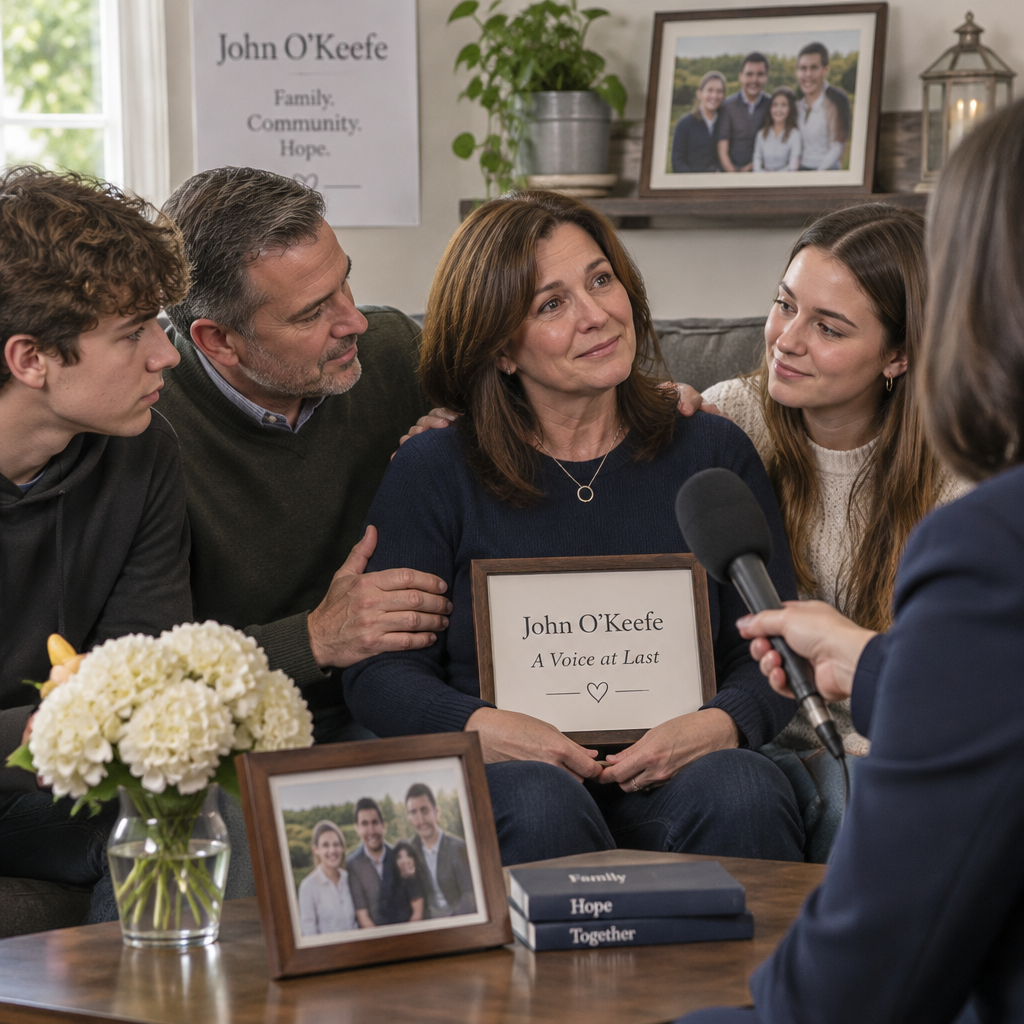
The family’s presence changes the emotional center of the film. Earlier television deep dives, according to the reporting around this documentary, leaned heavily on Read’s side of the story. Peggy and Paul O’Keefe bring viewers back to the cost of the case for the people who lost John, rather than leaving him as a name attached to an argument. That does not make their view of responsibility legally conclusive. It does make the human absence harder to ignore.
I assess this kind of true-crime production by separating three things: what the jury decided, what each side argued, and what the filmmakers choose to show. Those categories overlap, but they are not interchangeable. The legal record governs the verdict; witnesses and experts offer evidence; editors arrange it into a story. Viewers should keep all three layers in view.
Core Details and Context
The case’s central conflict is easy to state and difficult to resolve in a television episode: How did John O’Keefe die, and what responsibility, if any, did Karen Read bear? Prosecutors said her vehicle struck him and that she left him outside. Read’s defense challenged that account and argued that he was injured inside the home. The documentary presents experts who question some arguments widely circulated by the defense’s supporters, including material about digital evidence and accident reconstruction. An expert’s analysis can illuminate a point; it does not turn every unresolved question into a settled fact.
A few details deserve careful handling:
- The verdict was not an acquittal on every count. Read was acquitted of murder in 2025 and convicted of operating under the influence. The distinction matters because headlines that say only “acquitted” can leave readers with an incomplete account.
- The first trial did not produce a final murder verdict. In July 2024, the judge declared a mistrial after jurors could not reach a unanimous decision on the central charges. A mistrial is not a finding that the accused is guilty, nor is it a finding of innocence.
- The prosecution and defense offered competing accounts. The state’s account focused on a vehicle strike and Read leaving O’Keefe outside. The defense challenged the state’s explanation and advanced an alternative theory involving events inside the home. Those are opposing legal positions, not interchangeable proven facts.
- The cover-up allegations were disputed. Supporters of Read accused people connected to the home, including members of the Albert family, of participating in a conspiracy. The people accused denied the claims, and no criminal charges were brought against the witnesses described in the reporting.
- The internet became part of the story. Local blogger Aidan Kearney, known as Turtleboy, made the case a recurring subject on his Canton Cover-Up show. The source account says he has faced witness-intimidation charges connected to his activities around the case and has denied wrongdoing. That allegation should not be treated as a conviction.
Here’s the kicker: the online version of the case often rewarded certainty, while the courtroom required evidence that could be tested. A person could be cast as a hero or villain in a post before a jury had settled anything. When I compare the documentary’s stated approach with the loudest social-media claims, the useful question is not which camp sounds more confident. It is which claim is supported by evidence, and how strong that evidence is.
The family’s position is clear. They believe Read killed O’Keefe and reject the alternative accounts promoted by her supporters. That is their view, and their right to express it; it is not a substitute for the jury’s verdict. Respecting a family’s grief does not require pretending that grief answers every forensic question. Respecting Read’s acquittal on the murder charge does not require pretending that every public claim made in her defense was established in court.
The coverage also raises a basic issue of public image. Read became, for many viewers, the face of a cause. O’Keefe became the center of arguments about evidence and influence. Witnesses became characters in online storylines. Yet people are more than a courtroom role, a viral clip, or a public accusation. Charity in judgment is not gullibility; it is a refusal to treat a human being as a disposable symbol.
Timeline: How the Case Reached Netflix
- January 29, 2022 — O’Keefe is found in Canton. He is discovered outside a home in the snow after a night out. The discovery begins a homicide investigation and, eventually, a case that draws intense local and national attention. The weather and location became part of the public discussion, but neither detail alone explains how he was injured.
- Read is accused and denies responsibility. Prosecutors allege that she struck O’Keefe with her SUV and left him outside. Read maintains her innocence and says he was assaulted inside the home. The competing explanations set the terms of the case, while questions about the police investigation and physical evidence become major points of dispute.
- Online coverage accelerates. Kearney’s commentary and other social-media activity help spread an alternative narrative. Supporters gather outside court, and the public debate grows beyond Canton. Some people see the online effort as scrutiny of a flawed investigation; critics say it helped turn witnesses into public targets. Both descriptions need evidence, not applause.
- July 2024 — The first trial ends in a mistrial. Jurors fail to reach a unanimous decision on the central charges, and the judge declares a mistrial. That procedural outcome leaves the prosecution unresolved. It does not validate every defense claim or prove the prosecution’s theory.
- The second trial ends in 2025. A jury acquits Read of murder and convicts her of operating under the influence. The verdict settles the criminal counts before that jury, but it does not erase the broader disagreement over how O’Keefe died or what the evidence means. A verdict has boundaries; online certainty often does not.
- The documentary adds the family and expert voices. Filming began during the first trial, before journalist Gretchen Voss published her later investigation into alleged coordination between Read’s defense team and online activists. The film’s experts challenge some popular defense arguments, while the O’Keefe family describes its loss and its belief about responsibility. Timing matters: the production was already underway before that investigation appeared.
The timeline also explains why viewers may encounter different versions of the story. A first-trial clip, a second-trial verdict report, a family interview, and a forensic analysis all come from different moments and answer different questions. I would not treat a viral excerpt as a complete account of testimony. Context is duller than a clip, but it is usually more useful.
Comparison: Netflix Documentary vs. Earlier Trial Coverage
The closest comparison is not a rival series with published ratings or a competing verdict. It is the earlier television coverage of the same case, which the reporting describes as concentrating largely on Read’s viewpoint. The newer documentary’s distinction is its reported choice to include O’Keefe’s family and to bring technical experts into a story already crowded with claims. That is an editorial comparison, not proof that one production is more accurate.
| Feature | Netflix documentary | Earlier TV deep dives described in reporting |
|---|
| Main emphasis | O’Keefe’s family, prosecution witnesses, and expert analysis alongside the case | Largely centered on Read’s viewpoint |
| Family presence | Peggy and Paul O’Keefe speak about their loss and their belief in Read’s responsibility | The reported account describes less emphasis on the O’Keefe family |
| Evidence discussion | Digital forensics and accident reconstruction are examined | The account says earlier treatments focused more heavily on Read’s perspective |
| Treatment of online activity | Kearney’s role and the influence of online narratives are analyzed | The extent of coverage varies; the available account does not provide episode-by-episode comparisons |
| What it can establish | A new presentation of existing arguments and testimony | A previous presentation of the case, not a legal ruling |
The table has limits. No audience figures, episode titles, full production credits, or direct comparative content analysis are reported here, so claims about which show is more popular or comprehensive would be guesswork. It is also unwise to assume that a family-centered angle automatically makes a documentary fair, just as a defense-centered angle does not automatically make one false. The test is whether the film distinguishes allegations from verified findings and gives viewers enough context to judge the evidence.
The documentary’s most useful move may be its change in human focus. A murder case can turn into a battle of technical terms, courtroom clips, and online factions, while the person who died recedes into the background. Putting O’Keefe’s relatives on screen resists that flattening. Still, emotional testimony and forensic analysis do different jobs. One conveys loss; the other evaluates physical or digital evidence. Neither should be asked to do the other’s work.
Common Misconceptions and What to Know
Misconception: Read was fully acquitted. The short version is wrong. She was acquitted of murder in 2025, but the jury convicted her of operating under the influence. Readers should distinguish the murder acquittal from the full set of verdicts. That distinction neither revives the murder charge nor permits anyone to describe the conviction as a murder conviction.
Misconception: The mistrial proved the case was fabricated. It did not. A mistrial after a deadlocked jury means the jury did not return a unanimous verdict on the charges at issue. It says something about the jury’s inability to agree; it does not establish why jurors disagreed or whether a conspiracy existed. The later verdict must be described on its own terms.
Misconception: A documentary’s experts settle the case. They do not. The film’s digital-forensics and accident-reconstruction experts can test particular claims, explain methods, and identify weaknesses. Their work deserves attention, but an edited presentation is not a new trial. Viewers should ask what data the expert reviewed, what assumptions the analysis depends on, and whether the other side’s response is represented.
Misconception: The allegations against witnesses were established facts. They were not. Read’s supporters promoted claims that people connected to the home had taken part in a cover-up; those accused denied the claims, and the reporting says the witnesses were not charged with crimes. A person’s name appearing repeatedly online is not evidence of guilt. That should be obvious, but the internet has a habit of making obvious things feel optional.
Misconception: Online attention is the same as accountability. Public scrutiny can expose gaps, encourage questions, and put pressure on institutions. It can also spread errors, strip context from testimony, and intimidate people who are named in a viral accusation. Journalist Gretchen Voss told The U.S. Sun that she had faced online and in-person harassment after reporting on the case. The account also describes witness Jennifer McCabe receiving abusive calls and messages. Those reports deserve serious attention without turning allegations of harassment into an excuse to attack someone else.
Voss characterized the online activity as “mob justice, mob rule.” That is her assessment, not a legal finding. Her Boston Magazine reporting on the Karen Read case examined alleged coordination between Read’s defense team and online activists; the documentary, which began filming earlier, should not be described as a response to a report that came later. Sequence matters. The film can explore the online conflict, but its production timeline limits what it could have incorporated at the outset.
The broader lesson is not that every online commentator is malicious or every witness is reliable. It is that large audiences can inflict real damage when they treat suspicion as a verdict. Criticizing public testimony and analyzing evidence are legitimate. Threatening, harassing, or branding a person a murderer without proof is something else. A story about accountability should not reproduce the very behavior it claims to expose.
Frequently Asked Questions
What is the Netflix Karen Read documentary about?
It examines the case arising from John O’Keefe’s death and the two trials of his girlfriend, Karen Read. The documentary includes members of O’Keefe’s family, prosecution witnesses, and experts discussing digital forensics and accident reconstruction. It also considers the online activity surrounding the case. It presents a perspective on the dispute; it does not replace the jury’s verdict or establish every theory aired by either side.
Was Karen Read acquitted of murder?
Yes. A jury acquitted Read of murder in 2025. However, the result was not a complete acquittal on every charge: the jury convicted her of operating under the influence. Any accurate summary should include both parts rather than compressing the outcome into a single word.
Did the documentary prove there was a cover-up?
No. The cover-up theory was advanced by Read’s supporters and denied by the people accused. The reported documentary brings in experts who challenge some widely circulated defense arguments, but that is not the same as proving a conspiracy or resolving every disputed detail. No criminal charges were reported against the witnesses described as targets of those accusations.
Why are John O’Keefe’s relatives speaking now?
According to journalist Gretchen Voss, the family had mostly stayed quiet while trusting the judicial process. The documentary gives Peggy and Paul O’Keefe an opportunity to speak about John as a person and explain their belief about Read’s responsibility. Their participation fills a gap in earlier coverage, though their views remain distinct from the jury’s legal findings.
Final Thought
The strongest reason to watch the documentary may be the simplest one: it restores John O’Keefe to the center of a story that has often treated him as a piece of evidence or a flag for rival camps. Peggy and Paul O’Keefe speak from grief and conviction. Read has maintained her innocence on the murder accusation and won an acquittal on that charge. The jury’s separate operating-under-the-influence conviction is also part of the record. None of those facts cancels the others.
A careful viewer can hold several truths at once. The criminal process reached a verdict on the charges before it. Important aspects of the case remain contested in public discussion. Online harassment can cause lasting harm, even when its targets are witnesses rather than celebrities. And a person’s public image is never the whole person. That last point should be elementary, yet it gets lost whenever a case becomes a spectator sport.
I would watch for how the documentary handles uncertainty: whether it labels an allegation as an allegation, whether it gives technical claims enough context, and whether it distinguishes emotional testimony from proof. Those are better measures than asking which side gets the most sympathetic close-up. True crime is at its best when it clarifies what is known and marks what is not. Anything less is just another loud edit in a case that has had more than enough noise.