Joe Vinson Says Son Carey Was Killed in Deliberate Campground Shooting
Joe Vinson, a newly sworn-in Escambia County commissioner, says his 19-year-old son Carey was killed by gunfire while camping beside Florida’s Blackwater River—not by a stray round or hunting mishap. Deputies were called late Sunday and found Carey with a fatal head wound; Vinson’s account describes deliberate fire from across the river.
Vinson used a Facebook post to correct what he called a mistaken impression: that his son died in a freak accident. He said people on the opposite bank fired repeatedly toward an occupied sandbar campground, paused when campers shouted for them to stop, then fired again and laughed as they left. Those are grave allegations, and the distinction between a family’s account and a finding by investigators matters.
The story is also more than a crime report. It is about a young man his father described as funny, thoughtful, argumentative in the best sense, and fond of tabletop games. The public record in the reporting is limited, so the responsible approach is to separate what authorities reportedly found from what Vinson says happened, and to treat both the investigation and the family’s grief with care.
What Is the Carey Vinson Shooting Case?
The Carey Vinson shooting is a fatal shooting reported at a sandbar campground along Florida’s Blackwater River. Carey Washington Vinson, 19, was camping with friends when he was struck in the head by a bullet on Sunday evening. Deputies from the Santa Rosa County Sheriff’s Office were called to the area at about 11:30 p.m. and found him dead, according to reporting that cited Chief Deputy Randy Tifft.
That is the basic event. The central dispute is not whether Carey died from a gunshot wound—the reporting says authorities found him with that injury—but how the shot was fired and what the shooter intended. Joe Vinson publicly rejected the idea that a hunter carelessly fired in the dark or that a random stray bullet caused the death. He said, as the family understood it, one or more people stood across the river, could see and hear the occupied camp, and fired toward it deliberately.
The wording matters. Vinson’s statement is a direct account from a grieving father, and it describes conduct that, if established, would be profoundly serious. But the reported details do not include a sheriff’s office conclusion about intent, a named suspect, a motive, or a criminal charge. A careful article cannot turn an allegation into an official finding simply because the account is vivid or heartbreaking.
When I sort the story into what is reported and what remains uncertain, three points stand out. First, Carey was killed while camping with friends. Second, his father says the shooting was intentional and describes volleys of gunfire from the opposite bank. Third, the available account does not report whether investigators have confirmed that sequence or identified anyone responsible. Readers deserve all three facts, not just the most dramatic one.
The people in this story also deserve to remain people, not props in a headline. Joe Vinson had recently taken office as Escambia County District 4 Commissioner, but this is first a family’s loss. Carey was not merely the son of a politician or the victim in a crime story; his father’s memorial describes his particular humor, studies, interests, and place in the family. Human dignity does not depend on fame, office, or a polished public image.
Core Details and Context
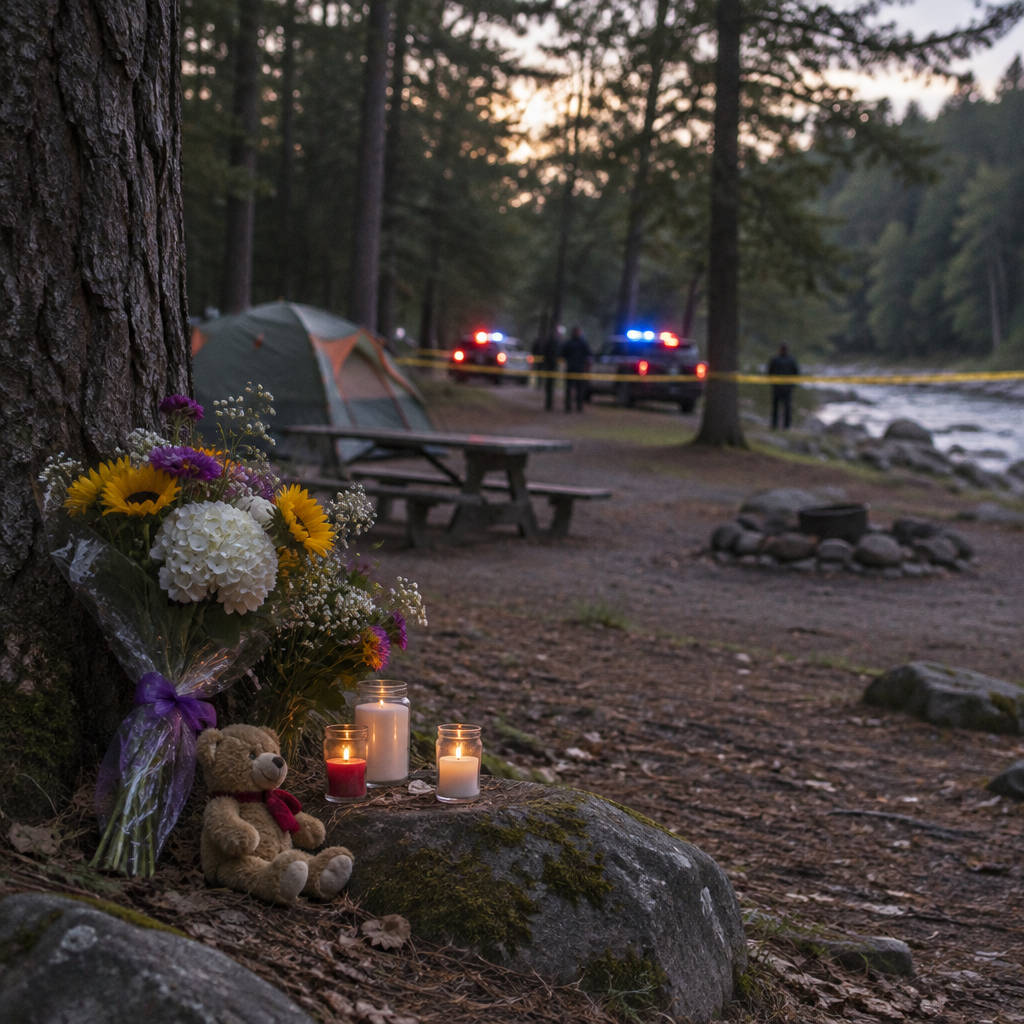
The known details are stark, but not extensive. The incident occurred near the Blackwater River in Florida’s Panhandle, in an area that borders southern Alabama. Carey and his friends had been exploring and camping at different spots along the river since Friday, Chief Deputy Randy Tifft told People, according to the report. The friends were not reported injured.
- The victim: Carey Washington Vinson was 19. His family called him Wash, while most people knew him as Carey. His father described him as a sweet, goofy child who grew into a thoughtful young man.
- The location: The group was at a sandbar campground along the river. Vinson said the alleged shooters were on the opposite bank. The exact campground, distance, visibility conditions, and physical evidence are not detailed in the account.
- The response: Deputies were called at around 11:30 p.m. Sunday after reports of a shooting. On arrival, they found Carey dead from a gunshot wound to the head. The reporting does not give a more precise timeline of the emergency response.
- The father’s allegation: Vinson said one or more people fired repeated shots toward the occupied campground, stopped briefly after campers shouted, fired again, and laughed as they drove away. Those details are attributed to Vinson, not presented here as an independently established account.
- The investigation status: The available report does not name a suspect, explain a motive, list an arrest, or say that charges have been filed. It also does not provide the results of ballistics testing, witness interviews, or other forensic work.
Here’s the kicker: the loudest claim is not necessarily the most settled fact. A parent may have information that is not yet public, but the phrase “as we understand it” in Vinson’s post signals that he was describing the family’s understanding at that point, not issuing a formal investigative report. That distinction does not diminish his grief. It simply protects readers from confusing an allegation with a conclusion.
Carey’s life, as his father described it, had its own texture. He was a history major at Florida State University, an excellent debater, and someone his family thought might pursue law, following his grandfather and uncles. He liked tabletop games and, his father joked, could be insufferable when he won—which happened often. Those small details are not decoration; they help explain why a family’s loss cannot be measured by the short facts of a police response.
Joe Vinson’s public role adds another layer, but it should not distort the story. His election as Escambia County District 4 Commissioner makes his statement more visible; it does not make his account automatically conclusive or automatically suspect. The office is context, not evidence. The most useful next information would be a clear update from investigators that distinguishes witness accounts, physical evidence, and any official conclusions.
For readers seeking official notices, the Santa Rosa County Sheriff’s Office is the relevant law-enforcement agency named in the report. The Escambia County Board of County Commissioners provides information about the office Joe Vinson holds. Those pages are useful points of reference; neither should be treated as proof of details not stated in a public update.
Timeline: What the Reporting Says Happened
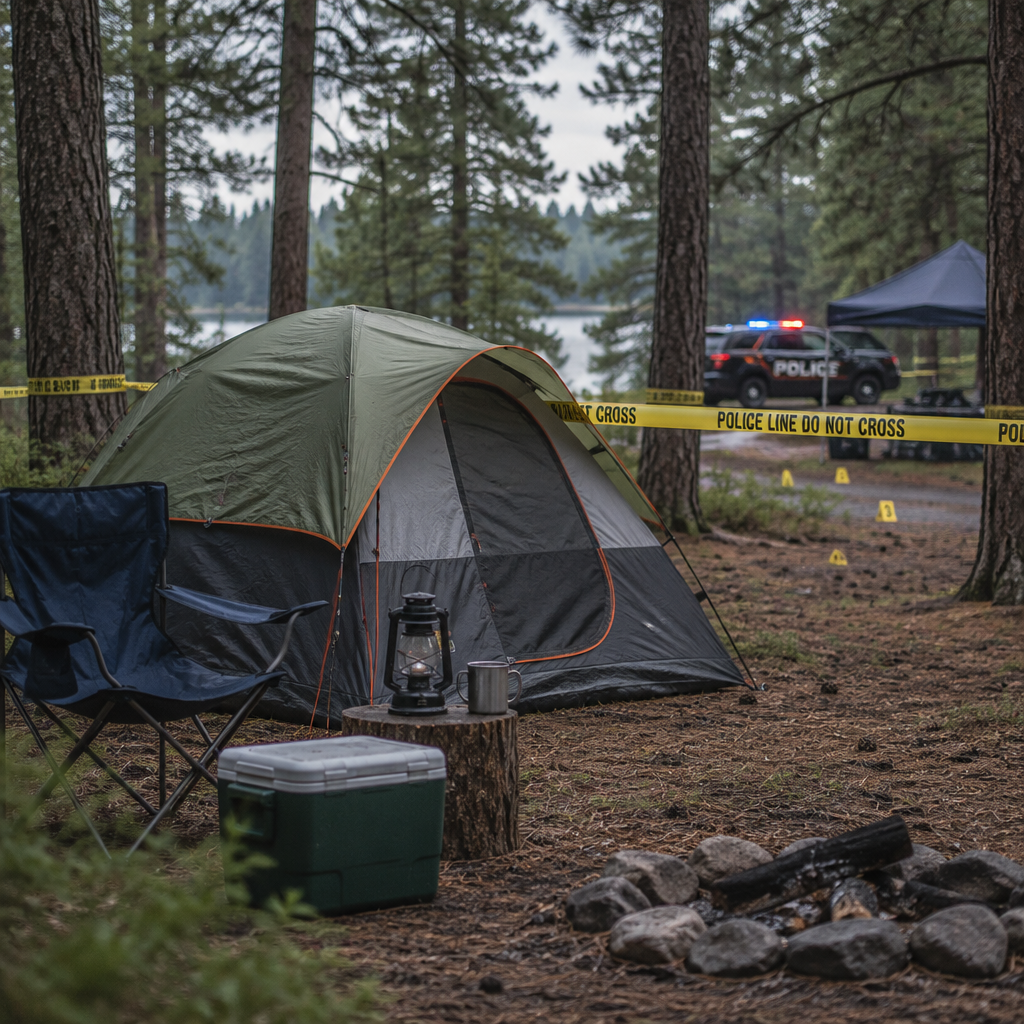
The sequence below sticks to the reported account. Some times and investigative steps are not given, and filling those gaps with guesses would serve nobody.
- Friday: The camping trip begins. Carey and his friends began exploring and camping at different places along the Blackwater River, according to Chief Deputy Randy Tifft’s comments to People. The report does not specify the group’s route, equipment, or exact campsite for each night.
- Sunday evening: The group is at a sandbar campground. Carey and his friends were camping in the river area. Vinson later said the camp was occupied and that a fire and conversation could be seen and heard from the opposite bank. That description comes from his post; the available account does not independently detail the sightlines.
- Gunfire is reported. Vinson said one or more people fired shot after shot toward the campground, paused after campers yelled for them to stop, then fired another volley. He also said they laughed while driving away. The account does not report how many shots were fired or provide an official reconstruction.
- About 11:30 p.m.: Deputies are called. The Santa Rosa County Sheriff’s Office received reports of a shooting in the Blackwater River area. The reported call time gives a useful marker, but not the exact time Carey was shot.
- Deputies arrive and find Carey. Authorities found Carey dead from a gunshot wound to the head. His friends were not reported injured. The available reporting does not describe emergency medical efforts, the position of the campers, or the location of recovered evidence.
- The family speaks publicly. Joe Vinson shared a memorial on Facebook, described his son’s character, and challenged the suggestion that the death was an accidental hunting incident or a stray bullet. He said the family understood the gunfire to have been deliberate.
- Public attention turns to the investigation. The report gives no suspect name, arrest, charge, or stated motive. When I map the timeline, that is the most important blank: readers need verified investigative updates, not online speculation dressed up as certainty.
A timeline can make a chaotic night look neat. It is not. We know the group had been camping since Friday, that deputies were called late Sunday, and that Carey was found fatally wounded. The precise interval between the shooting, the call, and the response is not reported. Nor is the source of each detail in the public account always the same: some facts are attributed to the sheriff’s office, while the alleged intent and sequence of volleys come from Carey’s father.
That is why responsible coverage keeps attribution close to the claim. “Vinson said the shooters laughed” is accurate to the account. “The shooters laughed” would present that detail as independently verified. The difference can look fussy on a screen, but it is basic fairness—especially when allegations describe a potentially intentional killing and could affect people who have not been publicly identified or charged.
Comparison: Family Account and the Accidental-Shooting Impression
Joe Vinson said he wanted to correct the impression that Carey’s death was a freak hunting accident. The available report does not identify a separate official account establishing that an accidental shooting occurred. So this is not a contest between two proven versions; it is a comparison between the family’s stated account and the assumption Vinson says he was correcting.
| Point | Vinson’s account | Accidental-shooting impression | What the report establishes |
|---|
| Cause of death | Carey was shot in the head by gunfire directed toward camp | A careless shot or stray round caused the death | Authorities reportedly found a fatal gunshot wound; the report does not give a final ruling on intent |
| Shooter’s position | One or more people stood on the opposite bank | The shot was accidental and may have come from elsewhere | The location across the river is Vinson’s account; no independent scene reconstruction is provided |
| Awareness of campers | The shooters could see the campfire and hear people talking | The shooter did not know the campground was occupied | No official finding on awareness is included in the account |
| Events after the first shots | Vinson says campers yelled, another volley followed, and the shooters laughed as they left | No deliberate return of fire is implied | The sequence is attributed to Vinson, not independently confirmed in the report |
| Current legal status | The family believes the shooting was malicious | Accident may be assumed by casual retellings | No suspect, arrest, charge, or motive is named in the available account |
Frankly, the table shows why a headline alone can mislead. The family’s accusation is specific and serious, but the report does not show that investigators had reached the same conclusion. Nor does the fact that no official conclusion is included prove the shooting was accidental. “Not reported” means exactly that: the publication account did not provide the information.
The most responsible description is therefore both direct and qualified: Carey died from a gunshot wound while camping; his father says people intentionally fired toward the occupied camp; the available reporting does not disclose an official determination of intent or identify a suspect. That sentence is less dramatic than a confident accusation. It is also more honest about what readers actually know.
This distinction matters beyond wording. Public claims can direct attention toward a case, but they can also turn rumor into supposed evidence, encourage harassment, or injure people wrongly named online. The fair path is not to dismiss the family or to announce a verdict. It is to preserve the allegation accurately, ask what investigators have verified, and wait for evidence that can be examined.
Common Misconceptions and What to Know
Misconception: “The family’s statement is the official investigative conclusion.” It is not presented that way in the account. Joe Vinson’s post gives his understanding of what happened and rejects an accidental-shooting explanation. The report does not say the sheriff’s office publicly confirmed malicious intent. His statement deserves accurate quotation, not promotion into a formal finding.
Misconception: “If investigators haven’t named a suspect in this article, they have no leads.” That conclusion does not follow. The report does not describe investigative progress either way. There may be information that has not been released, or there may not; readers cannot responsibly choose between those possibilities without a reliable update. Silence in a news account is not proof of an empty case file.
Misconception: “Calling it a stray bullet settles the question.” It does not. Vinson specifically objected to that label, and the account does not establish it as a law-enforcement finding. A bullet can be described as stray in casual conversation without that description proving who fired it, why, or whether the shooter knew a camp was there. Those are factual questions, not shorthand.
Misconception: “The political office is the main story.” Joe Vinson’s role as a newly sworn-in county commissioner explains why his public statement reached a wide audience. But Carey’s death is not merely a political-news hook. Nothing in the reported facts suggests the shooting was connected to his father’s office, and readers should not invent that connection. The story is about a young man killed while camping and a family grieving him.
Misconception: “A tragedy can be understood from one dramatic quote.” Vinson’s description—campers pleading for the firing to stop, then another volley and laughter—is chilling. It is also one part of a larger evidentiary picture that the report does not provide. There is no reported weapon description, forensic result, named witness statement, or formal charging document in the account. A quote can convey anguish; it cannot replace a complete investigation.
What readers should keep in view: Carey was 19, studying history at Florida State University, and camping with friends. His father said he was shot while in a tent and that those responsible fired deliberately. Deputies responded and found him dead. The friends were not reported injured. Beyond that, the publication account leaves essential questions unanswered.
The People report is the publication account cited for the family’s statements and the comments attributed to the Santa Rosa County chief deputy. Readers should check for later reporting before treating the initial details as the final word. Florida State’s Department of History provides information about the academic field Carey studied, but it does not confirm personal details about him. Keep sources in their lane; that’s the simple rule.
There is also a human reason to resist the rush to judgment. Grief can make people speak with urgency, and public audiences can turn that urgency into a verdict before evidence is laid out. Charity in judgment does not mean ignoring a possible crime or softening the seriousness of a father’s accusation. It means treating the bereaved with compassion while refusing to label unnamed people guilty without verified evidence.
Frequently Asked Questions
Who was Carey Washington Vinson?
Carey Washington Vinson was Joe Vinson’s 19-year-old son. His family called him Wash, and his father described him as a thoughtful young man who studied history at Florida State University, debated well, enjoyed tabletop games, and often won them. The report says he was camping with friends along the Blackwater River when he was fatally shot.
Where did the shooting happen?
The shooting was reported at a sandbar campground near the Blackwater River in Florida’s Panhandle, in an area that borders southern Alabama. The available account does not name the exact campground or give precise coordinates. Carey and his friends had been exploring and camping at different spots along the river since Friday.
Did authorities confirm that the shooting was intentional?
The reporting available here does not say that authorities publicly confirmed intent. Joe Vinson said the shooting was not a hunting accident or stray bullet and described the firing as malicious. That is his account of what the family understood; no official finding, suspect name, motive, arrest, or charge is included in the report.
Were Carey’s friends injured, and has anyone been charged?
None of Carey’s friends were reported injured. The account does not identify anyone charged in connection with his death. It also does not report whether investigators have named a suspect or released later findings, so readers should look for verified updates from law enforcement or reputable news organizations.
Final Thought
A father’s statement deserves to be heard in full. Joe Vinson did not describe a faceless tragedy; he remembered a son who could make his family laugh, argue a point, and win a tabletop game often enough to become annoying about it. He recalled Carey’s childhood sweetness, his thoughtfulness as a young man, and the family nickname Wash. Those details are the clearest reminder that a person’s life is larger than the violent final event that makes the news.
At the same time, careful reporting must keep the boundary between testimony and established fact. Vinson says his son was killed by people who knowingly fired toward an occupied campsite. The account reports that deputies found Carey dead from a gunshot wound and attributes the response details to the sheriff’s office. It does not provide a public determination of intent or identify a person responsible. Both sides of that distinction belong in the story.
The next useful development is not a louder rumor or a more certain headline. It is verified information: an official update, evidence that can be described responsibly, or a court filing if charges are brought. Until then, readers can honor Carey’s memory without pretending to know facts that have not been reported. Let the family grieve, let investigators do their work, and let every claim carry its proper name and source.