Jensen Huang’s Reported Apology Puts Nvidia’s CEO Under a New Spotlight
Jensen Huang’s reported apology is more than a celebrity-style confession: it is a personal statement attributed to Nvidia’s CEO, arriving beside a reported company inquiry into possible foreign intelligence targeting. Those are separate claims, and neither proves the other. The distinction matters because Nvidia’s chips sit at the center of a high-stakes technology contest.
The account of events says Nvidia released Huang’s statement on Sunday, Nov. 8, and that Chinese officials denied involvement in the alleged scheme on Monday. It attributes the initial intelligence reporting to The New York Times and the Chinese response to the Associated Press. Those attributions matter: the statement’s words, the outlets’ reporting, and any eventual company findings are not interchangeable evidence.
For readers searching for a simple answer, the central point is straightforward: the reported apology is a personal admission, while the espionage story is an unresolved security allegation. I have covered enough executive scandals to know that dramatic timing can make separate developments look like one tidy plot. It rarely is. The public should demand evidence without turning a family crisis into entertainment or treating suspicion as a verdict.
What Is Jensen Huang’s Reported Apology?
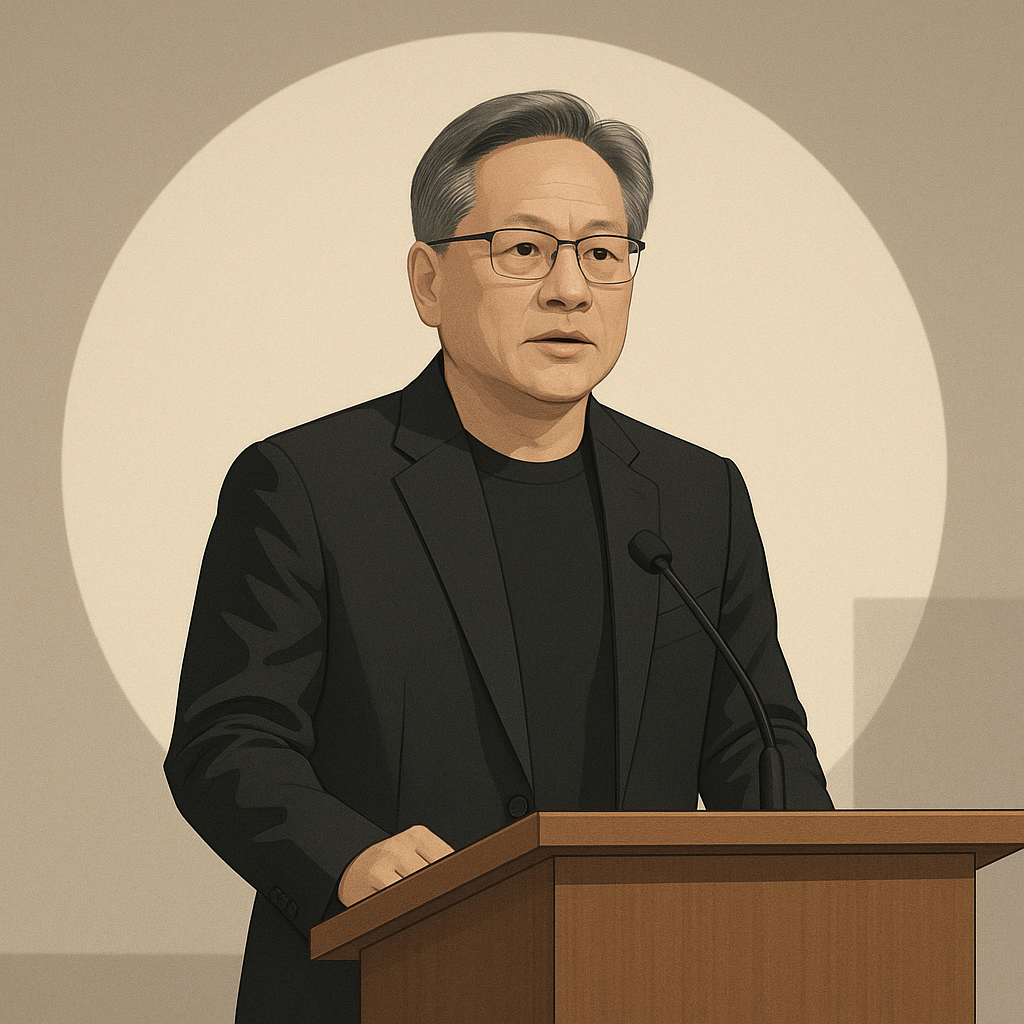
The account describes a statement issued by Nvidia in which Huang acknowledges that he was unfaithful to his wife, Lori, and says his actions hurt her and their children. He reportedly wrote: “There is no excuse for what I did. I am deeply sorry.” He also accepted responsibility and acknowledged that an apology could not undo the harm. That is the core of the personal story, as reported.
The distinction between an apology and a complete account is important. Huang’s quoted words accept responsibility for infidelity, but they do not name an alleged affair partner or lay out dates, circumstances, or other details. They do not, on their own, validate every claim circulating around the story. An apology can be meaningful without functioning as a full public record. Frankly, readers should resist the urge to fill its silences with guesses.
Huang is not simply a familiar face in technology. He co-founded Nvidia and leads a company whose processors are widely used in artificial-intelligence computing. Nvidia’s official leadership profile and its investor-relations annual reports provide background on his role and the business. Those corporate sources do not verify the personal allegations; they establish why developments involving the chief executive attract unusually broad attention.
The account also says Huang and Lori met at Oregon State University, where they were lab partners, and later raised two children, Madison and Spencer. A 2024 anecdote attributed to Huang has him joking that he approached Lori by offering to show her his homework. Oregon State is part of the biographical context, not evidence for the newer claims. A general biography, such as Britannica’s profile of Huang, can help readers separate the public career from the private story.
Here is the human point that tabloid coverage often misses: a person is not reducible to a celebrated career or a humiliating headline. Huang’s reported admission calls for accountability, but it does not make his wife and children props in a public drama. Charity in judgment does not mean excusing harm. It means refusing to invent details or deny anyone’s dignity while the facts are still being sorted.
Core Details and Context
Several claims are bundled together in the headlines, but they do not have the same evidentiary status. Keeping them separate is the first useful service a reader can do.
- The personal statement: The account attributes a direct apology to Huang and says it was released by Nvidia. The quoted statement admits infidelity and expresses remorse toward his wife and family. Until the statement itself is examined in its original context, careful reporting should continue to attribute its wording rather than embellish it.
- The alleged intelligence effort: The New York Times is reported to have said U.S. officials believed Huang may have been ensnared by a Chinese businesswoman identified as Alice Huang, also known as Huang Le. The described reporting calls this a possible “spy plot.” That phrasing is a claim about what officials reportedly believed; it is not a public, final finding that a foreign government ran an operation or that the woman acted on its behalf.
- Nvidia’s reported inquiry: The account says the company would investigate whether Huang was a target of foreign intelligence. An inquiry is a process for examining a question. It is not a finding, and it does not confirm the suspicion that prompted the review.
- China’s denial: The Associated Press is reported to have quoted a Chinese foreign-affairs spokesperson denying involvement and calling the allegation unsubstantiated and a smear. That denial is relevant, but it is not independent proof that the allegation is false. Denials and accusations both need supporting evidence.
- The technology stakes: Nvidia’s products are treated by business and political leaders as important to the growth of artificial intelligence. The company’s annual reports describe its business and risks, while the company’s About page offers corporate background. The wider stakes explain intense scrutiny; they do not make any particular allegation true.
The key question is not whether a story sounds plausible in a world of chip restrictions and geopolitical rivalry. It is what evidence supports each part. A technology executive may face security risks because of the value of his company’s work, but that general possibility cannot establish a specific intelligence operation. Likewise, a personal relationship and a corporate security inquiry can overlap in a news cycle without proving that one caused the other.
Most coverage will focus on the affair because that is the most intimate and immediately understandable element. Here’s the kicker: the more consequential questions may concern what Nvidia’s review actually examines, how the company protects sensitive information, and whether any officials have provided verifiable evidence. No outcome of the reported probe is included in the account, so readers should not pretend that one exists.
Timeline: What the Account Says Happened
The sequence below follows the dates and events described in the reporting. It separates older biographical details from the recent allegations and avoids filling gaps with speculation.
- College years: Huang and Lori, then Lori Mills, reportedly met at Oregon State University. The account says Huang was 17 and Lori was 19 when they became lab partners. Their exact meeting date and the details of their courtship are not stated here. The university is a biographical setting, not a source of proof about the later claims.
- A public anecdote in 2024: Huang reportedly told an audience in Hong Kong that he approached Lori by asking whether she wanted to see his homework. The story is a light recollection about their first meeting; it has no bearing on whether the newer allegations are true.
- Late October 2026: The account says The New York Times reported that U.S. officials had come to believe Huang might have been ensnared by a Chinese businesswoman. It does not give the underlying evidence, identify the officials, or provide the complete reporting in the account presented here. Those missing details matter.
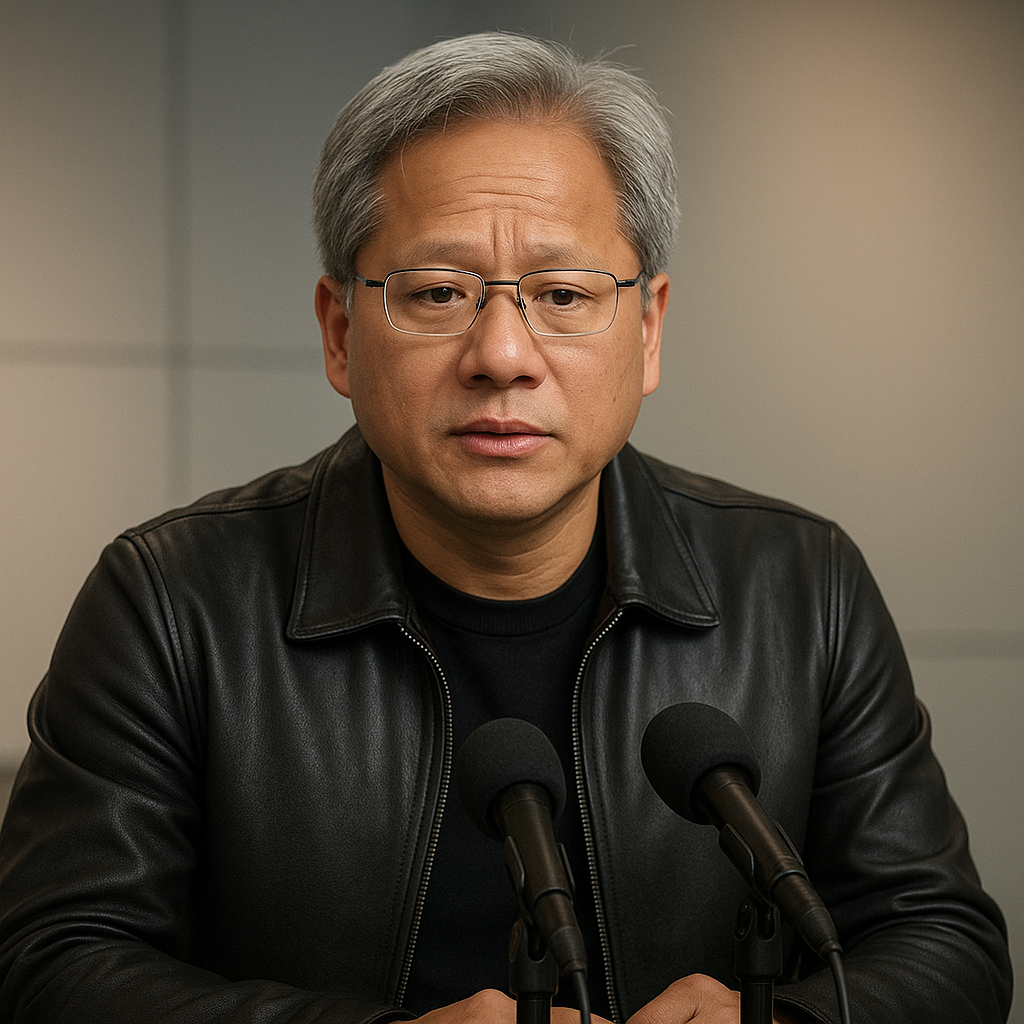
- Sunday, Nov. 8: Nvidia reportedly released Huang’s apology. Its quoted language accepts responsibility for infidelity and expresses hope that his family may heal and that he can earn back trust. The statement, as described, does not name the alleged affair partner.
- Monday, Nov. 9: Chinese officials reportedly denied involvement. The Associated Press is credited with reporting the spokesperson’s response. A denial is part of the public record described here, but the account does not report a completed investigation or a final assessment of the allegations.
When I track a story like this, I look for the point where a report ends and a conclusion begins. In this sequence, the public apology is presented as a direct statement, while the intelligence allegation rests on reporting about what officials believed and a company inquiry that had not yet produced a reported result. That is a meaningful difference, not a technicality.
The timeline also shows why timing can mislead. The apology and the security story reportedly surfaced together, which encourages the impression that one explains the other. The available account does not establish that connection. No public evidence described here shows that the affair was part of an intelligence operation, that the alleged businesswoman acted for a government, or that Nvidia’s inquiry confirmed a breach. Until credible findings are released, those remain open questions.
Comparison Table: Nvidia and Its Biggest Chip Rival
The closest major competitor named in discussions of AI chips is AMD. Comparing the companies can clarify the business context, but it cannot substantiate a personal allegation about Huang or a security claim involving Nvidia. The table sticks to broad distinctions and to what the reported story does—and does not—say.
| Topic | Nvidia | AMD | What this story establishes |
|---|
| Business context | A chip company whose products are central to the reported AI-computing discussion | A competing chip company with products in the computing market | The account concerns Nvidia and Huang; it reports no related allegation about AMD. |
| Executive focus | Jensen Huang is identified as Nvidia’s co-founder and CEO | AMD is a business competitor, not a subject of the reported apology | A comparison cannot transfer claims from one executive or company to another. |
| Personal allegation | Huang is quoted as apologizing for being unfaithful to his wife | No corresponding personal claim about AMD is described | The reported apology is specific to Huang and his family. |
| Security question | Nvidia reportedly planned an inquiry into whether Huang was targeted by foreign intelligence | No equivalent AMD inquiry is described in this account | The inquiry is not a finding of espionage or proof of a security breach. |
| Evidence available here | Attributed statement and reporting about a possible intelligence effort | No evidence about a parallel event | No company-to-company conclusion can be drawn from the available claims. |
A table can organize facts; it cannot manufacture comparability. Nvidia and AMD compete in technology markets, but that does not mean their leadership, security processes, products, or allegations are interchangeable. The account provides no AMD statement and no AMD-specific evidence. Adding a rival to the story is useful only to show the competitive setting—not to imply that AMD is implicated.
The same caution applies to business scale. Nvidia’s size and influence explain why a report about its CEO travels quickly through political, financial, and entertainment coverage. They do not lower the evidentiary bar. A company’s prominence is not proof of wrongdoing, and a public apology does not automatically create a corporate governance crisis. Investors and customers may reasonably ask what controls and procedures apply, but answers should come from reliable disclosures, not social-media inference.
Nvidia’s own annual-report archive is a better starting point for understanding the company’s stated business and formal risks than rumor threads. Such documents cannot settle the alleged affair or intelligence operation. They can help readers understand the company’s responsibilities and why a security review would matter to staff, customers, investors, and public officials.
Common Misconceptions and What to Know
Misconception one: the apology proves the entire affair narrative. It does not. The quoted statement reportedly admits infidelity and accepts responsibility, but it does not name a partner or confirm every detail attached to the story. A confession to one action should not be stretched into confirmation of every rumor around it. Most celebrity news is padded with conjecture; this is where skepticism is useful.
Misconception two: the alleged affair proves a spy operation. It does not. The account describes a report about U.S. officials’ beliefs and a company inquiry into whether Huang was targeted. That is not the same as a public finding that a foreign government directed anyone, that confidential information was obtained, or that Nvidia’s systems were compromised. “Possible target” is not a synonym for “confirmed agent” or “confirmed breach.”
Misconception three: China’s denial settles the question. It does not. A spokesperson’s denial is newsworthy and should be reported accurately, but a denial from a government accused of involvement is not a substitute for evidence. Nor does the denial become proof of guilt simply because some readers distrust it. The only sound route is careful examination of documents, corroborated reporting, and any formal findings.
Misconception four: an internal or corporate probe means the company knows what happened. An investigation often begins because facts are incomplete. It may assess contacts, security practices, potential exposure, or the reliability of a claim. The account does not describe the probe’s scope, who leads it, or its conclusion. Without those details, confident claims about what Nvidia has found would be fiction dressed up as analysis.
Misconception five: public figures surrender all privacy. Huang’s leadership role makes relevant conduct a matter of public interest, particularly where the company’s governance or security may be affected. But his wife and children are not public evidence exhibits. Their names and family pain should not be mined for clicks. A humane approach can acknowledge the apology and its consequences while refusing to turn relatives into characters in a melodrama.
Finally, do not confuse accountability with spectacle. Huang’s quoted apology says he hurt people close to him and hopes to rebuild trust. Whether those words are followed by sustained change is a private matter in large part, though a public executive can be judged on honesty and conduct relevant to leadership. In the security matter, the standard is different: claims about foreign intelligence require evidence, not moral condemnation by association. Two issues deserve scrutiny, but they deserve different kinds of proof.
Frequently Asked Questions
Did Jensen Huang confirm that he was unfaithful?
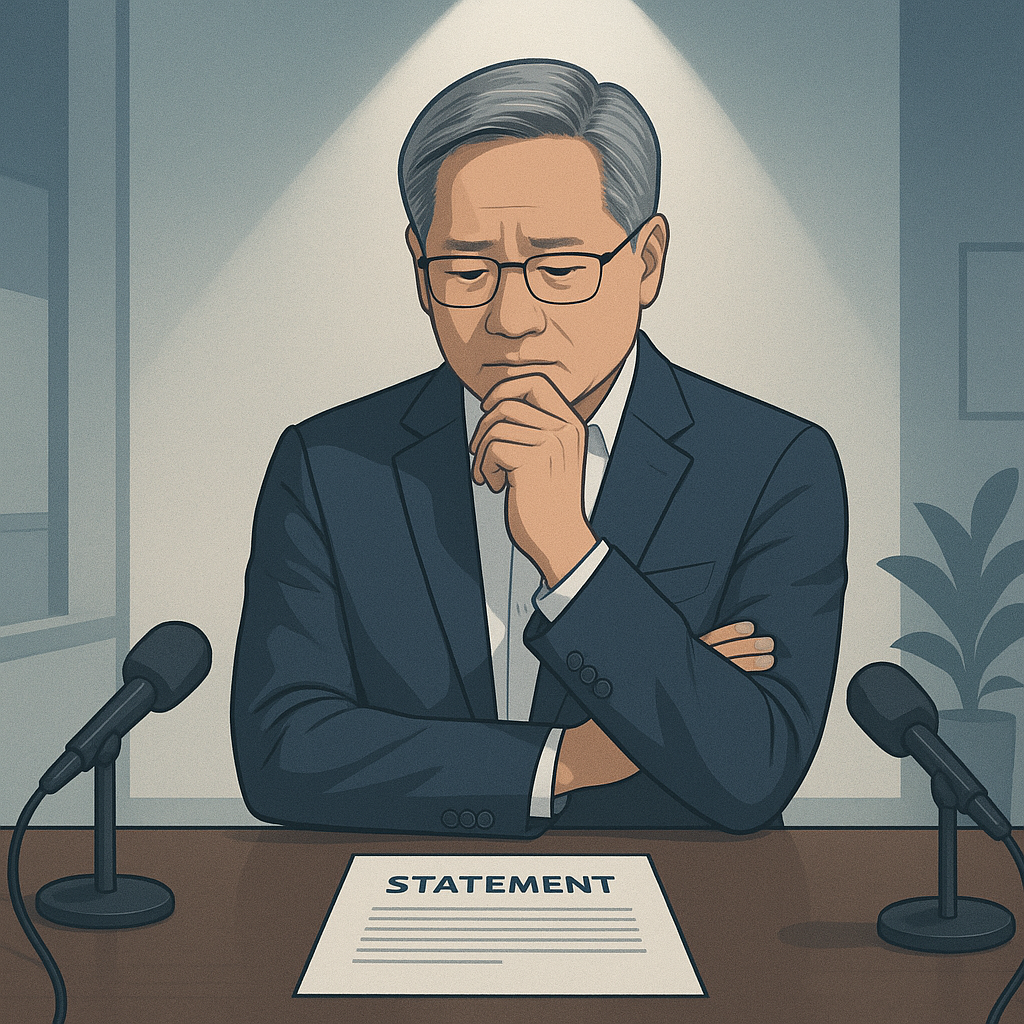
According to the statement attributed to him, yes. The reported wording says he was unfaithful and accepts responsibility for the hurt caused to his wife and family. The statement, as described, does not provide further details or identify another person. It is best to stick to what the quoted words actually say rather than treating unreported details as confirmed.
Did Huang name Alice Huang in his apology?
No. The account says his apology did not identify Huang Le, also known as Alice Huang, by name. That name appears in the separate intelligence-related reporting described as coming from The New York Times. The distinction matters: an allegation about a possible foreign intelligence effort is not the same thing as a confirmed description of an affair partner.
Has Nvidia proved that Huang was targeted by foreign intelligence?
No such finding is reported here. The account says Nvidia would launch a probe into whether Huang was a target. A probe signals that a question is being examined; it does not prove the answer. No public conclusion, corroborating evidence, or confirmed breach is described in the events above.
Why does the story matter beyond Huang’s family?
Because Huang leads Nvidia, a company whose chips are important to the current AI boom and to political debate about advanced technology. The reported inquiry could raise legitimate questions about executive security and corporate safeguards if supported by evidence. But the family apology and the security allegation remain separate stories, and one cannot be used to prove the other.
Final Thought
There are two ways to get this story wrong. One is to treat a reported apology as a license to gawp at a family’s pain. The other is to take a serious intelligence allegation and announce a verdict before evidence appears. Both errors are tempting because certainty sells, and because a famous executive makes a convenient character in a ready-made plot.
The more disciplined reading is less dramatic but more useful. Huang’s quoted apology, if accurately reported, is an acknowledgment of harm and a promise to accept responsibility. His family—not an audience—will judge what repair looks like. Separately, Nvidia’s reported inquiry should be judged by its evidence, its process, and any findings it can responsibly disclose. The Chinese denial belongs in the record, too, without being treated as the last word.
I would watch for direct statements, documented findings, and corroboration from credible reporting. I would ignore confident claims that leap from a relationship to espionage, or from an inquiry to proof. A person can be accomplished and fallible; a company can matter greatly and still owe the public clear answers when its security is questioned. That is not a contradiction. It is the sober standard this story deserves.