Iran’s plan to execute a female protester is not just another grim headline. It is a warning flare. A state that answers dissent with hanging wire and...
Iran’s plan to execute a female protester is not just another grim headline. It is a warning flare. A state that answers dissent with hanging wire and courtroom theater is telling the world exactly how it treats protest, women, and fear.
Key Takeaways- Iran’s death penalty is being used as a political weapon, not just a criminal punishment.
- The reported case of the first woman facing execution over the protest wave has drawn global outrage.
- Human rights groups say the system is stacked with rushed trials, coerced confessions, and vague national security charges.
- The broader issue is bigger than one name: it is about state power, public fear, and the value of human life.
What is the Iran execution case?
This is a case about political repression dressed up as law. That is the plain truth, and the regime knows it. When a government seeks to execute a protester—especially a woman—in connection with nationwide demonstrations, the move is not merely punitive, it is also performative, a warning to every citizen watching from the sidelines.
I’ve covered enough of these stories to know the script. First comes the crackdown. Then the arrests. Then the charges that sound legal but smell political. Finally, the state insists it is only preserving order. Frankly, that line is old, and it wears thin fast.
The reported case centers on a woman who could become the first female protester executed in connection with the recent anti-regime unrest in Iran. Human rights organizations say the authorities have sentenced large numbers of people to death over the past year, with the wider protest movement treated as a threat to the political system itself. That’s the kicker: the state is not just punishing one person. It is trying to terrify an entire population into silence.
The issue matters because capital punishment in this context is not operating like neutral justice. It is tied to a larger system of control—surveillance, detention, confession pressure, and judicial opacity. Most official statements from the regime are crafted to sound orderly and righteous, but the facts reported by watchdog groups point in a harsher direction. And let’s be real, when a state refuses transparency, you should assume the worst until proven otherwise.
This is also about women specifically. Iran has long treated female protest as a direct challenge to authority, not just to policy but to cultural and religious hierarchy. In a humane society, a person is not reduced to a slogan, a file number, or a propaganda target. Catholic teaching would call that obvious: each human person has dignity that does not vanish when the state gets angry. That principle is not abstract here. It is the whole story.
For readers following the broader arc of public figures, government crackdowns, and legal abuse, the pattern resembles other political prosecutions where the state wants obedience, not truth. Related coverage on how public narratives are shaped can be found in pieces like Human Rights Watch news, Amnesty International updates, and Reuters Middle East coverage.
The story is severe because it sits at the intersection of politics, law, human rights, and public fear. And those are the places where bad regimes usually do their ugliest work.
Core Details and Context
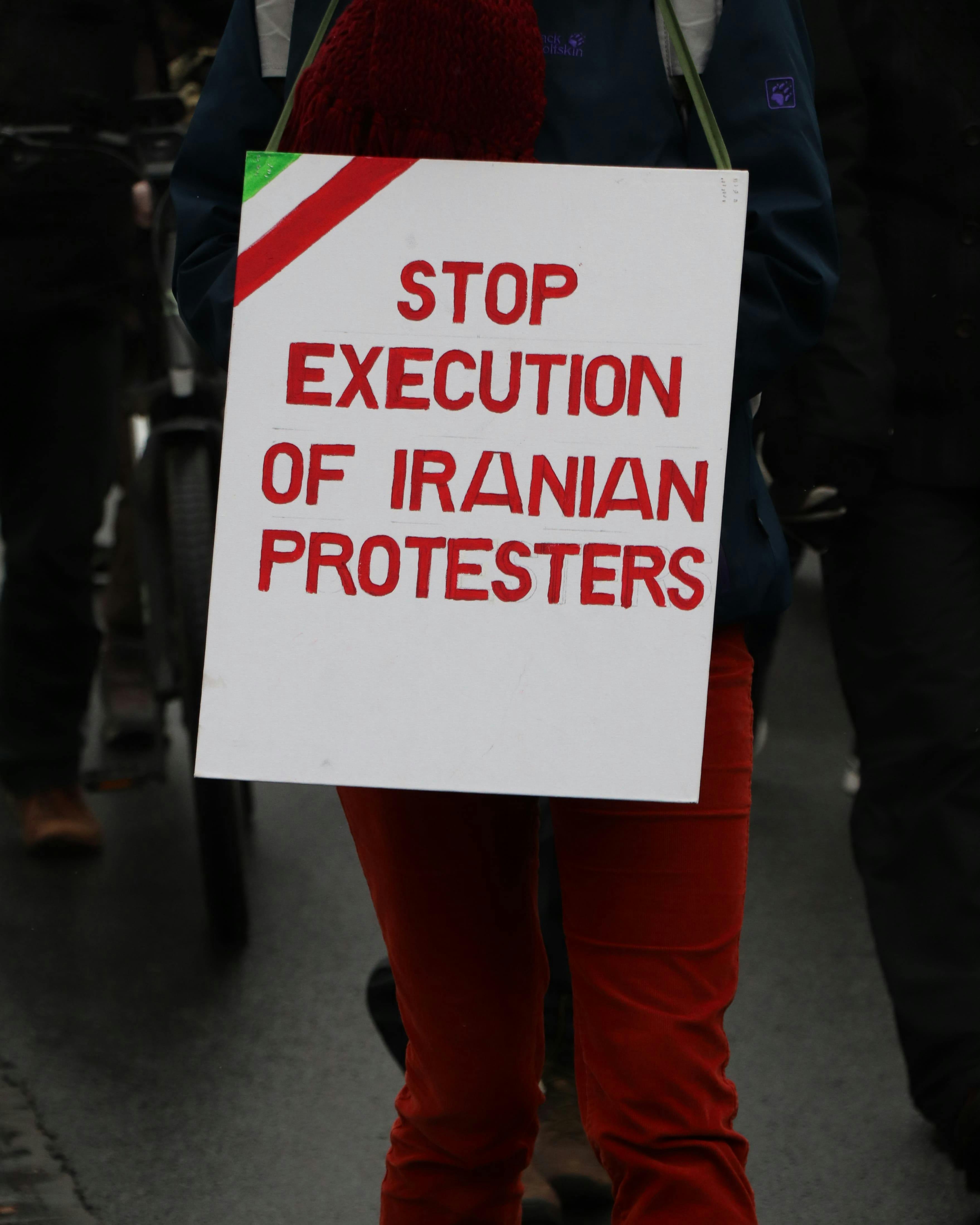
The core facts are ugly, and there is no point dressing them up.
- Reported context: The execution threat is tied to protests against the Iranian regime, not to a garden-variety criminal case.
- Human rights concern: Critics argue the authorities are using the death penalty to crush dissent and set an example.
- Gender angle: The case is especially alarming because it involves a woman, in a system already accused of harsh treatment toward women protesters.
- Judicial concern: Reports from rights groups often mention limited access to counsel, closed proceedings, and forced confessions.
- Political message: The state signals that organizing, speaking, or even appearing in protest can carry the highest possible price.
Here’s the part most coverage soft-pedals: regimes rarely rely on one execution when they want compliance. They use the threat. They circulate dread. They let rumor do some of the work for them. That way, the fear spreads faster than any official memo ever could.
The numbers floating around this issue are grim. Rights groups have warned of mass death sentences connected to unrest, and many observers believe the scale of punishment is meant to deter the next wave of demonstrations. But the real question is not only how many people have been sentenced. It is what kind of system turns protest into a capital offense. That is not ordinary law. That is a political machine with a gavel.
The comparison with other major public scandals is useful. In celebrity or business controversies, reputations can be repaired with lawyers, interviews, or a well-timed apology. In a case like this, the state holds nearly all the cards. The accused faces an apparatus designed to preserve itself. There is no equal footing. There is no PR fix. There is only power.
For a broader look at how governments and public figures shape narratives around crisis, see related reporting on BBC Middle East news and Associated Press Iran coverage. The common thread is simple: institutions always try to control the first draft of history.
Most people hear “execution” and think of a criminal case. That’s too neat. In politically charged systems, execution can function as theater, intimidation, and message discipline all at once. The law becomes a prop. The courtroom becomes a stage. And the public is supposed to clap—or at least stay quiet.
A sober moral reading matters here. Human beings are never just their charges, and states are never just their slogans. We should judge carefully, yes, but also charitably, and with a healthy suspicion of power. The state’s claim to justice deserves evidence, not applause.
Timeline and Step-by-Step
- Protests erupt. The anti-regime demonstrations begin, driven by anger over repression, social restrictions, and state violence. I’ve watched enough protest cycles to know the spark usually spreads because people are fed up long before the cameras show up.
- Authorities respond with arrests. Security forces detain demonstrators, activists, and ordinary people who happened to be in the wrong place. The state then presents the sweep as law enforcement, even when the scope looks political.
- Charges escalate. Protest-related accusations are framed in severe terms, often involving national security, corruption on earth, or similar broad allegations. That matters, because vague charges are useful when you want to make dissent feel criminal by definition.
- Trials move quickly. Rights groups report limited defense rights, short hearings, and heavy reliance on confessions. When I track cases like this, the same pattern keeps showing up: speed over scrutiny, fear over fairness.
- Death sentences emerge. The regime begins issuing capital punishments connected to the protests. It does this not just to punish individuals but to warn communities, families, and anyone thinking about the next march.
- Global outrage follows. Governments, NGOs, and human rights groups condemn the proceedings. The Iranian authorities dismiss criticism as foreign meddling, which is convenient when you don’t want to answer hard questions.
- The female protester becomes a symbol. Whether or not the state intended it, the case takes on symbolic force. One woman’s fate becomes shorthand for broader repression, especially against women who have been at the front of public resistance.
- The threat intensifies pressure. The mere possibility of execution becomes part of the machinery of control. The state wants people to think: if this can happen to her, it can happen to anyone.
The sequence is familiar because authoritarian systems love repetition. They don’t need creativity. They need compliance. And if there is one thing history keeps teaching, it is that systems built on fear eventually rot from the inside.
A few related stories help explain the mechanism. In coverage of public institutions and high-profile legal fights, similar tactics show up: delay, denial, selective leaks, then a hard line once the audience is numbed. See also internal reporting on Iran protests crackdowns, political trials and human rights, and public image and power for adjacent context on how narratives are built and sold.
What actually happened here is less mysterious than officials want it to seem. A protest movement challenged the regime. The regime answered with force. Then the legal system was used as a blunt instrument. That’s the whole ugly chain.
Comparison Table
Here’s the blunt comparison. No spin.
| Feature | Iran protest execution case | Typical democratic legal process |
|---|
| Core purpose | Deter dissent and preserve regime control | Determine guilt or innocence fairly |
| Transparency | Often limited or disputed | Public proceedings and records are standard |
| Defense rights | Frequently challenged by rights groups | Legal counsel and due process are central |
| Evidence standard | Reports of coerced confessions and vague charges | Evidence must be tested and challenged |
| Public message | Fear, obedience, state strength | Rule of law, accountability, restraint |
| Human rights oversight | Usually hostile or restricted | External scrutiny is expected |
| Outcome impact | Can chill protest across society | Should punish only proven crimes |
The comparison is not subtle, and it should not be. One system uses law to protect rights. The other, in this case, is accused of using law to crush them.
The biggest competitor to this kind of state narrative is not another government. It is the truth, which has a nasty habit of outlasting propaganda. That is why these cases attract international scrutiny even when officials want them buried.
The Iranian regime frames itself as orderly and righteous. Yet repeated reports of rushed trials and political death sentences suggest something else entirely: a bureaucracy of fear. You can dress that up however you like, but the stain remains.
Common Misconceptions and What to Know

The internet loves a tidy story. Reality is messier.
Misconception 1: This is just normal criminal justice.
No. That claim ignores the political context, the protest movement, and the broad reports of rights abuses. When a state makes an example of dissidents, the law is no longer operating in a clean vacuum.
Misconception 2: One execution is only one case.
Wrong. In authoritarian systems, one case is often designed to affect thousands. That’s the point. The punishment is individual; the fear is collective.
Misconception 3: Public outrage changes nothing.
Not quite. Outrage can force attention, slow proceedings, trigger sanctions, or at least reduce the comfort of secrecy. It may not save everyone, but silence is worse. Silence is how cruelty gets comfortable.
Misconception 4: The gender angle is secondary.
It isn’t. Women who participate in protest in Iran are not just political actors; they are often treated as cultural threats. That makes the state’s response even more charged and, frankly, more revealing.
Misconception 5: This is all too complicated to judge.
There is complexity, sure, but not paralysis. You can acknowledge uncertainty without surrendering moral clarity. If the reports are accurate, then a government is using capital punishment to crush dissent. That deserves plain language.
I’ve seen how quickly people retreat into fog when politics turns nasty. They say both sides are bad, or that facts are unclear, or that foreign reporting is biased. Sometimes those objections are fair. Here, they mostly sound like a shield for discomfort.
The Catholic instinct here is not to pretend every side is equal. It is to remember the person. Even the accused remains a person, not a headline. That means due process, yes, but it also means resisting the state’s temptation to turn flesh-and-blood citizens into disposable examples.
There is also a media lesson. Sensational coverage can flatten a case into outrage bait. That helps no one. Better to stick to verifiable facts, authoritative reporting, and a clear-eyed reading of power. For readers who want more context on how public figures and scandals are framed, related coverage like public fallout and reputation and high-profile court cases shows how narratives can be manipulated, even when the stakes are very different.
The truth is simple, even if the politics are not: when a state punishes protest with death, it is not merely enforcing order. It is trying to define reality.
Frequently Asked Questions
Why is this case drawing so much attention?
Because it combines protest repression, capital punishment, and women’s rights in one story. That trio makes the case politically explosive and morally hard to ignore.
Is this definitely the first woman Iran may execute over the protests?
That is how many reports have framed it, though exact legal outcomes can shift and details may change. The broader issue remains the same: a female protester facing the death penalty for political unrest is a major escalation.
Why do human rights groups focus on due process here?
Because reports of rushed hearings, limited defense, and coerced confessions suggest the verdict may be driven more by politics than evidence. Due process is not a luxury. It is the guardrail.
Can international pressure make a difference?
Sometimes, yes. It may not reverse every case, but it can increase scrutiny, complicate the regime’s messaging, and keep the issue alive in diplomatic and media channels.
Final Thought
This case is about more than one woman and more than one verdict. It is about what happens when a state decides that fear is cheaper than justice. That choice always corrodes something deeper than politics. It warps institutions, hardens officials, and trains citizens to mistrust every public word.
I’ve learned not to romanticize outrage, because outrage can be lazy. But I also won’t pretend the details here are neutral. If the reports are accurate, then a government is threatening to kill a protester to send a message to millions. That is not strength. That is panic in uniform.
The older moral tradition, Catholic and biblical alike, keeps reminding us of one stubborn fact: people are not disposable, and power is not sacred. A regime may claim divine legitimacy, legal authority, or revolutionary purity, but none of that erases human dignity. The state answers to something higher than itself, and so do the rest of us when we choose what to believe, what to repeat, and what to excuse.
People deserve justice, not spectacle. They deserve truth, not stagecraft. And when governments confuse vengeance with order, the rest of the world should say so plainly—because a society that grows numb to one hanging can very quickly grow numb to many.