Iran fires on ships near Oman after Strait tensions. The incident sits at the ugly intersection of politics, military posturing, and shipping risk, with IRGC...
Iran Fires on Ships Near Oman After Strait Tensions: What the Maritime Flashpoint Means
Iran fires on ships near Oman after Strait tensions. The incident sits at the ugly intersection of politics, military posturing, and shipping risk, with IRGC gunboats reportedly approaching a tanker near Oman and opening fire as Washington warned Tehran against “blackmail.” What happened matters because the Strait of Hormuz is not some abstract map line; it is a choke point for global energy, insurance costs, naval patrols, and the fragile habit of keeping commerce moving.
Key Takeaways:- The reported shooting near Oman follows renewed tension over the Strait of Hormuz.
- IRGC fast boats and tanker crews are the central actors in the latest account.
- The biggest issue is not only the gunfire itself, but the signal it sends to shippers, insurers, and governments.
- Washington’s response shows how quickly a local maritime incident becomes a political standoff.
- The real-world cost shows up in freight rates, fear, and the old problem of miscalculation.
Here’s the kicker: a few bursts of gunfire can ripple far beyond the water. The sea is broad, but the politics are cramped. 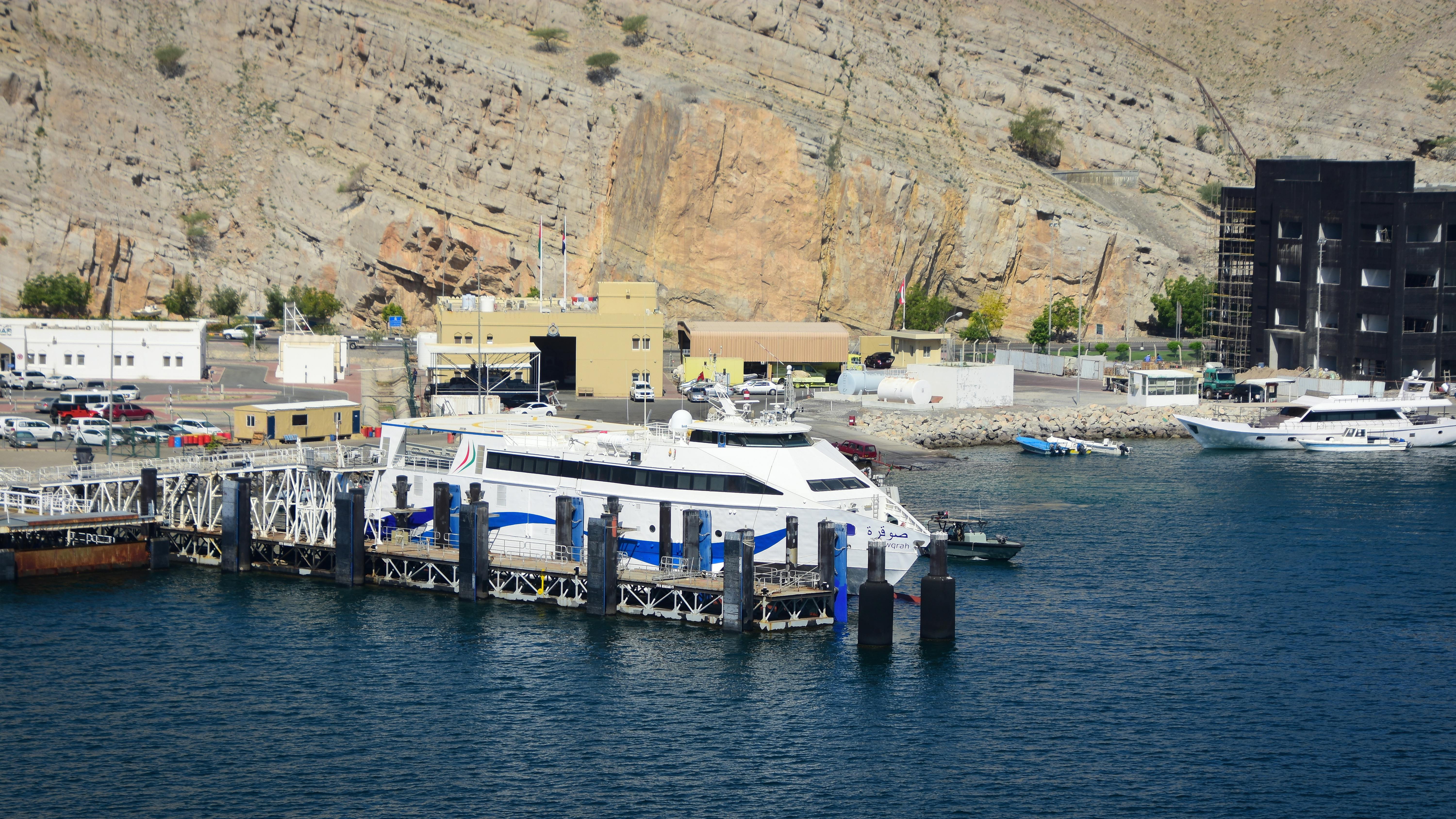
What is this maritime flashpoint?
This is a shipping and security crisis. It involves military pressure near one of the busiest and most sensitive sea routes on earth, where tankers, naval escorts, and patrol craft all crowd into a narrow corridor and everyone pretends calm is easy. It is not. The reported firing near Oman, if confirmed in full, fits a pattern the region has seen before: speedboats, warnings, interception claims, and then the usual fog of official statements.
I’ve covered enough of these flare-ups to know the first story is rarely the cleanest one. Governments issue sharp language, crews give frightened accounts, and the public gets a half-lit version of a very tense scene. Frankly, that is how maritime incidents often work. The sea is broad, but the politics are cramped.
The Strait of Hormuz matters because a huge share of the world’s oil and fuel exports pass through it. That makes it a pressure point, not just for energy markets but for diplomacy, naval strategy, and public confidence. When gunboats get close to merchant vessels, the risk is not only damage; it is escalation. One wrong move, one misread radio call, one nervous bridge watch, and you have a much bigger mess.
The Trump warning about Iranian “blackmail” adds another layer. It frames the event as coercion rather than isolated patrol behavior, which is exactly the sort of language that hardens positions fast. The truth is, these episodes are rarely just about one tanker. They are about leverage, face-saving, and who gets to say the other side crossed the line first.
If you want background on how public figures and governments use crisis narratives, see Reuters Middle East coverage, Associated Press Middle East, and broader security reporting from BBC News Middle East.
Core details and context
Here’s the kicker: the facts that matter are often the least dramatic ones. The reported incident occurred near Oman, with tanker crews saying Iranian Revolutionary Guard boats approached and opened fire. That claim, if sustained, is not a minor maritime nuisance. It is a direct threat to civilian shipping, and civilian shipping is the bloodstream of trade.
- Location matters. Near Oman means close to the waterway that links the Gulf to the Arabian Sea. That corridor is crowded, watched, and deeply political.
- Actors matter. The IRGC is not a random coastal police unit. It is a hard-edged arm of state power, often tied to the sharp end of regional signaling.
- Target choice matters. Tankers are not military ships. When a tanker is pressured, the message reaches insurers, energy traders, and foreign ministries at once.
- Timing matters. A flare-up after re-closing the Strait of Hormuz raises the stakes because it suggests deliberate use of chokepoints as leverage.
- Language matters. “Blackmail” is not neutral wording. It implies extortion, not just a security incident.
Most coverage rushes to the headline and skips the machinery underneath it. That is a mistake. The machinery is the point. This is where policy meets fear: shipping firms add risk premiums, crews reroute if they can, and states send patrols or statements to show they are in control. Nobody wants to admit how thin the margin is.
There is also a human angle that gets flattened. The men on those ships are not chess pieces. They are workers. They have watch schedules, sleep debt, and families waiting for a call. A proper moral view starts there: people are not just symbols in a geopolitical cartoon. That should be obvious, but in moments like this, it is astonishingly easy to forget.
For a broader sense of regional context and the actors involved, useful reporting can be found at Al Jazeera Middle East and Reuters World. I’d also keep an eye on official maritime alerts and shipping advisories, because the paperwork usually tells you more than the shouting does.
Timeline and step-by-step breakdown
This is how these incidents usually unfold. No mystery. Just tension, movement, and bad options.
- The area is already tense. The Strait of Hormuz and nearby waters have been under strain for years, with disputes over sanctions, maritime seizures, drone activity, and patrol encounters setting the stage.
- A vessel enters a sensitive zone. Tankers and commercial ships continue to move through the region because global trade does not stop for political theater. That is the brutal, practical fact.
- Military craft close in. According to the tanker master’s report, two IRGC gunboats approached the ship around 1 p.m. local time, near 20 nautical miles northeast of Oman.
- Shots are fired. The report says the gunfire was unprovoked. If accurate, that shifts the incident from harassment into active aggression. Big difference.
- The crew reports the event. A master or bridge team typically contacts maritime security channels, company headquarters, and sometimes naval forces in the area. This is where the first official record forms.
- Governments respond. The United States warns Tehran against “blackmail,” while Iran’s side, if history is any guide, may argue the ships violated rules or entered disputed space. Same stage, different script.
- Markets and insurers react. Even without a wider war, shipping rates can jump. A few bursts of gunfire can cost millions in indirect effects. That’s the ugly arithmetic of maritime risk.
- Narratives harden. Each side tries to lock in the story before the evidence settles. I’ve seen this pattern too many times: the first press release arrives before the full facts do.
- The public hears fragments. Headlines compress the event into a single sentence, but the real story lives in logs, radio traffic, route maps, and satellite data.
- The cycle either cools or repeats. If no one blinks, the incident becomes a precedent. If one side retaliates, the whole region feels the tremor.
If you want a sharper understanding of escalation mechanics and the difference between rhetoric and reality, the best reporting often comes from wire services and serious foreign correspondents. See Reuters Middle East and Associated Press for follow-up coverage when details settle.

Comparison table: shipping chokepoint crisis vs. routine maritime incident
| Factor | Strait of Hormuz crisis | Routine maritime incident |
|---|
| Strategic value | Global energy chokepoint | Localized commercial disruption |
| Actors | State-linked forces, navies, tankers | Port authorities, merchant crews |
| Media impact | Immediate global headlines | Limited trade reporting |
| Market response | Oil, freight, insurance spikes | Brief, contained reaction |
| Political stakes | High; tied to sanctions and deterrence | Low to moderate |
| Risk of escalation | Significant | Usually minor |
| Public attention | International, sustained | Short-lived |
| Human risk | Crew exposure to armed confrontation | Mostly operational hazards |
The comparison is stark. One is a nuisance; the other is a warning shot at the global system. That is why policymakers obsess over the Strait even when the public barely notices. It is not because they love process. It is because chokepoints punish carelessness.
Here’s what nobody tells you: the biggest competitor to honest analysis is not an opposing government. It is complacency. People hear “near Oman” and think distant, abstract, manageable. Not so. If a single armed encounter alters shipping confidence, then the incident is already bigger than the burst of gunfire suggests.
I’ve spent enough time reading crisis coverage to know how quickly context disappears. So let’s be blunt. If the same type of incident happened off a sleepy coast with no tankers, no sanctions fight, and no naval shadow-boxing, it would not be treated as a strategic event. The reason this one matters is the route, the actors, and the timing.
Common misconceptions and what to know
The first myth is that this is “just another headline.” No, it is not. The sea lane through the Gulf is too important, and the state actors involved are too serious, for anybody to shrug. A few rounds fired at a tanker can ripple through fuel prices, freight costs, and diplomatic messaging in a matter of hours.
The second myth is that every incident proves a grand master plan. That is lazy thinking. Sometimes a provocation is carefully staged; sometimes it is a collision of bad habits, overconfident commanders, and slow communication. Human affairs are messier than the clean plots people prefer. Catholic moral sense gets this right: people bear dignity, but also weakness, pride, and the habit of testing limits. States are no better than the people running them.
The third myth is that the public will always get a full account quickly. Not likely. Maritime incidents breed confusion. Crews may see one thing, patrol units another, and officials a third. That is why I trust corroborated logs and reputable wire reports more than breathless takes on social media. Most of the noise is performance.
The fourth myth is that markets only care about actual damage. Wrong. Markets hate uncertainty more than damage they can price. A tanker shot at, even without sinking, can still trigger insurance hikes and rerouting. That is the part people miss when they stare only at smoke and flames.
The fifth myth is that rhetoric is harmless. It isn’t. When a president warns about “blackmail,” or a state boasts about defending its waters, those phrases signal red lines. Sometimes they are bluster. Sometimes they are a warning that no one should ignore. The hard part is telling the difference before the next incident.
If you want to compare official statements with independent reporting, look at BBC News, Reuters, and Financial Times Middle East. That mix usually reveals the gap between image and fact.
Frequently asked questions
What happened near Oman?
Reportedly, two IRGC gunboats approached a tanker about 20 nautical miles northeast of Oman and fired on it. The account came from the tanker’s master, and the incident followed heightened tension around the Strait of Hormuz.
Why does the Strait of Hormuz matter so much?
Because it is one of the world’s most important shipping chokepoints. A large share of global oil and fuel exports pass through it, so any disruption can affect energy prices, shipping insurance, and international security.
Is this the same as a full military attack?
Not necessarily, but it is still serious. A shooting incident involving civilian shipping can be a form of intimidation, signaling, or escalation. Whether it becomes a larger conflict depends on what happens next.
Why did Trump mention “blackmail”?
That language frames the incident as coercive pressure rather than a simple patrol encounter. It also hardens the political tone, which often happens when maritime incidents become part of a larger U.S.-Iran dispute.
Final thought
This is the kind of story that exposes the thin skin of modern order. The sea looks calm from a distance, but a chokepoint tells the truth fast: trade depends on restraint, states depend on credibility, and crews depend on luck they did not ask for. That is the blunt reality.
Most people will remember the headline and move on. Fair enough. But the wiser move is to notice what this episode reveals about power and restraint. It shows how quickly a local incident can become a test of nerves for governments, markets, and ordinary workers trying to do their jobs. In a world that loves slogans, the plain fact remains: people are not abstractions, and neither is risk.
If the reports hold up, this was not just another noisy exchange on a hot stretch of water. It was a reminder that peace at sea is maintained, not granted. And that’s the part everyone should sit with, however inconvenient it is.