A security breach hit the <strong>Today</strong> show. That’s the blunt version, and it matters because this was not some harmless celebrity dust-up — an...
Inside the ‘Today’ Show Security Breach: What Happened to Craig Melvin, Al Roker, and Savannah Guthrie
A security breach hit the Today show. That’s the blunt version, and it matters because this was not some harmless celebrity dust-up — an intruder reportedly lunged at Craig Melvin, shouted a racial slur, and appeared to be looking for Al Roker. Nobody was hurt, but the story says plenty about fame, security, and the thin line between public access and public danger.
Key Takeaways- A man breached security connected to the Today show and reportedly targeted Craig Melvin and Al Roker.
- The intruder allegedly used a racial slur during the incident.
- No one was physically injured, but staff reportedly felt shaken afterward.
- The episode revived concerns about security for morning-TV personalities and live media workplaces.
- The public often treats these incidents like gossip; they’re really about safety, access, and human dignity.
What is the ‘Today’ show security breach?
The incident is best understood as a workplace security failure involving high-profile TV personalities, not as a cute celebrity anecdote. The Today show is a broadcast institution with millions of viewers, but behind the cameras it is still a set, a newsroom, and a workplace where ordinary people show up before sunrise and try to do their jobs without getting accosted by a stranger.
According to reporting from outlets including TMZ, Page Six, and broader coverage from mainstream news organizations, the intruder allegedly rushed toward Craig Melvin, shouted a racial slur, and had been seeking Al Roker. That combination is ugly, plain and simple. It is not “fan behavior.” It is not harmless excitement. It is a threat event.
I’ve covered enough celebrity nonsense to know that people love to flatten everything into a publicity stunt or a weird viral clip. Frankly, that’s lazy. What happened here touches several serious issues at once: public image, security protocol, racial hostility, and the pressure that famous people and their staff live under every day. Celebrities are not just avatars on a screen. They are human beings with bodies, families, and the right not to be cornered by a raving stranger before breakfast.
There’s also a broader moral point here, and it’s not complicated. A Catholic view of the person starts with dignity. Even the people we only know from television are not props in a media circus. They are more than their roles, and the people who work around them are not collateral damage for someone else’s grievance.
The attack on a morning show set also shows why security at media properties matters more than most viewers realize. These buildings often have public-facing areas, guest access, production movement, delivery traffic, and plenty of chaos. The truth is, when people think “studio,” they picture polished cameras and cheerful banter. They don’t picture the guard who has to make sure a man in a bad state does not make it inside.
If you want the broader media context, see why celebrity security keeps failing, how morning shows manage public access, and what media brands do after a live incident. Those pieces help explain the mechanics behind the headlines.
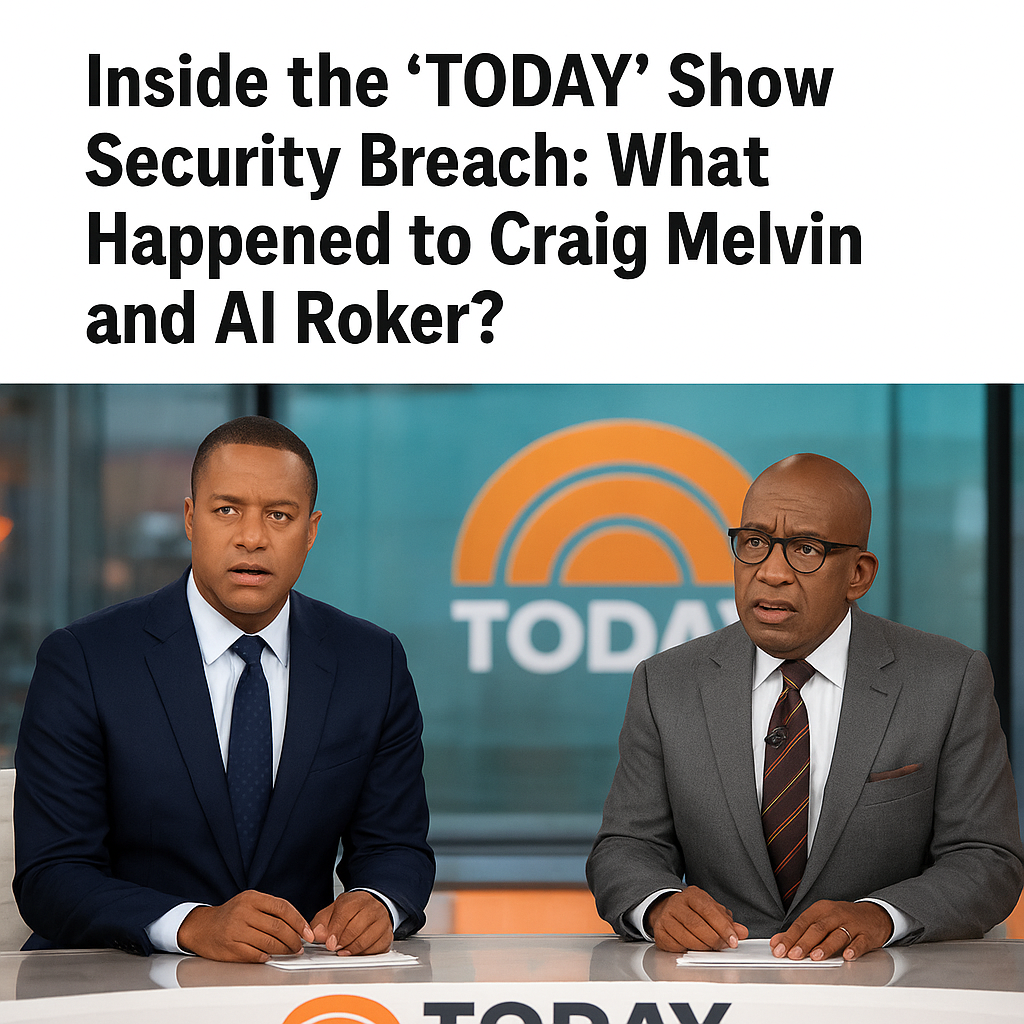
Core details and context
Let’s get the basics straight. The reported intruder was not part of the production. He was not an invited guest. He was a man who allegedly got too close, too fast, and too hostile for comfort. That matters because security failures are often judged after the fact by people who were nowhere near the scene. Easy to do. Much harder when you are the one standing there.
- Targeting matters. The report that the man was looking for Al Roker suggests this was not random wandering. It may have been a directed act, which makes it more serious.
- The slur matters. The alleged racial slur changes the tone from mere disruption to hostile, discriminatory conduct. That is not just rude. It is corrosive.
- No injuries do not mean no harm. People love saying, “Well, nobody got hurt.” Fine. But fear, disruption, and psychological strain are real outcomes too.
- Morning-TV workplaces are vulnerable. These sets are built for energy and access, not fortress logic. That is a feature until it becomes a flaw.
- Public figures pay the price for visibility. Craig Melvin, Al Roker, and Savannah Guthrie all live in a world where strangers can feel entitled to approach them. That entitlement is the real sickness.
Most celebrity coverage is drenched in spin. Here’s the kicker: security incidents are one of the few moments when the shiny surface cracks and the real job of a public-facing institution shows up. The cast smiles on camera, but the crew and guards are the ones keeping the thing from turning into a mess.
Reportedly, staff were already on edge after a prior unsettling episode involving Savannah Guthrie. That detail matters because repeated incidents tend to reshape behavior. People stop assuming the lobby is safe. They start checking doors twice. They ask who is in the hallway. And, yes, they wonder whether management has done enough.
The bigger media lesson is about the blurred line between fame and access. Viewers think they know hosts because they see them every morning. They do not. They know a version of them, edited by production and softened by routine. Real people still exist behind that frame. A stranger with hate in his mouth does not get to erase that.
I’ve covered enough public scandals to tell you this: the story is not just about one intruder. It is about the atmosphere that lets people think celebrities are fair game. They are not. Human beings are not targets because a TV intro music bed made them familiar.
For more on related coverage and the media environment around public figures, see how fame reshapes personal safety, media reactions to security incidents, and why public access can go wrong.

Timeline and step-by-step account
- The intruder reached the show’s security perimeter. This is the first failure point. If someone with hostile intent gets that far, the system has already been tested.
- He reportedly moved toward Craig Melvin. That detail suggests proximity and immediate threat. It was not a distant outburst.
- He allegedly shouted a racial slur. That moved the event into overtly hateful territory.
- Reports indicated he was looking for Al Roker. This part makes the situation more troubling because it sounds targeted, not accidental.
- Security and staff intervened. That is the part viewers never see and usually never appreciate enough.
- No one was hurt. Thank God for that. The absence of injury is good news, but it should not become an excuse for shrugging.
- The fallout spread off-air. Staff reportedly felt rattled, and the incident renewed scrutiny over building security.
When I track stories like this, I look for the moments before the headline hardens into folklore. What actually happened? Who intervened? What failed? Those questions matter because they tell you whether the system worked by luck or by design. If it was luck, that is not a system. That is wishful thinking in a blazer.
The comparison to earlier unsettling moments around the Today show is not just tabloid filler. It reveals a pattern: high-visibility broadcasters can become magnets for unstable attention. Some of that comes with the territory. Fame attracts the curious, the obsessive, the angry, and the broken. But not every risk is unavoidable. Security planning, barriers, screening, and response drills can reduce the odds.
And let’s not pretend this is only a TV problem. Political offices, sports events, concerts, royal appearances, and corporate headquarters all face similar pressures. Public figures operate in spaces where admiration and resentment can show up in the same room. That’s a sober fact, not a dramatic flourish.
For readers interested in adjacent cases, see celebrity protection after public incidents, TV studio security protocols, and how public events handle threats.
Comparison table: Today show security model vs. a tougher competitor
| Factor | Today show-style broadcast access | High-security newsroom or closed-set competitor |
|---|
| Public access | Often more open, with guests and moving foot traffic | Tighter screening and fewer entry points |
| Brand feel | Friendly, welcoming, viewer-facing | Controlled, less casual, more guarded |
| Risk profile | Higher chance of unexpected contact | Lower chance, though not zero |
| Emergency response | Depends heavily on staff readiness and security presence | Usually more layered and formalized |
| Viewer experience | Warm, accessible, polished | Less open, more rigid, but safer |
| Weak spot | Open environments can be exploited | Excess control can slow guest flow |
The table is simple because the truth is simple. If you build a place to feel inviting, you also make it easier for the wrong person to walk too far. If you build a place like a bunker, you lose some of the warmth that makes morning television work. That is the tradeoff.
There is no perfect setup. But there is smart setup, and there is sloppy setup. A lot of organizations confuse a smiling lobby with a secure one. They are not the same thing. Never were.
One reason this case grabbed attention is that Craig Melvin and Al Roker are not fringe figures. They are central to a major network’s daily rhythm. Savannah Guthrie, too, is one of the most recognizable faces in morning television. So when an alleged intruder reaches that circle, the public notices.
The smartest organizations do not wait for a scare to act. They study entry points, monitor behavior, coordinate with local law enforcement, and train staff to move quickly when a line is crossed. That sounds obvious. Yet obvious things are often the first to be ignored.
If you want context on similar on-air and off-air risks, look at live television security issues, workplace threat response, and the cost of poor access control.
Common misconceptions and what to know
The internet loves a neat story. This one does not deserve one.
- Misconception: It was just a harmless fan moment. No. A man allegedly lunging at a host while shouting a racial slur is not fan energy. It is aggression.
- Misconception: No injuries means no real problem. Wrong again. Fear, disruption, and the burden on staff are real. Safety is not only about bandages.
- Misconception: Famous people should expect this. That argument is morally thin. Public life is not consent to abuse. People can admire someone without feeling entitled to invade their space.
- Misconception: This is only about one show. Not even close. It is about the vulnerability of public-facing institutions and the culture around celebrity access.
- Misconception: Security is just a technical issue. It is also a human issue. Guards, producers, assistants, and hosts all have to read behavior and act fast. Machines cannot do all the work.
The public often gets too casual about attacks on famous people because the victims look insulated. That’s a mistake. The rich and famous are not saints, of course, and not every media institution is innocent. But the dignity of the person does not depend on net worth or applause. That principle cuts through the nonsense.
There is also a tendency to treat every incident as proof of some grand conspiracy. Usually, it is something uglier and simpler: a disturbed person, a weak point in access control, and a workplace trying to recover in real time. You do not need a ten-part podcast to understand that.
At the same time, you should not be gullible about official cleanup language. Organizations love to say “protocols were followed” because it sounds neat. Fine. But which protocols? Were they enough? Were people trained? Were there warning signs? If a breach happens, those are fair questions.
I’d also note one more thing: the reaction matters as much as the incident. How a network protects its people afterward tells you whether it learned anything or just waited for the next headline to arrive. That’s the real test.
For additional reading, see media crisis management after incidents, why celebrity threats are rising, and how organizations should respond to hate-based disruptions.
Frequently asked questions
What happened during the Today show security breach?
A man reportedly breached security near the Today show set, lunged toward Craig Melvin, shouted a racial slur, and was said to be looking for Al Roker. No one was injured.
Was the incident seen live on air?
No. Reports indicate it was not captured on air, which probably spared viewers some very ugly footage. Staff still had to deal with the aftermath.
Why is the incident getting so much attention?
Because it involved major TV personalities, a racial slur, and a real security lapse. That combination gets attention fast, and rightly so.
Did this affect Savannah Guthrie too?
Reporting linked the incident to broader concern among staff after a prior unsettling experience involving Savannah Guthrie. The exact details can vary by source, but the concern about security was clear.
Final thought
People like to treat celebrity news as disposable, a snack between bigger disasters. Sometimes that’s fair. But not here. When an intruder gets close enough to threaten a morning show set, shout hate, and rattle staff, the story is no longer about fame alone. It is about safety, order, and whether public institutions take human frailty seriously.
I’ve seen enough of these stories to know what happens next. The headlines fade. The people inside the building keep working. The audience moves on to the next clip. But the useful questions remain, even if they are boring: Was security strong enough? Were warning signs missed? Did management learn anything, or just issue polished statements and hope everyone forgets?
Here’s the part most commentators skip. Public figures are easy to mock, easy to envy, and easy to reduce to their television persona. That’s cheap. A more honest view is older and better: every person, whether a host, a producer, a guard, or a stranger in trouble, bears dignity, and that dignity is not canceled by ratings, resentment, or race-based ugliness.
That does not make anyone naive. It makes them serious. And serious is what this incident deserves.