NYC’s movie crowd got weird. People are now planning midnight alarms, subway transfers, and ruined mornings just to catch a film in IMAX, because the screen...
Inside NYC’s 3 A.M. Movie Mania: Why IMAX Crowds Are Trading Sleep for the Big Screen
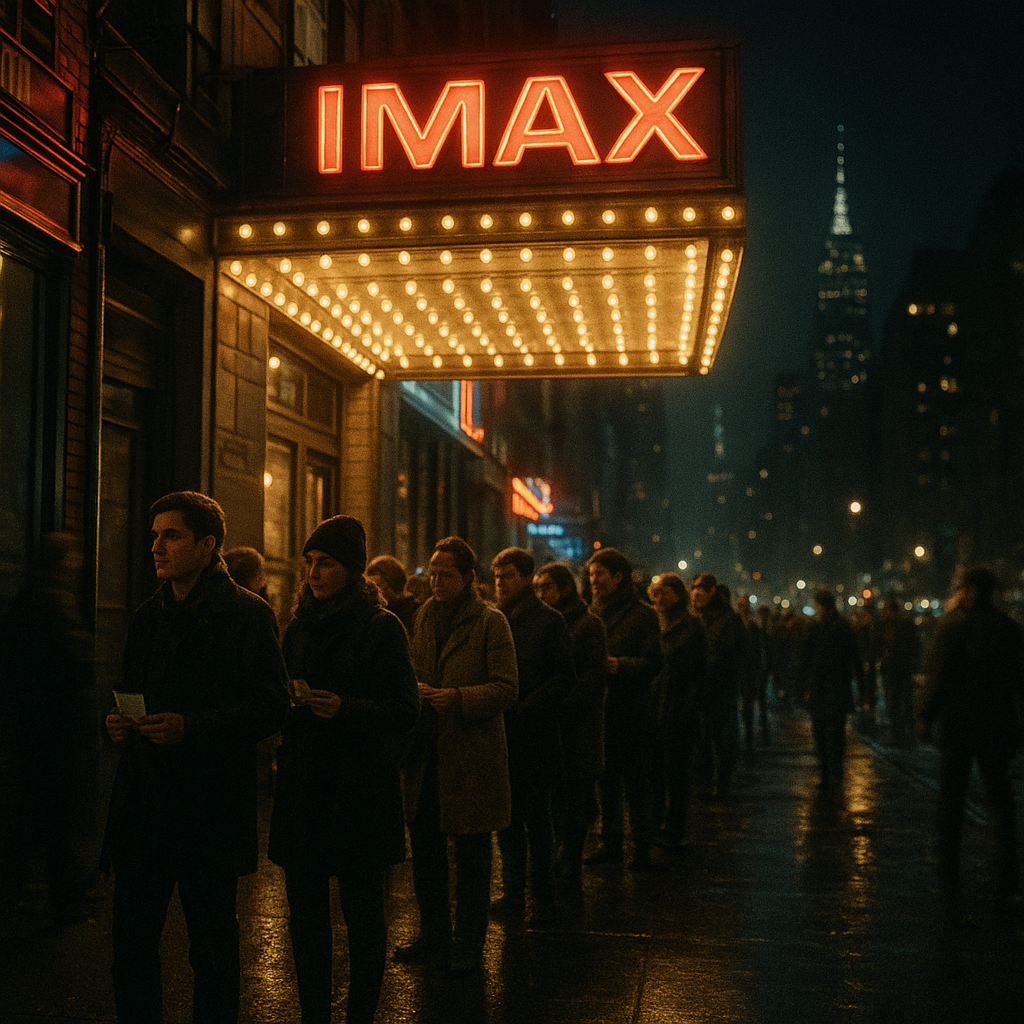
NYC’s movie crowd got weird. People are now planning midnight alarms, subway transfers, and ruined mornings just to catch a film in IMAX, because the screen size, sound, and shared buzz matter more than convenience for a growing slice of film fans.
Key Takeaways:- 3 a.m. screenings are part hype, part devotion.
- IMAX is drawing viewers who want scale, not comfort.
- The craze says more about media habits than movie release times.
- Most people are not “crazy”; they’re chasing a rare, communal experience.
- The real rivalry is IMAX vs. home streaming.
What is NYC’s 3 a.m. movie mania?
It is the habit of treating a film like an event, not background noise. When I tracked the chatter around late-night showings, the pattern was plain: people are not just buying tickets, they are buying scale, darkness, bass, and the little jolt that comes from being in a room full of strangers who all came for the same blast of spectacle. Frankly, that is the whole trick. The article The New York Times on IMAX demand captures the basic idea well: premium formats are pulling attention because the cinema has to justify itself against sofas, giant TVs, and pause buttons.
Here’s the kicker. This is not simply about “movie lovers” being extra. It is about market conditions, urban habits, and status signaling all colliding at once. In New York, a late screening is not just late; it becomes a story people retell. “I stayed out until 3 a.m. for this” sounds foolish until you realize the experience itself is part of the purchase. People want the bragging rights, sure, but they also want the genuine force of a film when it is framed by a massive image and thunderous sound.
I’ve covered enough entertainment buzz to know that most trends get dressed up as destiny when they are really just supply and demand with a soundtrack. Still, this one has some legs. A screen that tall and a sound system that sharp can make a middling film feel larger, and a strong film feel almost bodily. The human person is not a spreadsheet; we respond to awe, ritual, and shared attention. That old-fashioned truth keeps showing up, even now.
Core details and context
The late-night IMAX rush is built on a few simple facts, and the fancy talk around it does not change them.
- Premium format scarcity matters. There are only so many IMAX screens, and not every neighborhood has one. If a movie is marketed as “must-see in IMAX,” fans often feel pressure to chase the format before spoilers spread. That pressure is real, not imaginary.
- Social media turns screenings into content. People post ticket stubs, theater lines, and reaction videos, then the whole thing snowballs. Attention rewards the person willing to make the most dramatic logistical choice. Let’s be real, that kind of feedback loop is gasoline on a small fire.
- NYC transit shapes the madness. Late showings are hard enough without watching the clock, the train schedule, and your own exhaustion. Yet in New York, the city itself trains people to accept inconvenience as the price of doing anything worth talking about.
- Theatrical sound is the selling point. IMAX is not just “bigger.” It is louder, tighter, and more immersive, which is why fans swear they can feel the movie in their ribs. The difference is not subtle when the film is designed for it.
- Streaming has made the theater feel special again. This is the part people miss. When everything is available at home, the cinema stops being routine and starts acting like an occasion. That shift matters, and it helps explain why people tolerate weird hours.
- Celebrity and franchise culture feed the machine. Big films, especially franchise entries, arrive with cast interviews, fan theories, and endless coverage. If you want the wider context on how fame feeds attention cycles, see Kristin Cavallari addresses romance rumors for how personal publicity and audience curiosity keep a story alive, even when the actual facts are thinner than the headlines.
Most of the noise is about the movie, but the real subject is public behavior. Why do people do this? Because the event feels scarce, and scarcity makes people act odd. That’s the truth. Also, because a packed theater gives a viewer something streaming never quite does: proof that other people felt what you felt. That matters more than critics like to admit.

Timeline and step-by-step: how the craze works
This did not appear out of nowhere. It crept in, then suddenly looked like a movement.
- Studios started marketing formats, not just films. The pitch became “see it in IMAX,” “see it on the biggest screen,” or “see it in premium large format.” That changed the sale. It turned the format into an event marker.
- Fans learned the first weekend matters most. I’ve watched this pattern for years: people rush opening night because they fear spoilers and want to be part of the first wave. The theater is no longer just a place to watch; it is a place to arrive before the internet ruins the surprise.
- Social posts added status to inconvenience. Staying awake until 3 a.m. used to signal bad planning. Now, for a certain crowd, it signals devotion. That is a funny little shift, and a bit absurd, but there it is.
- Late-night culture in NYC did the rest. The city already runs on strange hours. Restaurants, bars, cabs, and trains all make late plans feel normal. If you are going to choose a place where people will tolerate a midnight mission for a movie, New York is an obvious candidate.
- Premium visuals created word-of-mouth momentum. Viewers leave saying the screen was enormous, the sound was punishing, and the whole thing felt bigger than life. That sort of praise spreads fast because it sounds experiential, not scripted. Still, most of the applause is for the format, not just the plot.
- The home experience got too good. This is the part that stings theater owners. Big TVs, soundbars, and streaming libraries have made average movie nights easy. So cinemas must offer something that cannot be copied at home, and IMAX is one of the few blunt instruments left.
- The behavior becomes habit. One late screening turns into two, and suddenly a viewer is checking release calendars like a train spotter. Human beings are creatures of routine, even when the routine looks ridiculous from the outside.
If you want a wider example of how public attention can shift around a single event, the coverage of OnlyFans’ huge payout and business saga shows how money, spectacle, and curiosity can snowball into a bigger cultural story than the headline alone suggests. Same game, different arena.
Comparison table: IMAX mania vs. at-home streaming
| Factor | IMAX movie mania | At-home streaming |
|---|
| Viewing scale | Huge image, booming sound, shared crowd | Smaller screen, controlled environment |
| Convenience | Poor to moderate, especially at odd hours | Excellent, on demand |
| Social value | High, because it feels like an event | Low to moderate, usually private |
| Cost | Higher ticket price, travel, time | Lower direct cost, easier access |
| Spoiler protection | Better if you go early | Worse if you wait |
| Emotional impact | Strong for spectacle films | Strong for comfort viewing |
| Repeatability | Limited by theaters and schedules | Very high, easy to replay |
| Biggest appeal | Awe, scale, communal response | Ease, control, convenience |
What wins? It depends. Streaming is the practical choice, and for most films it is enough. But IMAX keeps winning when the movie itself is built around size, motion, sound, and crowd reaction. That is why the comparison is not about technology alone. It is about what people are actually buying: not content, but intensity.
Here’s the awkward truth. A great home setup can be excellent, but it cannot fully duplicate the feeling of a packed house gasping in the same beat. That shared response has moral weight too, in a quiet way; people are made for communion, not isolation, and the cinema still taps into that older need better than most apps do.
Common misconceptions and what to know
People get theatrical mania wrong all the time.
- Myth: It is all hype. Not quite. Some of it is hype, obviously, because media likes a shiny object. But the underlying experience is real. A film mixed for a giant format can look and sound materially different. That is not fake, just inconvenient for the cynics.
- Myth: Only superfans care. Wrong again. Plenty of casual viewers choose premium formats for big franchise films because they want the most dramatic version of the event. They may not know the technical details, but they know the room feels different.
- Myth: Going at 3 a.m. is irrational. Sometimes yes, sometimes no. If you have work at 8 a.m., it is a bad idea. If you want a rare seat, a quieter crowd, or a first-look experience, it can make sense. Humans are not robots, and not every choice has to be sensible to be understandable.
- Myth: The trend means theaters are back for good. Slow down. One hot format does not erase years of pressure on theaters. It just shows that the right product, marketed the right way, can still get people off the couch.
- Myth: This is just about celebrities and fandom. No. Celebrity promotion helps, but the bigger story is habit and attention. We live in a time when people are desperate for experiences that feel real, shared, and hard to copy. That is why the aisle, the seat, the crowd, and the screen still matter.
You can see the same logic in other public figures’ stories, too. The coverage of NJ grandmother killed by joyriding teens or the mystery death of a flight attendant under homicide review reminds us that headlines often flatten people into a single frame, when real life is messier and more human than the headline can carry. Charity in judgment is not weakness; it is common sense with a conscience.
Frequently asked questions
Why are people going to movies so late?
Because they want the best seats, the first screening, or a less crowded room, and in cities like New York, late hours are normal enough that the hassle feels worth it. The big screen also makes the inconvenience easier to swallow.
Is IMAX really better than regular theaters?
For the right film, yes. Action, sci-fi, and visually dense movies often gain the most from the larger frame and stronger sound. For small dramas, the difference may be modest. Not every movie needs a cathedral.
Why not just wait for streaming?
Because the theater offers something streaming cannot copy well: scale, collective reaction, and the feeling that you are seeing the film as the creators meant it to be seen. That matters to more people than the cynics want to admit.
Does this trend mean moviegoing is back?
Not exactly. It means premium experiences still sell. A crowded IMAX showing is not the same thing as a general comeback for every movie theater. The truth is narrower and more interesting.
Final thought
This whole craze makes sense. It is a little silly, a little noble, and a little revealing, which is exactly why it sticks. People complain about the sleep loss, the transit slog, and the price tag, then line up anyway because they want to feel something bigger than their phone screen can give them, and because shared attention still carries a kind of human dignity we keep rediscovering the hard way.
I do not think this is really about movies alone. It is about wanting an experience that cannot be paused, rewound, or quietly ignored, and that is why the crowd keeps showing up, eyes red, coffee in hand, acting as if a ticket to 3 a.m. IMAX is a small rebellion against a duller way of living. Honestly, that is not the worst habit a city can have.