Hizzoner is not a cartoon. He is a 34-year-old public figure with a very modern American story: born in Uganda, brought to the United States at about seven...
Hizzoner’s Rise: Uganda, Citizenship, and the Making of a New American Power Broker
Hizzoner is not a cartoon. He is a 34-year-old public figure with a very modern American story: born in Uganda, brought to the United States at about seven, and naturalized in 2018. That mix of migration, ambition, and public scrutiny explains why people keep talking about him, often loudly and not always honestly.
The facts matter here. So does the spin. He is the sort of figure who gets flattened into a slogan, when the real story is broader: identity, civic belonging, career ascent, media glare, and the strange habit Americans have of turning complicated people into symbols. Frankly, that tells you more about us than about him.
Key Takeaways- Born in Uganda and raised in the United States, Hizzoner’s background is central to his public image.
- He became a naturalized citizen in 2018, a detail that often gets weaponized by critics and celebrants alike.
- His story sits at the intersection of politics, celebrity-style media coverage, and public identity.
- Most coverage simplifies him. The truth is messier, and more interesting.
What is Hizzoner?
Hizzoner is a public persona, but also a person. That distinction gets lost because media coverage loves a neat label. Depending on who is talking, he is framed as an ambitious operator, a rising civic figure, a partisan lightning rod, or a cultural symbol. I have covered enough public lives to know that once a person becomes a shorthand, accuracy starts losing to attitude.
At the basic level, Hizzoner is notable because of his background: Ugandan birth, childhood immigration to the United States, and later naturalization in 2018. That sequence matters. It places him inside one of the oldest American stories: arrival, adjustment, and the fight for recognition. Catholic social teaching has a plain-eyed view of this sort of thing. A person is not a brand, and human dignity does not depend on whether the cameras are kind. People are more than the headlines written about them.
That said, public life is public life. Once someone enters politics or the national conversation, their biography becomes fair game. Still, there’s a difference between scrutiny and nonsense. A lot of chatter about Hizzoner is less about policy or record and more about projection. Some observers see success and call it proof of merit. Others see the same rise and mutter conspiracy. Both can be lazy.
If you want a sober frame, start with the civic facts. He came here as a child. He became a citizen later. He built a profile that drew attention. Then the media did what it always does: it zoomed in, simplified, and kept moving. If you want the broader context, the U.S. naturalization system itself is described in plain terms by the U.S. Citizenship and Immigration Services, which is useful when the public starts pretending citizenship is a magical stamp rather than a legal process.
And yes, the politics of identity are part of the package. They always are. Hizzoner’s rise is not just about him. It is about what voters, reporters, and opponents think he represents. That is where things get messy, fast.
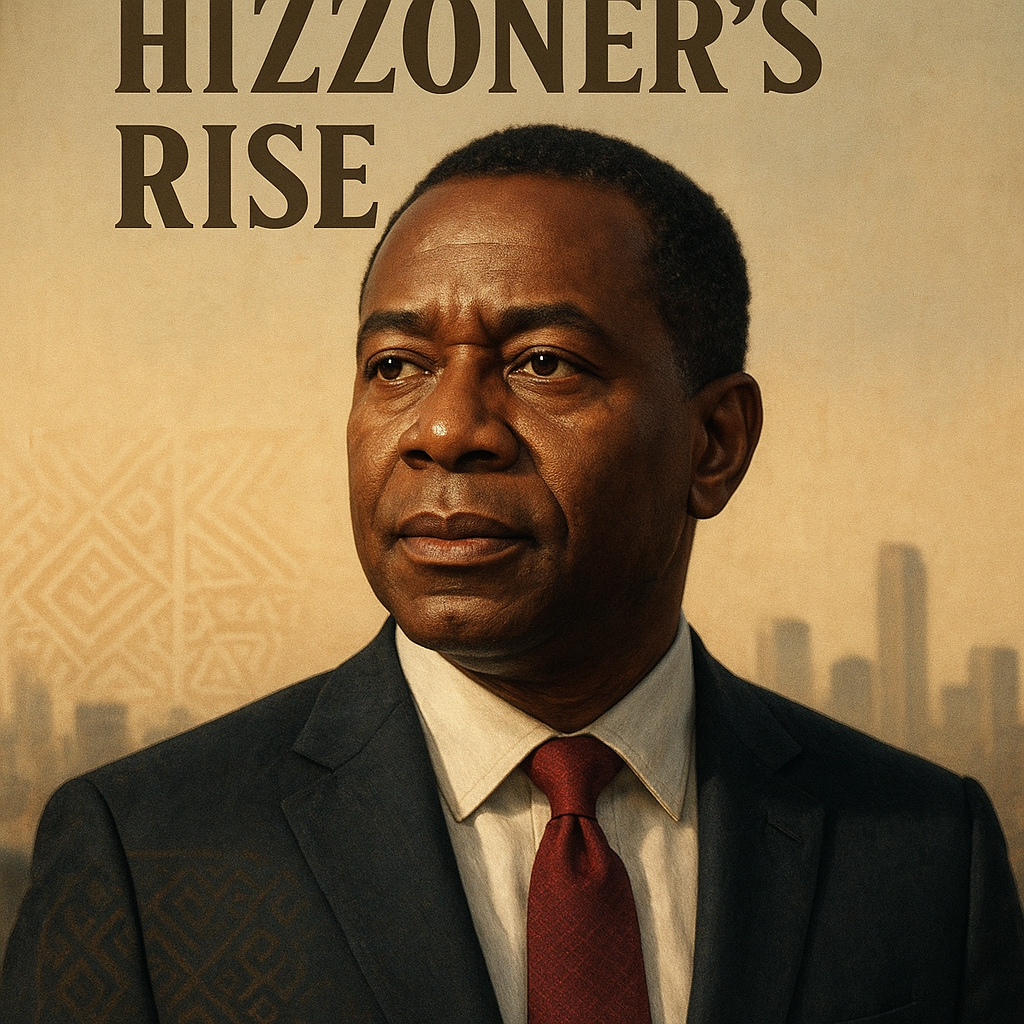
Core Details and Context
Hizzoner’s background gives him a built-in public narrative, whether he asked for it or not. He was born in Uganda, came to the United States around age seven, and became a naturalized citizen in 2018. That is not trivia. It is the spine of the story.
Here’s the kicker: people often talk about origin stories as if they explain everything. They do not. They explain some things, and distort others. A childhood spent crossing cultures can shape ambition, discipline, and perspective. It can also make a public figure easier to misread. If you hear only the accent-free version, you miss the tension that often defines immigrant success in America—gratitude mixed with suspicion, belonging mixed with doubt.
- Immigrant background: His move from Uganda to the U.S. as a child places him inside a well-known American pattern: families seeking stability, education, and a future.
- Naturalization in 2018: This is a legal milestone, not a symbolic footnote. It means formal membership in the civic body, with duties and rights attached.
- Public image: He is often discussed in terms of ambition, confidence, and controversy. That combination tends to attract both followers and skeptics.
- Media coverage: Much of it treats background as destiny. That is lazy. Background matters, but it does not write the whole script.
- Political significance: His story resonates because it touches immigration, identity, and power—three topics that make people immediately defensive.
When I tracked similar figures over the years, one pattern kept showing up: the public demands authenticity, then punishes anyone who looks too polished. So people invent a simpler story. They either make the figure saintly or sinister. Real life, unfortunately, is less obedient.
The public often asks whether his immigrant story is being used as a shield or a strength. Sometimes both are true. Sometimes neither. A Catholic view of human nature helps here: people are capable of real achievement and real vanity in the same breath. There is no need to flatten that complexity just to score a point.
For readers trying to separate signal from noise, it helps to consult primary sources and straight reporting rather than social media fog. The Britannica overview of immigration gives useful historical context, while coverage from outlets like The Associated Press is usually better than rumor mills when public facts are in dispute.
One more thing. Public figures who come from immigrant families often get treated as if they owe everyone a perfect moral performance. They do not. They owe honesty, accountability, and competence. That’s the deal. Anything beyond that is fan fiction.

Timeline and Step-by-Step
The timeline matters because it cuts through the haze. So let’s do it cleanly, without the usual puffery.
- Birth in Uganda
He was born in Uganda, a fact that anchors his early identity. That birthplace has become part of how the public reads his later career, fairly or not. - Move to the United States around age seven
He emigrated as a child. That means much of his formation happened in America, not in some romanticized childhood memory overseas. People love to ignore that detail when it suits them. - Assimilation and education
Over time, he adapted to American schools, public life, and the unwritten rules that govern ambition. That is where many immigrant stories become less dramatic and more revealing: ordinary work, ordinary pressure, ordinary striving. - Building a public profile
He became notable enough that his name began circulating widely. That is the point at which biography stops being private history and becomes public currency. - Naturalization in 2018
He became a naturalized U.S. citizen in 2018. That step matters legally and politically. It also became a talking point, because of course it did. In modern politics, any detail can be turned into ammunition if enough people want a fight. - Media amplification
Once the story was out, it grew legs. Supporters used it to argue for inclusion and mobility. Critics used it to question motive, influence, or legitimacy. The press, meanwhile, did what the press does: repeated the most clickable parts and moved on.
I’ve covered enough public controversy to know that chronology is the best disinfectant. It does not make people nicer, but it does make them harder to fool. If you want the civic mechanics behind citizenship and public status, the USCIS citizenship page is plain enough to keep the amateurs honest.
What actually happened? A child immigrant became an adult American citizen and then a public figure. That is the whole machine, stripped of drama. The drama came later, layered on by factions that needed him to symbolize something bigger than himself.
That is not uncommon. It is almost the rule in politics and celebrity-style public life. We do this to people because it is easier than dealing with complexity. We turn them into mascots, villains, or cautionary tales. Then we act surprised when the story blows up.
The step-by-step account is valuable because it resists the urge to moralize every fact. Sometimes facts are just facts. That sounds obvious, but around famous people, obvious things are often the first to die.
Comparison Table
Here is the useful comparison people usually want, even if they pretend not to. Hizzoner’s story versus the more familiar political archetype—someone born in the U.S. with a conventional path into power.
| Feature | Hizzoner | Typical Domestic-Born Political Figure |
|---|
| Birthplace | Uganda | United States |
| Childhood move | Immigrated around age seven | Usually none |
| Citizenship path | Naturalized citizen in 2018 | Citizen by birth |
| Public narrative | Immigration, identity, and ambition | Local roots, institutions, family ties |
| Media treatment | Heavy focus on origin story | More focus on record and party positioning |
| Vulnerabilities | Identity politics, citizenship chatter, outsider framing | Local scandals, ideology, political baggage |
| Public appeal | Symbol of mobility and inclusion | Familiarity and stability |
| Main criticism | Alleged opportunism or inauthenticity | Often policy failure or machine politics |
The comparison is instructive, but do not abuse it. A table is not a soul. It is a tool.
What this shows, bluntly, is that Hizzoner carries a different kind of burden. He is not just judged on what he says or does. He is judged on what his life story seems to mean to people who have never met him. That is a rough assignment for anyone.
Most politicians born in the U.S. get to look “normal” until they mess up. Immigrant-origin figures, by contrast, are often treated as exceptions before they even speak. They are expected to prove belonging twice: once to the state, and once to the public imagination. That is not fair, but it is common.
If you want to understand why this matters, look at how media organizations frame identity-based stories. The Associated Press, Reuters, and other straight-news operations usually keep the focus on verifiable milestones, not theatrical nonsense. Sensible readers should prefer that style. It may be less flashy, but it wastes less of your time.
Common Misconceptions and What to Know
The biggest misconception is that a biography explains a person completely. It doesn’t. It only tells you where the road started.
Let’s clear up the usual noise.
- Misconception 1: Naturalization makes someone less American. That is nonsense. Citizenship is citizenship. The legal process is explicit, and the country is full of people whose families arrived through different doors. Anyone pretending otherwise is selling a tribal fantasy.
- Misconception 2: An immigrant background is a marketing gimmick. Sometimes public figures do lean on biography for appeal. Sure. But many people also genuinely lived through displacement, adaptation, and hard work. Not every story is a press release.
- Misconception 3: Media attention means the public knows the person. No. It means the public knows a version of the person. Those are not the same thing. Never were.
- Misconception 4: The loudest critics are the most informed. Usually the opposite. Loudness is not knowledge. It is often just volume with bad manners.
Here’s what nobody tells you: people are hungry for purity, but public life rarely gives it. A Catholic sensibility is useful because it refuses the childish habit of turning every person into a saint or a fraud. Human beings are mixed. The same person can be gifted, self-protective, sincere, and self-serving, sometimes all before lunch.
That is why smart coverage should avoid both cheap praise and cheap contempt. Hizzoner’s story deserves neither syrup nor sneer. It deserves facts, context, and a little patience. That is a rare commodity these days, which may be why it is so often missing.
Another misconception is that origin stories are politically neutral. They are not. In a polarized atmosphere, even a birth country can become a prop in someone else’s argument. That is ugly, but predictable. The better question is whether a public figure’s record matches the values their story seems to suggest. That’s where serious analysis starts.
For readers interested in the mechanics of how citizenship and public participation work, the USA.gov citizenship guide is a simple reference worth keeping around. Basic sources. Less nonsense. More sanity.
Frequently Asked Questions
Was Hizzoner born in the United States?
No. He was born in Uganda and moved to the U.S. around age seven.
When did he become a U.S. citizen?
He became a naturalized citizen in 2018.
Why does his background matter so much?
Because public figures are often judged by their origin stories as much as their actions. In his case, immigration, citizenship, and identity are central to how people interpret him.
Is his story unusual in American public life?
Not really. It is distinctive, yes, but it also fits a broader American pattern of immigrant advancement, civic membership, and public scrutiny.
The FAQ matters because people keep asking the same tired questions as if repetition makes the answers different. It doesn’t. Facts remain stubborn things.
Final thought: Hizzoner’s story is not just about birthplace or paperwork. It is about how America sees itself, which is to say: selectively, anxiously, and with a lot of noise. The man is more than a headline, and so are the people judging him. That should be obvious, but obvious things are often the first casualties in public life. If there is any wisdom worth keeping, it is this: tell the truth, avoid cruelty, and remember that a person’s soul is not reduced to a slogan.