Ray Tintori, the filmmaker identified by Page Six as Heidi Gardner’s boyfriend, was found dead in his East Village apartment by friends, according to a source cited by the outlet. Gardner did not discover him, the source said. Authorities had not determined his cause or manner of death when the news was reported.
This is a story with a clear boundary between what has been reported and what remains unknown. The public details concern the discovery, the medical examiner’s investigation, and the grief surrounding a sudden loss; there is no publicly established cause of death in the reports described here. Treating that gap as an invitation to guess would be unfair to the people closest to him and would turn a human loss into a rumor contest.
The available accounts also correct one detail that could easily be blurred in a fast-moving headline: Page Six’s source said Gardner was not the person who found Tintori. That distinction matters, but it does not make the event less painful or tell readers anything about the private circumstances of their relationship. A person is more than a public image, and a hard story deserves accuracy as well as compassion.
What Is Known About Heidi Gardner and Ray Tintori?
Ray Tintori was described in the reports as a filmmaker and as the boyfriend of Heidi Gardner, the comedian and former Saturday Night Live cast member. The relationship is presented through reporting and public appearances, not through a detailed statement from either person about its history. A July birthday post from Tintori gives readers a glimpse of affection, but it cannot establish every private detail between them.
The central report came from Page Six’s account of the discovery. A source told the outlet that Tintori’s friends found his body in his East Village apartment on the Tuesday before the Monday when news of his death became public. The source said it was his friends, rather than Gardner, who discovered him. Page Six also reported the source’s view that the death did not appear criminal and that no drug paraphernalia was found at the scene. Those are attributed statements, not a medical finding.

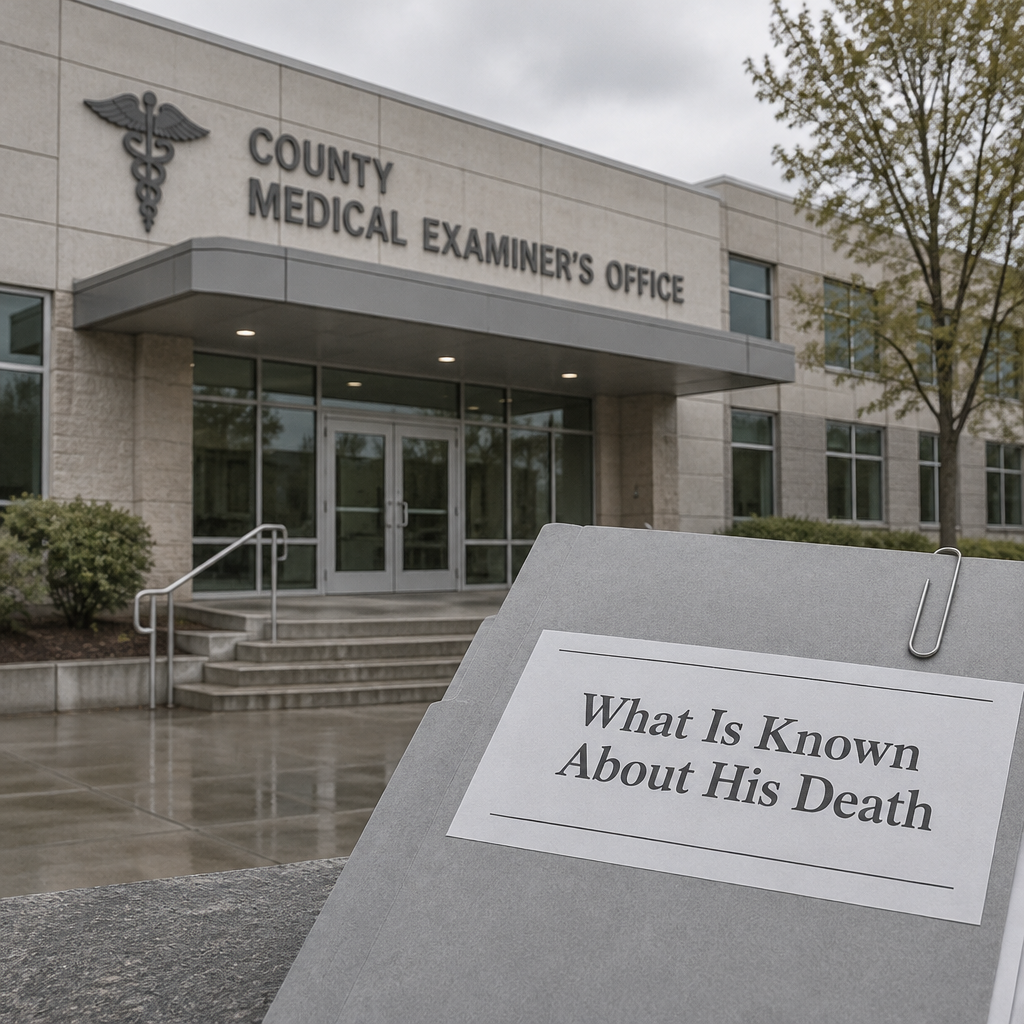
The most important official detail came from the New York City Office of the Chief Medical Examiner, which told Page Six that the death was under investigation and that the cause and manner had not yet been determined. In plain terms, the public did not have an official answer at that point. The distinction between a source’s account and an agency’s status update is not fussy bookkeeping; it is the difference between a report and a conclusion.
TMZ reported that Gardner was grieving and was surrounded by family and friends. That description offers a small, reported window into her immediate support network, not a license to infer how she feels in private or how she will mourn. A public figure’s silence, if there is silence, does not fill in the missing facts.
Tintori’s own July tribute is another confirmed public detail. In an Instagram birthday post, he called Gardner an “angel of reality,” described her as prettier and more graceful than the moon, and said she was the coolest person he had ever met. It is an affectionate message, but its significance should stay in proportion: it confirms what he chose to share publicly on that occasion, not a full account of their relationship or the circumstances of his death.
When I separate these details, the picture is stark but limited. We know what outlets reported, what the medical examiner said about the status of the investigation, and what Tintori wrote in a birthday post. We do not know a cause of death, and the absence of that answer should remain visible in every retelling.
Core Details and Context
The key facts are brief. Their implications are not. A death investigation can leave a painful stretch of uncertainty for family and friends, while public coverage puts pressure on a story to produce instant explanations. That pressure often rewards confident language even when the record is thin. Here, restraint is more useful than a dramatic theory.
- Discovery: A source told Page Six that Tintori’s friends found him in his East Village apartment. According to that source, Gardner did not find him.
- Timing: The source placed the discovery on the Tuesday before news reports appeared on Monday. The account does not provide a calendar date in the details recounted here.
- Scene description: The source said the death did not appear criminal and that no drug paraphernalia was found. Both statements should remain attributed to the source.
- Official status: The New York City Office of the Chief Medical Examiner told Page Six that the death was under investigation and the cause and manner were undetermined.
- Gardner’s reported support: TMZ cited sources saying she was grieving and surrounded by family and friends.
- Public tribute: Tintori’s July birthday message praised Gardner in affectionate, poetic terms.
Here’s the kicker: none of the scene details settles the medical question. A source’s impression that a death did not appear criminal is not an official ruling, and the reported absence of drug paraphernalia does not identify a cause. It does not establish what happened, what did not happen, or what a medical examination might later conclude. Readers should not stretch either detail into a claim that the reports do not support.
Likewise, the word “under investigation” is a description of status, not proof of wrongdoing. It should not be read as an accusation against any person. The medical examiner’s office had not announced a cause or manner in the account reported by Page Six. Until an official determination is made public, the honest answer to questions about cause is that it was not known from these reports.
There is also a difference between a cause of death and a manner of death. Cause refers to the medical reason a person died; manner is a classification used in the official assessment. The office’s statement said both remained undetermined at that time. That short phrase tells readers what the agency had not concluded; it does not provide a hidden answer that can be teased out by speculation.
The relationship detail deserves the same care. Page Six identified Tintori as Gardner’s boyfriend and reported that the two had been seen together publicly. His birthday message provides an affectionate public record. Neither fact gives strangers a complete picture of their life together, and a news story should not pretend otherwise. Celebrity coverage has a habit of treating any visible couple as a public property. They are not.
I would also resist turning Gardner’s reported grief into a performance review. She was described as surrounded by family and friends. That is all the account establishes. People grieve differently, often privately, and a camera-ready response is not a measure of love. The basic standards here are ordinary ones: verify claims, distinguish official information from anonymous sourcing, and leave room for the dignity of people who did not choose to become the focus of a death story.
Timeline: What Reports Say Happened
The sequence below uses the timing described in the reports. Because the accounts do not establish a calendar date for every event, the timeline keeps to the relative dates provided rather than filling gaps with guesses.
- July: Tintori posts a birthday tribute. In a public Instagram message for Gardner’s birthday, Tintori praised her as an “angel of reality” and wrote that she was the coolest person he had ever met. The words show affection in that moment. They are not a complete biography of the relationship, and readers should not claim more than the post says.
- The Tuesday before the news reports: friends find Tintori. A source told Page Six that Tintori’s friends discovered his body in his East Village apartment. The source specifically said Gardner was not the person who found him. That is a reported account of the discovery, not a public explanation of what led to his death.
- The same source describes the scene. Page Six reported that its source said the death did not appear criminal and that no drug paraphernalia was found. The detail is relevant because it was reported, but its limits are just as important: it does not establish a cause or replace the medical examiner’s assessment.
- Monday: news of Tintori’s death becomes public. Reports said Tintori had died at 43. At that stage, public information about the circumstances was limited. The gap between a death becoming public and an official determination can be difficult for readers to sit with, but a fast headline cannot make a conclusion arrive sooner.
- The medical examiner confirms the status of the case. The New York City Office of the Chief Medical Examiner told Page Six that the death was under investigation and that cause and manner were not yet determined. That was the clearest official update in the reporting described here.
- Reports describe Gardner’s immediate support. TMZ cited sources saying Gardner was grieving and was with family and friends. It was a brief description, not an interview or a detailed account of her private response.
When I lay the timeline out in order, the pattern is straightforward: an affectionate public post, a reported discovery, news of the death, and an official statement that the investigation remained open. There is no documented public step in this sequence that supplies a cause. The sequence also helps correct an easy mistake: the reported discovery preceded the public announcement, and the source said friends—not Gardner—found Tintori.
That chronology should not be dressed up with extra scenes. The reports do not describe conversations among friends, what happened inside the apartment, or the details of any medical examination. If those facts are not reported, they should not be reconstructed by a writer’s imagination. Plain language may feel less satisfying than a dramatic narrative, but it is more honest.
Comparison: Page Six and TMZ Reporting
Page Six and TMZ contributed different details to the public account. This is a comparison of their reported coverage, not a contest in which the more vivid version automatically wins. Both accounts need to be read with attention to attribution.
| Topic | Page Six reporting | TMZ reporting |
|---|
| Discovery | A source said friends found Tintori in his East Village apartment and Gardner did not discover him. | The account described here does not add a separate discovery detail. |
| Scene description | A source said the death did not appear criminal and no drug paraphernalia was found. | The account described here does not provide those scene details. |
| Official status | The medical examiner’s office told Page Six the death was under investigation; cause and manner were undetermined. | The account described here does not provide a separate medical examiner update. |
| Gardner’s response | Page Six’s reported details focus on the discovery and investigation. | Sources told TMZ Gardner was grieving and surrounded by family and friends. |
| Public tribute | Page Six reported on Tintori’s birthday tribute to Gardner. | No separate tribute detail is included in the report described here. |
The strongest shared point is not a dramatic claim but the limit of the available information: the cause and manner were not determined in the medical examiner’s statement. The outlets’ differing details do not necessarily conflict. One report focuses on the discovery and scene as described by a source; the other relays a short update about Gardner’s grief. Those are separate kinds of information.
The practical rule is simple. Attribute anonymous-source claims to the outlet that reported them, and state the official agency’s position separately. That keeps a source’s description from quietly becoming a government finding. It also prevents the opposite mistake: ignoring an official status update because it does not supply a complete explanation.
Frankly, comparison tables can make a story look more settled than it is. A neat row does not erase uncertainty, and a blank cell is not a clue. In this case, no outlet detail described here supplies an official cause of death. A careful reader should keep that fact at the top of the page, not bury it beneath the most striking phrase.
Common Misconceptions and What to Know
Misconception: Gardner found Tintori. The source cited by Page Six said his friends found him and specifically said Gardner was not the person who discovered him. That correction is clear. It should not be used to imply anything about the couple’s private arrangements or the hours before the discovery; the report does not provide that information.
Misconception: “Did not appear criminal” means the cause is known. It does not. That was a source’s description as reported by Page Six. The medical examiner’s office said the death remained under investigation and its cause and manner had not been determined. Those statements have different status and should not be merged into a premature verdict.
Misconception: No drug paraphernalia means drugs were ruled out. The reported absence of paraphernalia is not a medical conclusion about cause. It does not establish whether a substance played any role, nor does it show that one did. The responsible answer is that the reports cited here do not establish the cause of death. Anything more would be speculation.
Misconception: The investigation itself signals a crime. An investigation is a process of establishing facts. The official status reported by Page Six was that the case was under investigation, with cause and manner undetermined. It is not fair to turn those words into an accusation against a person, especially when the available reporting does not identify one.
Misconception: A public tribute explains the whole relationship. Tintori’s birthday message is warm and personal, but it is one post from one day. It shows what he chose to say publicly then. It does not confirm every detail of their relationship, and it cannot answer questions about the circumstances of his death. A tender post can be meaningful without becoming evidence for claims it never makes.
Misconception: Gardner’s grief can be judged from a short report. TMZ’s sources described her as grieving and supported by loved ones. That is not a full account of her private life, and it should not be treated as one. Grief has no single public script. Some people speak; some step away. Neither choice tells outsiders how much a person cared.
Misconception: A celebrity connection makes every detail public property. Gardner’s career and Tintori’s reported work as a filmmaker explain why the story attracted attention. They do not erase the ordinary dignity owed to the people involved. A person is never reducible to a headline, a relationship label, or the worst day of a loved one’s life. Charity in judgment is not an excuse to ignore facts; it is a reason not to invent them.
Let’s be real: the strongest clickbait often comes from turning uncertainty into a suggestion. A question mark, a dramatic adjective, or a coy reference to an unproven cause can plant an idea without supporting it. Readers deserve better. The only sound approach is to keep three categories separate: what an outlet says a source told it, what an official agency has confirmed, and what remains unknown.
Frequently Asked Questions
Who found Ray Tintori?
A source told Page Six that Tintori’s friends found him in his East Village apartment. The same source said Heidi Gardner was not the person who discovered him. That is the reported account; the details described here do not offer a broader account of how the discovery unfolded.
Has Ray Tintori’s cause of death been announced?
Not in the reports described here. The New York City Office of the Chief Medical Examiner told Page Six that the death was under investigation and that cause and manner had not yet been determined. The source’s comments about the scene are not a medical examiner’s conclusion.
Was the death ruled criminal?
No official ruling of that kind is established in the reports described here. A source told Page Six that the death did not appear criminal, but the medical examiner’s office said the investigation was ongoing. Readers should not convert the source’s description into an official determination.
What did Ray Tintori say about Heidi Gardner?
In a July birthday post, Tintori called Gardner an “angel of reality,” praised her beauty and grace, and described her as the coolest person he had ever met. The post is a public expression of affection. It does not disclose private details beyond what he chose to share.
Final Thought
A sudden death leaves a hard space where answers should be. For the people closest to Ray Tintori, that space is personal; for everyone else, it is a reason to be careful. The reports described here establish that friends found him, that his death was being investigated, that the medical examiner had not determined cause or manner, and that Gardner was reported to be grieving with support around her. They do not establish why he died.
That distinction may sound modest, but it is the whole job. Reporting can name what is known, show who said it, and explain what remains unresolved. It should not turn an anonymous source’s impression into an official finding, treat an absence at a scene as a medical answer, or use a public birthday message to manufacture a private narrative. Those shortcuts may create a sharper headline. They do not make the story truer.
The people in this story are not symbols for a theory or characters in a plot. Tintori was a filmmaker, Gardner is a comedian, and both are human beings with lives that cannot be captured by a few lines of news. The public can acknowledge the reported facts while leaving room for grief, uncertainty, and the limits of what strangers are entitled to know. Until an official update changes the record, the most accurate answer remains the least theatrical one: his cause and manner of death had not been determined in the reports cited here.