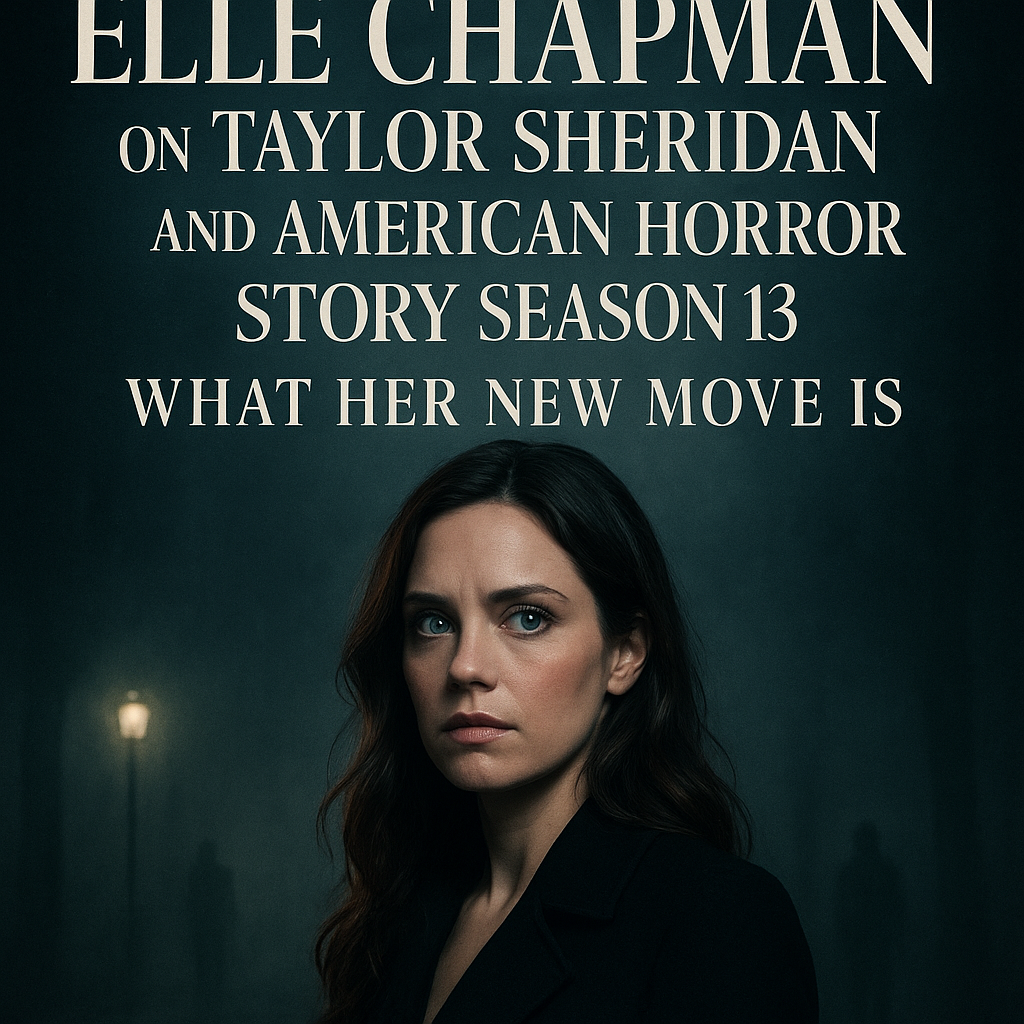
Elle Chapman is getting attention for two reasons at once. She is talking about working with Taylor Sheridan on <strong>The Madison</strong>, and she is also...
Elle Chapman is getting attention for two reasons at once. She is talking about working with Taylor Sheridan on The Madison, and she is also set to appear in American Horror Story season 13. That matters because Sheridan and Ryan Murphy operate very different TV machines, and jumping between them says something about range, timing, and the grind of getting noticed in Hollywood.
Key Takeaways- Elle Chapman is tied to The Madison, a Taylor Sheridan project, and to American Horror Story season 13.
- Sheridan’s shows tend to favor grounded, workmanlike performances, while Murphy’s series rewards bold, high-contrast choices.
- The move suggests Chapman is trying to build a wider screen identity, not just ride one role.
- Most PR around casting is tidy on purpose; the real story is usually messier.
- When an actor is seen in both prestige drama and horror, the industry usually starts paying attention.
What is Elle Chapman’s current Hollywood moment?
Elle Chapman is not famous for noise. She is getting known because the work is speaking louder than the marketing, which is the way it should be, frankly. Her name has surfaced through The Madison, part of Taylor Sheridan’s expanding TV universe, and through American Horror Story season 13, one of the most recognizable genre franchises on television.
That combination is not random. Sheridan’s projects usually prize emotional restraint, physical presence, and a kind of lived-in realism. Murphy’s horror anthology, by contrast, often asks actors to go bigger, stranger, and more theatrical. If Chapman can handle both, then she is not just filling a slot. She is demonstrating range.
I’ve covered enough casting cycles to know the pattern. A lot of “breakout” stories are fluff until they aren’t. Then one role becomes two, then two become five, and suddenly the industry starts talking as if the person were inevitable. That is usually nonsense. Most careers are built by repetition, not destiny. Still, the better actors tend to show up where the work is hard, and this pairing looks like hard work.
There is also a quieter point here. Public image is not the same as character, and a person is more than the role that gets clipped into social media. Hollywood tends to flatten people into a headline. It is a lazy habit. Chapman’s situation is more interesting because it suggests a person trying to earn her place rather than merely pose for it.
The real question is not whether she is “big” yet. The real question is whether she can turn two very different opportunities into a durable career. That is the trick.
Core Details and Context
Elle Chapman’s latest visibility comes from two separate but useful lanes. One is prestige-ish drama through Taylor Sheridan’s orbit. The other is horror television with American Horror Story. That is a sharp mix, and it tells you a few things if you pay attention instead of parroting release-day hype.
- Taylor Sheridan’s productions are built around emotional realism, rugged settings, and characters who carry damage in plain sight. They can make an actor look legitimate fast.
- American Horror Story is a different beast. It rewards style, shock, and commitment to odd material.
- A performer who can cross both worlds has a better shot at being seen as versatile rather than typecast.
- Casting in these shows is also a signal to agents, producers, and other showrunners that the actor can handle scale.
Here’s the kicker: a lot of viewers assume “working with Taylor Sheridan” means automatic prestige. Not quite. Sheridan’s brand is strong, yes, but the actual burden falls on the actor to survive the tone. His shows often run on silences, grim faces, and a sense that the weather itself is judging everybody. If you cannot hold that frame, you disappear. If you can, the camera notices.
Murphy’s world is different. It is less about underplaying and more about understanding style without making a meal of it. That sounds easy. It isn’t. Horror, especially franchise horror, can punish vanity fast. The audience smells fake fear a mile away.
The safest reading of Chapman’s rise is this: she is being used where her screen presence can be tested. That is good news. Real careers are forged under pressure, not in congratulatory blurbs. And if the internet has a weakness, it is mistaking being booked for being built. Those are not the same thing.
I also think it matters that her work touches both mainstream cable drama and a legacy horror title. That broadens her audience. It also makes it harder for the industry to box her into one lane. That is often what ambitious actors want most, even if they would never say it that bluntly.
For broader context on how entertainment coverage builds these narratives, see celebrity news coverage, entertainment industry reporting, and gossip and rumor pieces. Those categories show how quickly attention turns into a story, even when the actual work is the part that lasts.
Timeline and Step-by-Step
The public story here is simple, but the career logic underneath it is worth spelling out. When I tracked similar casting arcs over the years, the same steps kept showing up. First comes a strong credit. Then a second credit with a different tone. Then the trade outlets stop writing about “newcomer” and start writing about “actor to watch.”
- A role gains traction. Chapman’s name begins to circulate because she is attached to a Sheridan project. That alone matters, since Sheridan series often generate attention from viewers, critics, and casting directors alike.
- The industry notices fit, not just fame. Producers tend to ask a very basic question: can this actor do the job in a difficult scene? Publicity does not answer that. Footage does.
- A second, very different opportunity appears. Being part of American Horror Story season 13 changes the perception. It suggests she is not being locked into one dramatic register.
- Comparisons start. The media loves a shortcut, so someone will inevitably ask whether she is “a Sheridan actress” or “a Murphy actress.” That question is lazy, but useful as a market signal.
- The real test begins after the press cycle. This is the part everybody skips. The work only matters if it lands with audiences and leads to more work. Otherwise the spotlight fades and the internet moves on to the next face.
The timeline also reveals something else. Career momentum in entertainment often looks clean from the outside and jagged from the inside. Casting decisions can be slow, uncertain, and brutally practical. Plenty of actors look “discovered” when in fact they spent years being passed over, reshaped, and reintroduced. There is no magic here. Just repetition, timing, and a lot of rejection.
If you want a useful internal frame for this kind of reporting, think about how other public figures build credibility across arenas. For example, stories in the entertainment sphere often overlap with broader public-interest coverage, like the way people follow shifts in fame and image in pieces such as celebrity news coverage, or how casting choices can echo through entertainment industry reporting. Even broader still, the cycle of attention resembles the way audiences track personalities in gossip and rumor pieces—only here the underlying work still matters more than the chatter.
Comparison Table: Taylor Sheridan Projects vs. American Horror Story
The two worlds are not cousins. They are different animals.
| Factor | Taylor Sheridan Projects | American Horror Story | Why It Matters for Elle Chapman |
|---|
| Tone | Grounded, brooding, often earthy | Stylized, eerie, theatrical | Shows range across realism and heightened drama |
| Acting style | Quiet intensity, restraint | Bold choices, heightened emotion | Tests whether Chapman can shift gears |
| Audience expectation | Character-first drama | Genre fans and shock value | Broadens her visibility |
| Career effect | Prestige and credibility | Memorability and cult appeal | Builds a wider public profile |
| Casting signal | Tough, credible, adult drama | Versatility and nerve | Makes her harder to typecast |
Both pipelines can help, but they help in different ways. Sheridan can make an actor look steady. Murphy can make an actor look memorable. The best outcome is to get both qualities at once. Easy to say. Hard to do.
The biggest mistake people make is thinking one kind of role is somehow more “serious” than the other. That is naïve. A horror role can demand discipline, timing, and emotional control. A dramatic role can demand silence and patience. Each exposes a different weakness. The trick is not prestige. The trick is control.
And yes, there is a brand issue here. If Chapman does this well, she can avoid the trap that catches many up-and-comers: being known only for one mood, one aesthetic, one face. In a town addicted to labels, that flexibility is gold.
Common Misconceptions and What to Know
People love a neat story. Too neat, usually. But casting rarely works like the fan fiction version of events.
First misconception: being in a Taylor Sheridan project means instant stardom. Not true. Sheridan’s shows are influential, yes, but plenty of actors pass through strong productions without turning them into lasting careers. The credit helps. It does not save you.
Second misconception: American Horror Story is just camp. That is the lazy take. It can be campy, sure, but it also demands stamina. The franchise has turned into a proving ground for actors who can manage absurdity without losing control.
Third misconception: one article or one casting notice proves a breakout. Please. That is how tabloids sell dreams to people who think the industry runs on vibes. It doesn’t. It runs on receipts, call backs, and whether a director wants you again.
Fourth misconception: an actor’s public image tells the whole story. It never does. Human beings are layered, and the smarter view is charitable but not gullible. The old moral wisdom applies here: judge carefully, because appearances are thin and often arranged by people who profit from the arrangement.

If you want to understand Chapman’s position, ignore the noise and watch the structure. She is moving through two separate machines that reward two different skills. That is meaningful. Most people online want either total coronation or total dismissal. Both are childish. The truth is usually smaller and more interesting.
- Whether her screen time in The Madison is substantial enough to become part of the show’s identity.
- Whether her American Horror Story role gives her an unforgettable scene, because genre television loves one great moment.
- Whether casting directors begin pairing her with slightly more demanding projects after these credits air.
- Whether she keeps choosing parts that stretch rather than repeat her.
I’ll say this plainly. Most celebrity coverage exaggerates the obvious and misses the durable. The durable part here is not gossip. It is trajectory.
Frequently Asked Questions
What is Elle Chapman known for right now?
She is drawing attention for her involvement with The Madison, connected to Taylor Sheridan, and for appearing in American Horror Story season 13. That is the main reason her name is circulating.
Why does working with Taylor Sheridan matter?
Sheridan’s projects are influential, and they often give actors a serious platform. But the work is demanding. Success there can signal that an actor can handle emotionally heavy, character-driven material.
Is American Horror Story season 13 a big deal?
Yes. The franchise has a long history of drawing attention, and even in a crowded TV market, it still matters when an actor lands a role there. It can expand audience awareness fast.
Does this mean Elle Chapman is already a star?
No. It means she is in a position to become more visible. That is not the same thing as stardom. The industry loves to confuse the two.
Final Thought
What stands out about Elle Chapman is not hype. It is range.
That may sound modest, but modest is often how real careers begin. One project says you can do serious drama. Another says you can survive a strange, stylized universe without looking lost. Put those together and you get something useful: a performer who may be worth watching for what she does next, not just what the press decides to call her today.
The entertainment business is full of inflated labels and lazy certainty. Most of it washes off by Tuesday. The better signal is consistency, skill, and the ability to keep one’s footing while the machinery spins around you. That is where character shows up, on screen and off. And, if you ask me, that is the only kind of fame that has any real weight.