David Smith on Susan Smith’s Parole: The Memories He Keeps of Michael and Alex
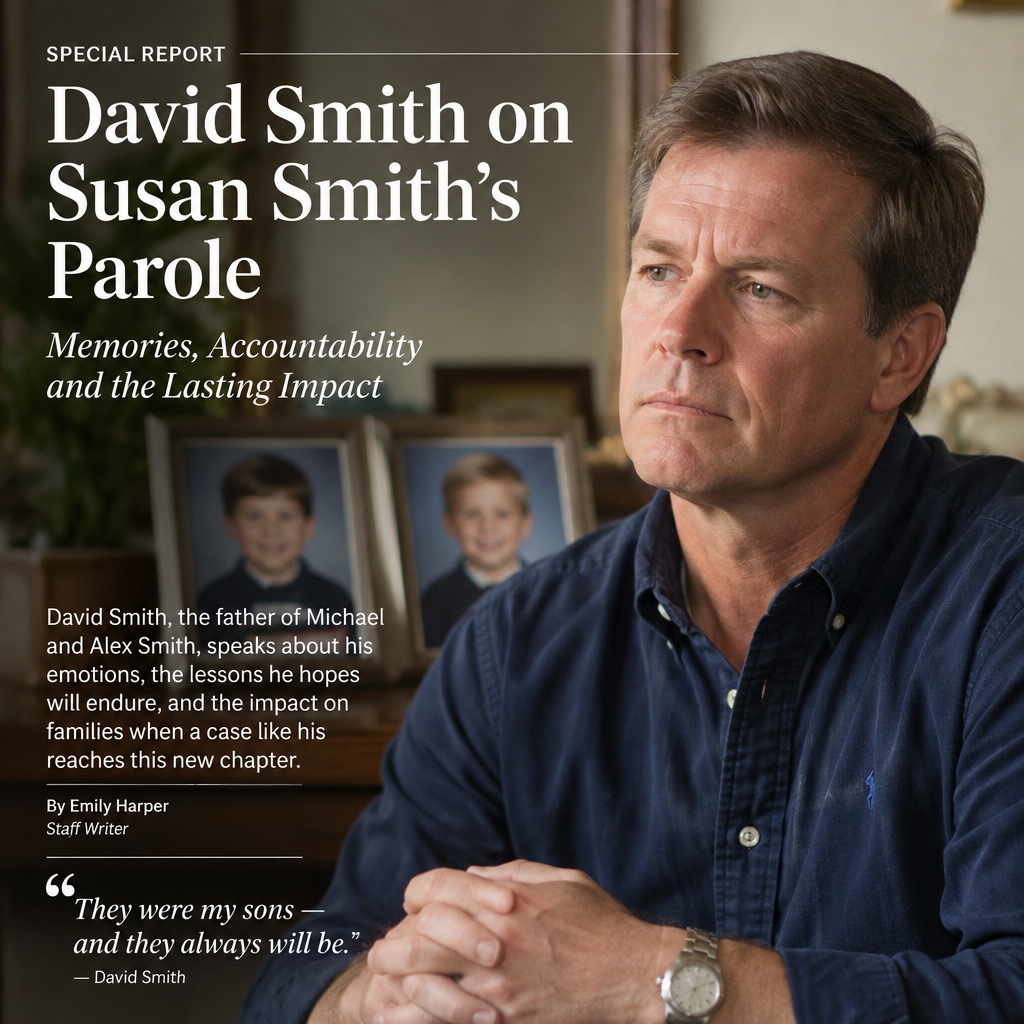
David Smith says his memories of his sons Michael and Alex, murdered by his former wife Susan Smith in 1994, have faded to a handful of childhood phrases. As Susan faces another parole hearing, his account turns attention from the notorious crime to the children he lost—and to the family still living with its consequences.
The story is a rare reminder that a famous crime does not belong only to the headlines. David’s account, given to PEOPLE, contains grief, limits, and ordinary details: a favorite movie, a child’s pronunciation, a few objects left at a gravesite. Those details do not explain away the crime or decide a parole case. They do show why a hearing about a convicted person can still feel immediate to the people who lost the children.
I read David’s comments as an effort to speak about Michael and Alex as boys with their own small habits—not merely as names attached to a notorious case. That distinction matters. Public attention often arrives in a rush around a hearing, then disappears; a family’s loss does not follow the news cycle.
What Is David Smith’s Story About?
This is a story about bereavement, memory, and a parole decision—not a new account of the crime. David Smith is the father of Michael, who was 3, and Alex, who was 14 months old, when Susan Smith drowned them in 1994. He has spoken publicly about the loss before, but the details in this interview are strikingly intimate: what he can still recall, what he chooses to keep at home, and how he responds to the possibility that Susan might be released.
Memory does not always preserve a neat sequence. David tells PEOPLE that he remembers a few words the boys used, including Michael’s version of the title 101 Dalmatians: “101 Domashafens.” He also remembers Michael saying “brudder” when talking about Alex. These are not grand stories or polished anecdotes. They are small sounds from a family life that ended before either child could grow up.
That smallness is the point. A child’s voice can stay vivid even when broader memories feel inaccessible, and David does not pretend that a handful of phrases adds up to a complete recollection. He says the boys remain alive in his heart, while acknowledging that the memories themselves are scarce. It is a careful distinction between continuing love and the mind’s ability to replay a past.
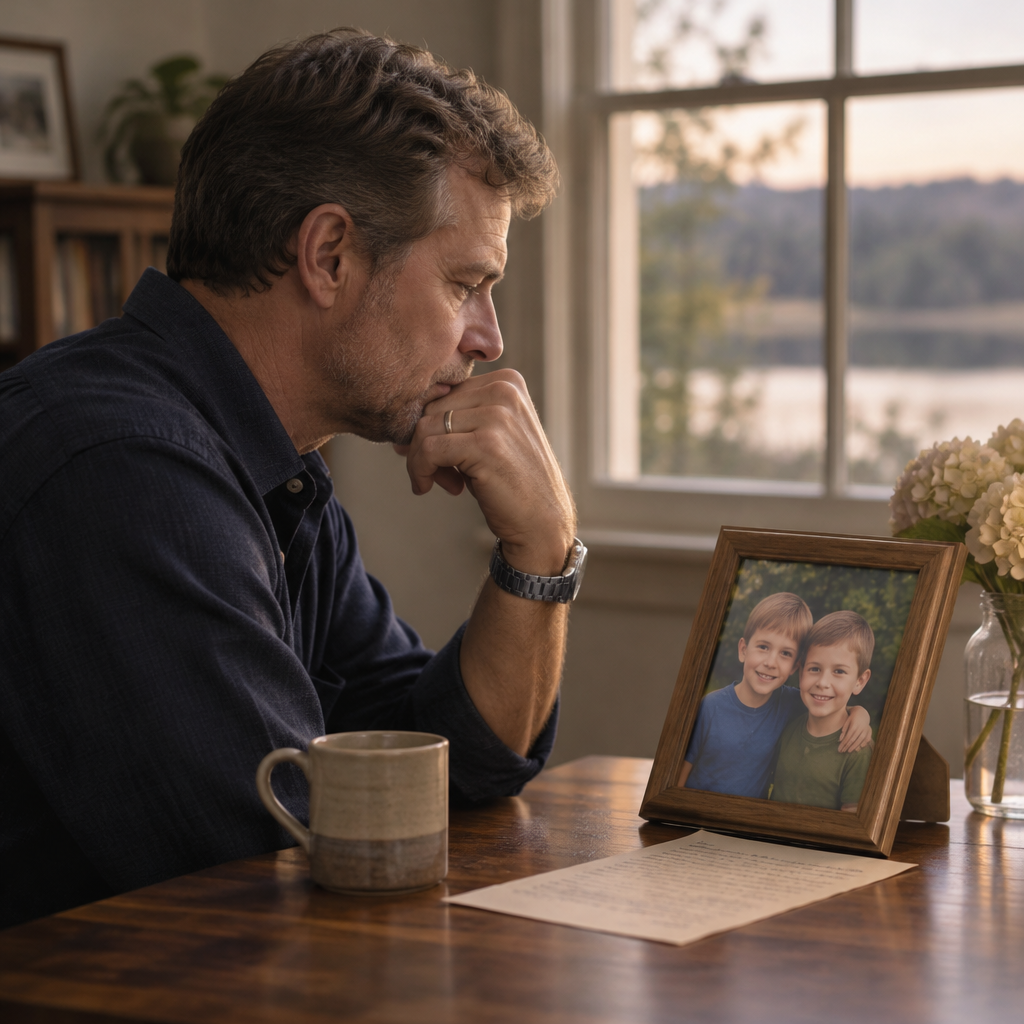
He also explains that he and his wife, Tiffany, keep a few photographs around their home but have not made a shrine of toys and possessions. David says he did not believe that surrounding himself with every available memento would be healthy for him. That is his personal choice, not a rule for other grieving parents. People mourn differently; a photograph, a keepsake, or no display at all cannot be treated as a scorecard for how much someone loved a child.
The parole issue gives the interview its immediate urgency. Susan became eligible for parole after serving 30 years of her life sentence, and the board denied her release in 2024. PEOPLE reports that she is due to appear before the board again Thursday, Nov. 19. David says he plans to oppose release and worries that a future decision could go the other way. Eligibility is not approval, and worry is not a prediction. But for him, the possibility is not abstract.
Core Details and Context
The public knows the broad outline. The personal consequences are less tidy. Several details help explain why this hearing reopens the story for David and for people who still remember Michael and Alex.
- A false carjacking story shaped the first public account. After the children disappeared, Susan told authorities that a Black man had taken her car with the boys inside. She made emotional public appeals for their return. That claim was false; the children were later found in the car after it had entered John D. Long Lake in Union, South Carolina. It is important to describe the allegation as a lie, not repeat it as an unresolved possibility. The false claim also put an innocent group of people under public suspicion, a consequence that deserves care rather than sensational retelling.
- The case ended in a life sentence. Susan was convicted of murdering Michael and Alex and sentenced to life in prison. Reports on her 2024 parole hearing, including Reuters’ coverage of the denial, describe the board’s unanimous decision not to release her. The legal status is plain: she remains incarcerated unless the parole authority grants release. A hearing is a review, not a promise.
- The hearing is personal for the surviving family. David says the prospect of release weighs on him and that he considers it an injustice to his sons. He also says his wife, two adult children, and friends help him through difficult moments. That support is not a footnote. It is part of the present-day story: the loss affected a family, and the family has had to keep living while a public case periodically returns to the front page.
- The public leaves small tributes. David says visitors still bring toys and other items to the boys’ gravesite, despite never having known them. He describes those gestures as kind and moving. Their meaning should not be overstated: a toy left at a grave does not repair a loss, and the public cannot claim the family’s grief as its own. Still, the gestures show that people remember the children as more than evidence in a criminal case.
- The interview is about memory, not a psychological diagnosis. David says he can recall almost nothing beyond fragments. That statement does not license outsiders to explain why, label his grief, or tell him what he ought to remember. I would keep the reporting there: he has described his own experience, and the respectful response is to quote him accurately rather than turn a private limit into a theory.
Here’s the kicker: the crime is already well known, but the children’s brief lives can get lost beneath the familiar sequence of accusation, confession, conviction, and parole. David’s memory of “Domashafens” gives Michael a distinct voice. His recollection of “brudder” gives Alex a place in that family picture. Neither detail needs to carry a grand message. They matter because they belonged to these boys.
The broader record is available through outlets such as CNN’s report on the parole denial and the South Carolina Department of Probation, Parole and Pardon Services hearing information. The first describes the case and board decision; the agency is the place to check hearing-related information. Those sources cannot tell readers what David feels beyond what he has chosen to say. That boundary matters.
Timeline: From the Murders to the Next Hearing
The sequence is often retold as a crime timeline. This version keeps the legal milestones clear while noting what each one means for the family.
- 1994: Michael and Alex are killed. Susan Smith let a car roll into John D. Long Lake in Union, South Carolina, with the children strapped into their car seats. The boys were 3 and 14 months old. She first claimed a Black man had carjacked her vehicle with them inside, and she made public pleas for their safe return. The claim was false. That lie shaped the initial search and brought intense media attention to the case.
- 1995: Susan is convicted and sentenced. She was convicted of murdering her sons and received a life sentence. The sentence meant she would serve decades before becoming eligible for parole; it did not mean that parole was guaranteed after a set time. This is a distinction that gets blurred in casual coverage. A date at which someone may seek release is not a date on which the person automatically walks free.
- 2024: The board denies parole. After serving 30 years, Susan became eligible to seek release. The parole board unanimously denied it, as reported by Reuters and other news organizations. The decision kept her in prison. It did not erase the possibility of another review later, which is why the case returned to public discussion.
- Before the next hearing: David speaks about the boys. In the PEOPLE interview, David shares the words and sounds that remain with him, says he keeps only a few photos at home, and describes the support he receives. He says he intends to oppose release. His remarks do not replace the parole board’s process; they give readers a clearer sense of what the process means to a surviving parent.
- Thursday, Nov. 19: Another parole review is scheduled. PEOPLE reports that Susan will face the board again on that date. The hearing is the next formal point in the process, not a settled outcome. The board—not public speculation, online commentary, or a headline—makes the decision. Readers should check official hearing information for updates, rather than treat advance reporting as a result.
When I track the sequence, the main change is not that the underlying facts have shifted. The legal status has moved from eligibility to denial and now to another review; David’s account adds the human detail that a docket cannot supply. That is why a responsible story needs both pieces, without confusing one for the other.

Comparison: David’s Remembrance Versus Crime-First Coverage
There is no single rival case or “competitor” to compare here. The useful comparison is between two familiar ways of covering a high-profile crime: a remembrance-centered account and a crime-first account. They draw on different details and serve different purposes. Neither should be mistaken for the whole story.
| Topic | Remembrance-centered account | Crime-first coverage |
|---|
| Main focus | Michael and Alex as children, and David’s present-day memories | The 1994 crime, investigation, false claim, conviction, and sentence |
| Details emphasized | Childhood speech, family photographs, support, and gravesite tributes | The lake, the car, the investigation, and the court record |
| What it can establish | What David says he remembers and how the parole possibility affects him | The reported facts and legal history of the case |
| What it cannot decide | Whether the parole board should grant release | How David experiences grief or what the boys meant to their family |
| Risk when used alone | Sentiment can obscure the legal case or the victims’ full reality | Sensational framing can reduce the children to plot points |
The two approaches can work together. A reader needs the basic facts to understand why a hearing matters, and needs the human account to see that the case did not end when a sentence was imposed. The trouble begins when coverage treats one layer as a substitute for the other. A moving quote is not a legal finding; a legal summary is not an account of a family’s life.
Frankly, the phrase “true-crime story” can make a tragedy sound like a finished piece of entertainment. It is not finished for people who loved the children. A careful article can give readers the facts without dressing suffering up as spectacle, then give David’s words room without asking him to perform grief for the camera.
Common Misconceptions and What to Know
Parole eligibility does not mean automatic release. Susan’s eligibility after 30 years allowed her case to be considered; the board denied release in 2024. A later hearing means the decision is being reviewed again. It does not tell readers what the board will decide. The state agency’s parole hearing information is a better reference for process than rumors or confident social-media predictions.
A parent’s memories are not a measure of love. David says he remembers few moments beyond fragments of the boys’ speech. It would be cruel and unsupported to suggest that limited recall means limited love. Memory is personal, and grief is not a performance with a required script. David himself says the boys’ memories remain alive in his heart. Readers can report that plainly without trying to diagnose him from a quote.
A public tribute does not make the public a member of the family. The gifts at the gravesite move David, who appreciates that strangers continue to care. That kindness deserves respect, but boundaries remain important. Visitors should follow cemetery rules and avoid turning a family’s burial place into a tourist stop. Nor should strangers demand access to the Smith family because they feel connected to a case they have followed in the news.
The case should not be reduced to Susan Smith’s public image. The false carjacking story, the murders, and the conviction are central facts. So is the lasting harm to Michael and Alex’s family. Sensational coverage often places the accused at the center of every sentence, because scandal attracts attention. But the children were not supporting characters in an adult’s story. They were people, even at ages too young to leave behind a public record of their own.
Compassion and accountability are not opposites. David can be treated with care, Susan’s actions can be described accurately, and the parole board can be left to apply its process. Charity in judgment does not require pretending that a grave crime was less serious. Accountability does not require reducing a person to one public label. Human beings are more than their public image, while the consequences of their actions remain real. That balance is not soft-headed. It is the bare minimum for fair reporting.
A hearing is not a referendum on whether the boys mattered. Public debate can become so focused on whether Susan should be released that Michael and Alex appear only as names in an argument. David’s comments bring them back into view as brothers with shared phrases and favorite things. That does not settle the legal question. It does help explain why the hearing carries such weight for their father.
Frequently Asked Questions
What does David Smith remember about Michael and Alex?
He says he recalls only a few fragments, especially words the boys used or pronounced in their own way. He remembers Michael calling 101 Dalmatians “101 Domashafens” and saying “brudder” for brother. David also says the boys remain alive in his heart, even though he cannot call up many other memories. He has not suggested that these examples capture the whole of their short lives.
Why is Susan Smith facing another parole hearing?
Susan was sentenced to life in prison for the murders and became eligible for parole after serving 30 years. The board denied her release in 2024, and PEOPLE reports that another hearing is scheduled for Thursday, Nov. 19. A further review is part of the parole process; it does not guarantee release. The board’s decision is not known in advance.
Does parole eligibility mean Susan Smith will be released?
No. Eligibility means a person may be considered for release under the applicable process. In Susan’s case, the board unanimously denied parole in 2024. The next hearing could produce a new decision, but until the board acts, predictions are speculation. Official South Carolina hearing information is the sensible place to check procedural updates.
How does David Smith honor his sons?
David says he keeps some photographs at home with his wife, Tiffany, but has chosen not to create a shrine of photographs, toys, and other possessions. He also values the toys and mementos people leave at the boys’ gravesite. He describes these choices as personal; they are not instructions for how other families should remember someone they have lost.
Final Thought
David Smith’s most affecting detail is not a speech about grief. It is a child’s mispronounced movie title, remembered decades later, and a brother’s word for his sibling. Those scraps do not fill the silence left by Michael and Alex’s deaths. They do something more modest and more honest: they remind readers that the boys had voices, habits, and a place in their father’s life before the case took over the public record.
The parole hearing will bring the legal question back into view. David says he fears release and intends to oppose it; the board must make its own decision. Readers can recognize the weight of his concern without claiming to know the outcome, and can follow the proceeding without turning it into a spectacle. That restraint is especially useful when the people at the center of a story have already had so much taken from them.
I have covered public figures and public cases long enough to distrust the neat version that a headline offers: villain, victim, verdict, next story. Here the facts are grave, and the family’s loss is not a plot device. Michael and Alex deserve to be remembered as children, David deserves room to speak without being told what his grief should look like, and any legal decision deserves accurate reporting rather than wishful certainty. Sometimes the most decent thing a reader can do is keep those truths in the same frame.