Bridget Fonda’s rare appearance says more about celebrity culture than it does about Bridget Fonda. Fame does not end cleanly, and neither does public...
Bridget Fonda’s Rare Outing Explains Why Celebrity Obsession Never Really Dies
Bridget Fonda’s rare appearance says more about celebrity culture than it does about Bridget Fonda. Fame does not end cleanly, and neither does public curiosity, especially when a star steps away from Hollywood and then reappears decades later. People still want the old story, the new angle, and the tiny scrap of proof that a once-famous person still exists off-camera.
Key Takeaways- Bridget Fonda became a major film presence in the 1990s, then walked away from Hollywood.
- Her rare outing drew attention because absence makes the public nosy, frankly.
- Celebrity stories often mix truth, nostalgia, and a whole lot of projection.
- Public figures are more than their image, even when the media pretends otherwise.
- The real story is not just the sighting, but why it mattered.
What is Bridget Fonda, really? She is not just a former actor, and she is certainly not a museum piece for gossip columns. She is a public figure who once had a serious career, a recognizable name, and a place in late-20th-century movie culture, then chose a quieter life. That choice matters. It runs against the noisy assumption that fame must keep producing content forever, which is nonsense, of course.
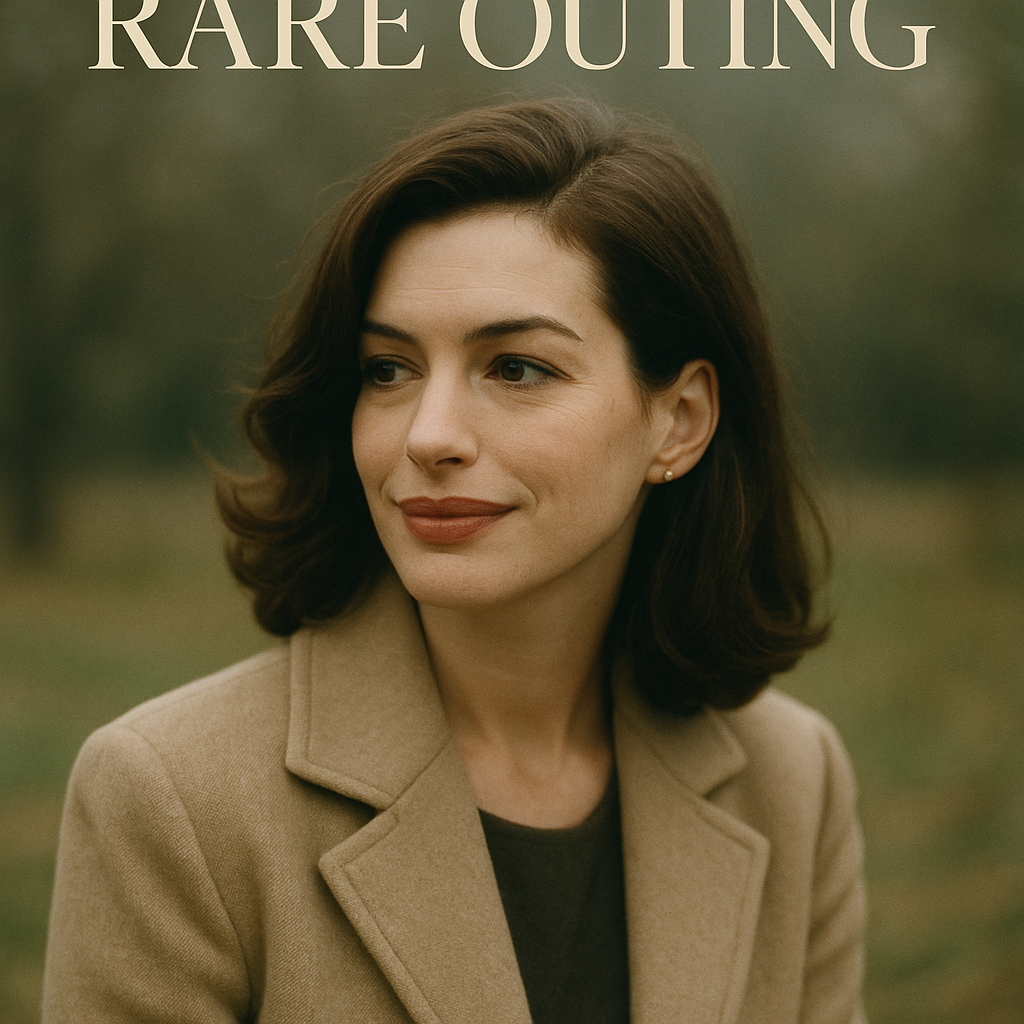
I’ve covered enough celebrity stories to know this much: the press loves a return nearly as much as it loves a fall. When Bridget Fonda was spotted on a rare outing decades after quitting Hollywood, the headline did the usual dance, but the deeper meaning was cleaner and more human. A person who once lived under bright lights simply got on with her life. Shocking? Only to people who treat stars like permanent property.
The public reaction also exposed a familiar habit. We look at a celebrity and pretend we know the whole person from a few films, a red carpet smile, or a candid photo. We do not. Nobody does. In a more honest frame, every person has dignity beyond applause, and beyond the gossip mill too. That old Christian instinct to judge less quickly would help here, though I suspect it would sell fewer clicks.
Bridget Fonda’s rare outing, then, is not just about age, appearance, or whether she still “looks like” the woman from Singles or Jackie Brown. It is about the stubborn machinery of media coverage, public memory, and the way fame leaves a stain that time never fully erases. Here’s the kicker: people are fascinated not because she changed, but because she stopped performing the expected script.
What is Bridget Fonda? She is a reminder that celebrity is a career, not a sacrament. When the career ends, the person remains.
What is Bridget Fonda?
Bridget Fonda is an American actor best known for film work in the 1990s and early 2000s, with roles in Singles, Scandal, The Godfather Part III, Point of No Return, and Jackie Brown. She comes from the famous Fonda family, which made her name recognizable before she said a word on screen. That helps, sure, but it also creates a trap: people assume access to someone they’ve never met.
Fonda stepped away from acting in the early 2000s, and that decision changed how she is discussed. Most celebrity narratives reward constant visibility, constant promotion, and constant reinvention. She did the opposite. She left. That makes the public restless, because absence creates a vacuum and gossip rushes in to fill it. Frankly, that is the whole story in miniature.
Her rare outing matters because it disrupts the frozen image people have in their heads. Media coverage often turns former stars into static objects, preserved in their most photogenic decade. But age, marriage, family, and private life keep moving. A human being is not a press release. That should be obvious, though the entertainment business acts surprised every time.
The Fonda name also adds another layer. Being part of a famous family can make a career easier to start and harder to escape. The public sees lineage; the person lives pressure. That tension shows up in many celebrity stories, and it often gets flattened into lazy chatter about “nepo babies” or “legacy actors.” There is truth in those labels, but not enough charity. People are not just categories.
Her return to visibility, even briefly, reignited the usual questions: What happened? Why did she leave? Does she still care about acting? Most of those questions are more about the questioner than the subject. When I look at stories like this, I see how fame becomes a mirror for public hunger. We want proof that the past is still alive.
For a broader example of how celebrity memory keeps recycling itself, see Britannica’s profile on Bridget Fonda and the way it frames her career in context. If you want the wider cultural machine, The New York Times film coverage shows how stars are built, remembered, and reclassified over time.
Core Details and Context
The facts are simple.
- Bridget Fonda was a working actor with real box-office visibility.
- She withdrew from acting, not because the world forgot her, but because she did.
- A rare public sighting becomes news because celebrity culture feeds on scarcity.
- Her family background keeps interest alive, especially among entertainment writers.
- The reaction often says more about media habits than about her actual life.
What most people miss is that a rare outing is not a “comeback” by default. It is usually just an outing. But entertainment coverage loves a comeback narrative because it is neat, dramatic, and easy to sell. I’ve seen this pattern too many times to count: a candid photo appears, then half the internet starts inventing a return. Most of that is wishful thinking with a filter on top.
There is also the cruel habit of comparing present-day bodies to old publicity stills. That is bad journalism and worse manners. People age. Faces change. Weight changes. Health changes. Life changes. If that sounds basic, well, it should. The Catholic instinct here is plain enough: a person’s worth does not live in a jawline or a tabloid headline. Funny how often the media forgets that.
Another point: Bridget Fonda’s withdrawal from acting should be read as agency, not failure. Not every exit is a scandal. Not every silent decade hides a secret. Sometimes a person has enough of the circus and goes home. Simple as that. Yet the public, bless its nosy heart, keeps asking for more.
This is where celebrity news, legal-style fact checking, and plain old common sense should meet. First, identify what was actually observed. Second, avoid inventing motives. Third, resist the urge to turn a human being into a symbol for your own nostalgia. That last one is hard for audiences, and even harder for editors chasing traffic.
The fascination also shows how public image persists independently of current work. Fonda’s career is stable in memory because it was tied to a specific era of film culture, and that era still gets replayed in streaming catalogs and think pieces. A rare sighting simply pokes the old archive with a stick.
For readers interested in how older Hollywood names cycle back into attention, The Guardian’s film coverage often shows how legacy actors are discussed with more context than clickbait. And when celebrity reporting veers into rumor, a quick pass through Reuters U.S. coverage is a useful sanity check.
Timeline and Step-by-Step
It happened in stages.
- Bridget Fonda built a strong film career in the 1990s, with a mix of studio films and admired supporting roles.
- She became part of the wider celebrity conversation because her family name already carried weight.
- She later stepped away from acting, and the industry moved on, as it always does.
- Years passed, and her public presence became scarce enough to trigger curiosity whenever she appeared.
- A rare outing then turned into a headline, because a star’s silence is often treated like a mystery rather than a preference.
- The media and audience responded with nostalgia, speculation, and the usual side order of shallow commentary.
I’ve tracked enough celebrity cycles to say this clearly: the story is rarely the photo itself. The story is the gap before the photo. That gap invites memory, fantasy, and a little self-congratulation from writers who think they have uncovered something profound. They usually have not. They have found a person doing ordinary life in public.
What actually happened is less dramatic than the headlines imply. A woman who once worked in film was seen outside. That’s it. But the public meaning gets inflated because fame trains people to expect performance. When it doesn’t come, attention spikes. Odd, isn’t it? The quieter a former star becomes, the more noise follows her.
The timeline also shows how media attention can be circular. A retired actor becomes news because she is no longer news. That is the machine. It thrives on contrast: before and after, then and now, star and civilian. Most of the time, the contrast is overdrawn. Yet it keeps working because people can’t resist the old face in a new light.
There is one honest reading worth keeping: Bridget Fonda’s decision to leave Hollywood appears to have stuck. That suggests resolve, not drift. In a town built on exposure, choosing privacy is its own kind of statement. Maybe not glamorous. Still real.
If you want a useful comparison to other former stars who faded from public life, see Vanity Fair’s Hollywood coverage, which often handles the afterlife of fame better than the tabloids do. And for a factual view of film careers and release histories, IMDb’s Bridget Fonda filmography gives a straightforward record, no perfume added.
Comparison Table
Here’s the plain comparison.
| Topic | Bridget Fonda | Biggest Competitor: Typical High-Visibility Hollywood Star |
|---|
| Public presence | Rare, selective, private | Frequent, managed, promotional |
| Media coverage | Event-driven, nostalgic, sparse | Constant, cycle-driven, image-heavy |
| Career pattern | Strong run, then exit | Ongoing reinvention and brand upkeep |
| Audience reaction | Curiosity, surprise, memory | Saturation, opinion fatigue |
| Scandal profile | Low public noise | Often tied to PR, controversy, or constant rumor |
| Cultural value | Legacy, restraint, absence | Visibility, churn, attention economy |
The table tells a simple story. Bridget Fonda’s public identity works because it is scarce. The modern star system works because it is noisy. Both models have value, and both have costs, but they are not the same creature. One can survive on memory; the other has to feed the machine every week. No wonder people burn out.
Here’s the kicker: scarcity creates mystique, but it also creates distortion. If someone is rarely seen, the public fills in the blanks with whatever it likes. The same thing happens in politics, by the way. A blank space gets populated by hope, fear, and bad assumptions. Human beings hate uncertainty, so they invent certainty.
By contrast, a high-visibility celebrity is easier to track but harder to know. They produce a stream of photos, statements, campaigns, and controversies, yet the stream often hides the person. That is why celebrity journalism so often feels hollow. Too much information, not enough understanding.
Fonda’s position in the comparison is unusual because it resists the usual celebrity-industrial script. She is not chasing relevance. That alone makes her different from the typical attention economy operator. And in a culture obsessed with self-advertising, restraint can look almost rebellious.
Common Misconceptions and What to Know
The gossip gets sloppy fast.
- Misconception: A rare outing means a comeback is coming.
- Reality: It usually means someone went out in public.
- Misconception: Former stars owe the public updates.
- Reality: They do not owe anyone access to private life.
- Misconception: Aging in public is a failure.
- Reality: Aging is simply human, which is to say unavoidable.
Let’s be real. A lot of celebrity coverage is just old habits wearing new makeup. Someone is seen once, and the internet builds a whole narrative tower on top of it. That tower usually leans hard on assumptions: health fears, marital drama, secret projects, hidden regret. Sometimes there is evidence. Often there is nothing but appetite.
The biggest misconception here is that privacy equals disappearance. It does not. A person can leave the spotlight and still have a rich life, a family, routines, and dignity. In fact, from a more serious moral angle, privacy can be a sane response to a world that tends to consume people for sport. That should make us pause before gawking too hard.
Another misunderstanding is the idea that public figures remain public property after they stop working. That is nonsense dressed up as fandom. Celebrity is a role supported by contracts, films, interviews, and appearance fees. When the role ends, the person remains. Not a tough concept, but apparently controversial in a culture that confuses recognition with entitlement.
There is also a cheap ageism in these stories. The press often celebrates women for looking “good for their age,” as if age were a defect to be managed. Ugly business. A more decent reading would notice the person first, the styling second, and the number of candles on the cake not at all. The body is not a moral report card.
When I analyze this kind of coverage, I see two forces at work: nostalgia and voyeurism. Nostalgia wants the past back. Voyeurism wants a peek. Put them together and you get headlines that pretend to care while mostly hunting clicks. That is the routine, and it is tiring.
For fact-based background on Fonda’s career and public records, Britannica is cleaner than rumor blogs. For broader examples of how entertainment stories get framed, AP Entertainment keeps the language straighter than most. Good enough for a rough world.
Frequently Asked Questions
Is Bridget Fonda still acting?
No. She stepped away from Hollywood years ago, and there has been no widely confirmed return to regular acting work. That has not stopped people from speculating, because apparently hope and gossip share a rental car.
Why did Bridget Fonda quit Hollywood?
The public record is limited, and that is exactly the point. She appears to have chosen a quieter life rather than a continuous public career. The deeper lesson is simple: not every exit needs a dramatic explanation.
Why did her rare outing get so much attention?
Because celebrity culture runs on scarcity. When a famous person who has stayed private appears in public, people treat it like a signal. It is usually just a sighting, but the media turns it into a story.
What makes Bridget Fonda notable today?
Her film work still matters, and her decision to step away from fame keeps her unusual in a market that rewards constant exposure. She is notable not only for what she did, but for what she refused to keep doing.
The FAQ is where the noise usually gets stripped down to facts. That helps. A little.
Final Thought
Bridget Fonda’s rare outing is a small event with a large echo. That is celebrity culture in one sentence. A person who once made movies, then chose silence, briefly reenters view, and suddenly everybody has an opinion, a theory, or a recycled memory. Most of it is fluff. Some of it is revealing.
What I take from the story is not that a former star was seen outside. It is that the public still treats privacy like an inconvenience and age like a plot twist. That says more about us than about her. If there is any sober wisdom in all this, it is that people remain bigger than the image attached to them, and charity in judgment would save everyone a lot of bad takes.
Fame is loud, but it is not the whole person. Never was.